Sportsthoughts (70) – Messi, the catalyst

Watching the second leg of the European  Champions League quarter final last night, between Barcelona and Paris St Germain. Finely poised after the first leg finished 2-2 in Paris. Two precious away goals for Barca, but Lionel Messi, the world’s best player, picked up a hamstring injury. Usually takes at least 2-3 weeks to heal, which would mean him missing the second leg. But he was on the bench…

DownloadedFile

Barca could surely overcome the loss of Messi. After all they have so many of the Spanish national team, world and European champions. The great Xavi, the controller; the magnificent Iniesta, the rapier; Fabregas, the heir apparent;  Busquets, the ultimate defensive midfielder; David Villa, supreme striker, getting his form back after his broken leg; Pique, smooth centre back; Jordi Alba, rampaging left back, Pedro, understated but lethal up front; Valdes, reliable goalkeeper. Plus two Brazilians, Dani Alves, the most attacking full back in world football, and Adriano, solid utility man. Not a bad side!

PSG not so bad themselves. Some big spending having brought in players like Ibrahimovich, Lavezzi and Pastore up front. Dangerous.

I didn’t see all the first half, but it seemed like Barca were stuttering. PSG had the better of the game. And then just after half time Javier Pastore pounced. 1-0 to PSG, 3-2 on aggregate. The unthinkable looming. The commentators on Sky Sports obsessed by the absence of Messi, tantalised by the fact that he was on the bench. But how could he come on less than two weeks after a hamstring injury? What risks would be involved? Nine Spanish internationals. Xavi and Iniesta pulling the strings. What was going wrong?

Somehow the penetration wasn’t there, though we should not forget that Barcelona are a patient team. They’ll probe, pass, probe, look like they are going nowhere, and then find that gap, that opportunity, and pounce.

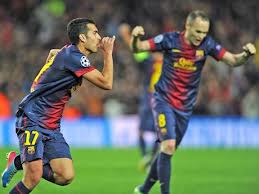
But it was getting worrying and they took the risk. On 62 minutes, Cesc Fabregas came off and Messi came on. And something happened to Barcelona. Immediately the energy levels seemed to go up. The pressing was more urgent, the passing sharper. Messi didn’t do that much. A few attempted runs, but PSG attention deflected onto him, and therefore less on others. On 71 minutes he took a run to the edge of the box and threaded it through to Villa. He twisted, turned, and laid it back to Pedro, who placed it into the net. A precision move and goal. 1-1.
DownloadedFile

From then on Messi did a bit of this and that, but he was clearly hamstrung. He looked stiff when he was walking, through freer when he ran. Barca settled for the 1-1, brought on defensive reinforcements. 3-3 on aggregate, through on away goals.

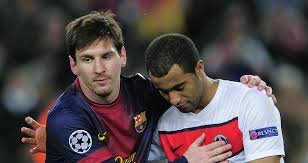
Messi, the talisman, the catalyst. Even in a team of absolute greats, a team whose personnel and philosophy underpinned Spain’s World Cup and European Championship victories,  he stands out,  galvanises. The marvel, but also a true team player. That’s why he was willing to play with a hamstring injury, to risk more time out, because Barca’s season was at stake. He is Barca through and through.
DownloadedFile

The semis promise to be mouth watering – the draw is tomorrow. Two Spanish teams, two German. The ascendant powers. England, Italy, floundering.  Barca, Real Madrid, Bayern Munich, Borussia Dortmund. A lot of pundits fancy Bayern or Madrid. They have been the form teams. But I still think Barca are the team to beat.

And remember the way they demolished AC Milan 4-0 in the last 16 second leg. The best I’ve seen this season.

But they will need Messi to do it.

Posted in Sportsthoughts | Tagged , , , , , | 6 Comments

Some reflections on the Thatcher era

Margaret Thatcher, British Prime Minister from 1979 to 1990 died on 8 April 2013, aged 89. May she rest in peace.

There is no doubt that her time as PM was a time of great change in British society. There are many different views about whether the changes were good or bad, as we have seen in the reaction in the media and elsewhere over the past day or so. The fact that there have been celebratory parties in parts of the country show how there is division about what happened under her watch. Others feel she rescued Britain from complete collapse.

I want to offer four personal memories from the Thatcher era. Things that stay with me. They are not party political. And I could never rejoice about someone’s death, as some have been doing over the last day. Margaret Thatcher was a democratically elected politician. She did a job according to her own convictions. She subjected herself as party leader to the electorate three times. Her own party overthrew her, again legitimately within their own procedures.

There is no doubt that Britain, overall, regained a self-confidence in the eighties, which has lasted. There are plenty of reasons for that, but one cannot deny Margaret Thatcher some of the credit. There was undoubtedly a revival of entrepeneurship and aspiration. We now take that for granted, but I think we have to remind ourselves that in the late seventies it wasn’t there in the same measure.

So that’s my preamble. The personal memories may not seem quite so positive!

1. 1982. I’m sitting in my office in Britannic House, the head office of BP, British Petroleum. Working late on some economic analysis, I forget what. But it is in the middle of the Falklands war. I’m 23 years old. There’s been something on the news about the possibility of conscription if the war isn’t over soon. I’m sitting in that office, on my own, thinking, what would I do if they tried to conscript me? A battle in a far off place. A place that our government was pretty happy to let go of not so long ago. All sorts of things going through my head. Of course I’d fight if someone was trying to invade our country. Of course I would. But being sent off to the Falklands? I sat there thinking. And concluded I’d go to jail if necessary. Like Muhammad Ali.

Of course it never came to that, but it focused the mind.

And it doesn’t mean I wasn’t happy when David Coleman had to interrupt his commentary of Brazil v Russia (or Scotland?)  in the 1982 World Cup to announce Argentina had surrendered. And back to the football…

(And respect to Argentina today. Friends, as we should always be).

2. I’m living in Belsize Park, North London – very nice North London – in 1985 (possibly 1984). I’m commuting on the Northern line into the City, where I work. I’m in my pin stripe suit. At the entrance to Belsize Park station there are miners with their yellow buckets, collecting for their struggle against the government. A suicidal struggle, which their leaders should never have taken them into. But a struggle in which the forces of the state – the police – are being used to destroy a working class movement. Neither side has the moral high ground in this struggle. I can’t help feeling that a solution to the arguments could have been found with goodwill on both sides, but it has moved beyond that.

I give the miner at the station a fiver. In my pin stripe suit. He looks really surprised. I expect he would more likely have expected a volley of abuse. Appearances are deceptive. I feel a buzz, a sense that I am doing the right thing and also that I’m changing perceptions. City dudes supporting the miners.

And yet it is ultimately futile. Of course the state won, helped by the crazy leadership of the miners. It was the symbolic victory for Mrs Thatcher over the unions. Revenge for Edward Heath’s defeats in the seventies. And so many communities destroyed. Wasn’t there another way?

3. Harry Enfield, a brilliant comedian, on “Saturday Night Live” (and some times Friday) , with his greatest creation, LOADSAMONEY. Waving his wad at the audience, at all the Northerners. The South, especially Essex, newly rich, as the result of Thatcherite reforms. Entrepeneurship and aspiration. More than aspiration. Triumphalism.

And Loadsamoney’s alter ego, BUGGERALLMONEY. Geordie guy, getting a bit heavy. Hard. I drink beer, me. Buggerallmonaaay….

Very funny, very laddish, but also a brilliant exposition of the North/South divide, which was hugely accentuated in the Thatcher era. The economic boom during the Blair era may have reduced the divide a little, but it’s back and biting during the current recession.

4. Where was I when Maggie was ousted? I remember it well. My wife, Kath, and I were living in Paris. It was 1990, and I’d stopped working at BP, who’d moved the office to Brussels. We were enjoying some time just chilling in Paris. We decided one day to do the tourist river trip. It started up by one of the bridges not too far from the Eiffel Tower.  There was a newspaper stand nearby. On a poster it said that “Mme Thatcher est sortie” or something like that. Oh wow, we said, then continued on the boat trip. It wasn’t such a surprise after the poll tax riots and resulting dips in her popularity. The Conservatives are remarkably ruthless when they think a leader has become a liability, even one as iconic as Margaret Thatcher.

So they got John Major instead. He survived the 1992 election, so ended up being quite a long-standing Prime Minister. In 1997, Labour, under Tony Blair, trashed the Tories and stayed in power until 2010.

Counterfactuals are often used in politics. What if X had stayed in power, etc, etc. Actually, we just don’t know. Because the external forces and how you react to them are the determining factor. Party politics hardly matters in the final analysis. 9/11, for example. Or the banking crash.

So all the talk about how Margaret Thatcher changed Britain is fine, but it doesn’t mean no-one else would have done it. Because most things are a reaction to those external forces, and at the end of the day, the politicians of most of our parties will react to them in similar ways. The rhetoric may be different, and credit to Maggie, she knew all about rhetoric.

But in the end, it’s just dealing with the world…

Posted in Random stuff | Tagged , , , , , , , , , , | 4 Comments

Roy Lichtenstein at the Tate Modern

I hopped over to the Tate Modern last Friday after a visit to my optician in the City, when I finally succumbed to the need for multi-focal glasses. Age: can’t read the newsprint these days without taking the glasses off.

Anyway, afterwards I strolled down to the Millennium Bridge and made my way to the Roy Lichtenstein retrospective. Like a lot of  people, I imagine, I just thought of him as a rather humorous painter of large comic strips. Fun, but not much more.

But the paintings on show changed my view.

It’s funny, after seeing the exhibition, I read a few reviews online. The piece in the Guardian (my favourite paper) praised the first few rooms, which expanded on his cartoon stuff, and then said it went downhill. For me it was completely the opposite. I didn’t need to see pictures of Donald Duck and Mickey Mouse or fried eggs, but I was fascinated by the homage Lichtenstein paid to other artists.

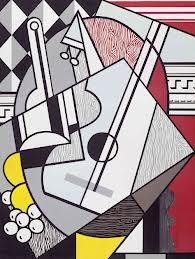
So the exhibition really got going for me in room 7, which was called “Art About Art”. There were a series of paintings which took the work of Picasso and related artists, stripped them down and built them up with Lichtenstein’s powerful lines and colours, and in some cases the dots of varying sizes, that give a sense of light and shade. Here are a few examples based on Picasso – which don’t use the dots too much but convey the essence.  They are infused with humour, as ever with Lichtenstein, but also with respect for the artist.

‘Femme d’Alger” here represents Picasso’s “Women of Algiers”.

DownloadedFile

This one makes cubism bright and lively.

DownloadedFile

And this one is pure Picasso from his twenties series of nudes on the beach.

Simplified.

DownloadedFile

I liked this triptych, too, that rather affectionately showed how you could move from a fairly conventional painting of a woman’s head, through cubism to the most abstract representation possible.

DownloadedFile

There was also what I thought was a very beautiful take on Monet’s series of Impressionist views of Rouen Cathedral. A work of art in its own right. There was a real intricacy to the use of the dots and shadows in these paintings. Only one way to appreciate them – go see!

DownloadedFile

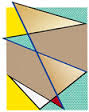
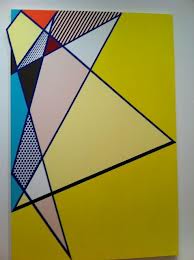
There was colourful room called “Perfect/Imperfect” for all the geometrists out there.

imagesDownloadedFile

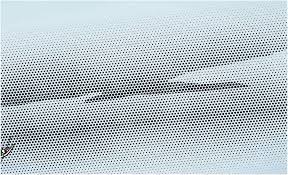
That was followed by a room of “Late Nudes”. A real sense of fun here, a kind of parody of the conventional. But also a weird sense of sixties America, even though the works were from the nineties. And the dots came to the fore in these works.

DownloadedFile

DownloadedFile

Finally, maybe the best of all, Lichtenstein’s Chinese phase, in which he followed the classic forms, with their emphasis on simplicity. A lovely landscape and just a hint of branches, or a person or boat.

imagesDownloadedFileDownloadedFile

And in this one, the splurge of fog over the pointillist scene.

DownloadedFile

Not what I was expecting at all, and so much more than I was expecting. You might go and just love the classic Lichtenstein cartoons and comic strips. They are very enjoyable. But the new angles made the exhibition for me.

And as ever, there is nothing like seeing them right there, right now. To see what they do to your senses when they are right in front of you.

Because we all perceive in different ways.


All the pictures are from Google Images.

Posted in Art, books, theatre, cinema | Tagged , , , , | 6 Comments

Sportsthoughts (69) – Quins ambushed!

Heineken Cup quarter final weekend. The European rugby elite go head to head: Clermont Auvergne v Montpellier, Saracens v Ulster, Toulon v Leicester… and Quins v Munster. Clermont, Sarries and Toulon all won.

And Quins were ambushed, on and off the field.

On the field, Quins haven’t been in the best of form recently. In the Premiership they’ve lost three games on the trot: woefully at home to Exeter, outplayed by Saracens at their place and then unluckily, 15-17 away to Gloucester 9 days ago. Meanwhile though, they won the LV Cup (the closest thing to the FA Cup in football) playing with a mix of youngsters and one or two experienced players. They played some exhilarating rugby in the semi finals against Bath and the final against Sale – encouragement for the future.

But today was the start of what we love to call “the business end” of the season. ‘Squeaky bum time” in the words of Sir Alex Ferguson.

I fancied our chances against Munster. They are not quite the force they were and have been in poor form in the Pro 12 League for the top Irish, Scottish, Welsh and Italian teams. Having said that, they know how to win Heineken Cups: twice winners in the twenty-first century.

And they demonstrated all that knowledge today. They had a basic game: win the set piece, especially the lineouts, defend with ferocity, and the points will come. They executed it superbly, especially in the second half. Quins huffed and puffed but never really got their running game going, even though the pitch was hard and the sun was shining. Munster were so dominant at the lineout, that Quins seemed to become confused about what to do when they had penalties. And seeds of doubt quickly grow into poor decision-making, ball spillage, a loss of focus. The second half was nearly all Munster after Quins went in 9-6 up at half time. The final score was 18-12 – all penalties. Barely a sniff of a try-scoring opportunity at either end. That showed that Quins’ defence was functioning; there was just no real spark in attack. No pace in a usually pacey team. Strangely, little was done to rectify this. Ben Botica was left on the bench, Matt Hopper only got on for the last five minutes. Luke Wallace, young hero of recent weeks, didn’t even make the bench. Most unlike Conor O’Shea not to give himself the options and try something different when the game plan wasn’t working.

So, on the field, Quins were outwitted – ambushed by the most basic of rugby strategies. Setpiece and physicality. Still a bit naive in this competition? Lessons to be learned for next season.

But the club was ambushed off the field too. I sit, with my friend Jon, and our kids, in the Etihad stand, side on, near the centre. The general area is pretty much Quins’ home end, with the stand on the other side similar. It’s usually pretty noisy and spurs the players on. Well, it was certainly noisy today, but most of the noise was from Munster fans. They had about half the seats and took the place over. How did this happen? It never would in football.

It started when we season ticket holders got a message that our usual seats wouldn’t be available as they were part of the allocation for the ERC, the competition organisers. But we would get priority on-line booking for other seats. That sort of worked, except if you had the same customer number for all your season tickets (normal if you pay for your child’s ticket!) you could only book one on-line and then chance your arm by email and a return phone call. In the end I managed to get three tickets, but they were scattered around. I think many others experienced something similar. So the Harlequins fanbase was scattered.

Meanwhile where did all those ERC tickets go? Well, judging by the fact that our seats were occupied by Munster fans and by the fact that they occupied half the central seats and many more besides, I can only conclude that some of them may have found their way to the Munster fans. Fair play to them – if you want to support your team and can afford it, you’ll do what you can to acquire tickets. We also had surprisingly high attendances at the Exeter game and the LV semi final against Bath. I believe that anyone who’d been to a home game previously had some kind of priority for Quins v Munster, once season ticket holders had had their chance.

I think that Munster fans, like their Leinster counterparts, know how to get tickets for big games after years of experience. And having big fanbases in London probably helps too. Again, Quins a bit naive, still learning.

Next time we have a home quarter final, maybe the Club’s executive will do everything to put their own fans first.

I have to say that the Munster fans were pretty magnificent, and for the first time since I’ve been attending Quins regularly, which is about five years, it felt like the away fans had won the noise battle. That must have helped the Munster team, in what was a close game. While Munster had most possession, one break for a try and conversion could still have won Quins the game late on.

I don’t feel angry about the team performance. They gave their all, in a really tough, physical game, but were just beaten by a better team on the day. But I do feel angry about the ticket situation and the consequent balance of support in the most important game of the season. Just hope lessons are learned.

Anyway, the season rolls on. We are still in the Premiership top four, although the chance of first or second has slipped away with recent results. Sarries and Leicester are lined up for the first two and we are battling it out with Northampton and Gloucester for the other two play off places. And our last game of the regular season is… Northampton.

Those bums are going to keep on squeaking!

#COYQ !!!

Posted in Sportsthoughts | Tagged , , , , , | 2 Comments

Have You Heard? – (36) “Imperial Bedroom” by Elvis Costello

DownloadedFile

I’m off work this week and have been spending some time on my music book, now on a chapter about what Elvis Costello and Bruce Springsteen did from the the early eighties onwards. After both made a sequence of five amazing albums, ending with “Trust” by Elvis and “The River” by Bruce, which I cover in earlier chapters.

Today I ran through three fine albums by Elvis Costello. It was great fun just listening to them again, with intent.  “Imperial Bedroom” stands out as possibly Elvis’s most ambitious album ever. His attempt at making the ultimate pop album. This is what I wrote today – a first draft, subject to change, but probably not far off what I’ll end up saying.

I’d just ended my piece on the wonderful “Almost Blue”, Elvis’s country album, which was…

Quite a contrast to the next album, “Imperial Bedroom” in 1982, which was Elvis’s most adventurous album sonically, maybe ever. Some people, including my good friend Steve, who is pretty obsessive about Elvis, think it’s his best album, and I can understand why. I wouldn’t go quite that far myself, but it is an album that bears repeated listening, because there is so much going on. It was produced by Geoff Emerick, who had history with The Beatles. Perhaps Elvis was trying to make his “Revolver” or “Sgt Pepper”. Or paint his musical Picasso? The album cover was a pastiche of twenties/thirties Picasso by the artist Barney Bubbles – and credited to “Sal Forlenza 1942”. Always one for a joke, Elvis. Wasn’t a bad take on Picasso though. Like many of the works of the great man himself, the painting was both primitive but complex, colourful and beyond ordinary vision. Beyond belief? It was an album where key board wizard Steve Nieve was let loose too. His trademark strokes are everywhere. Trills and thrills. In the sleevenotes to the double CD reissue in 2002, Elvis writes about how he had started composing most of his songs on the piano, which invited a more “arranged” approach to them. It gave Steve Nieve a different kind of canvas to improvise over, too.

At first, some of the slower, darker songs appealed to me most. Songs like “Shabby Doll” and “Kid About It” (written the day after the murder of John Lennon) and “Almost Blue”. The latter wasn’t a leftover from the previous album, although it was one of the more straightforward songs on “Imperial Bedroom”. The subject matter could have been from the album of the same name, but the sound was from the smoky jazz bar rather than the Nashville jukebox. It was the first true sign that Elvis could turn out to be a pretty powerful singer of torch songs. Songs from the dark shadows, full of lush regret. I looked forward to the day when he chanced his arm. It did come, much later, and I realised that actually, I preferred a bit of torch mixed up with the pop Elvis, rather than too much of the real thing!

Elvis has said in the past that he took inspiration from the songwriting of Abba: those big build ups and choruses on tunes like “Knowing Me Knowing You”. There was plenty of that on “Imperial Bedroom”: songs like “Man Out Of Time” and “Pidgin English”, though the latter had a hint of an old favourite from “Armed Forces”, “Green Shirt” too. “Imperial Bedroom” was, in a way, a return to the musical direction of “Armed Forces” but with many more layers of sound and experimentation. It was Elvis’s attempt to make the ultimate pop album; but being Elvis, there were too many ideas pinging about, too many clever lyrics, too much complexity for it to be a true pop hit. It was a musician’s or a music journalist’s idea of a great pop album, a distillation of great pop from the past. Not that of a teenager with the money to buy one album, or a couple of singles. That’s not a criticism. It’s just the way pop is.

It’s an album I’ve never grown tired of though, because it is always revealing new angles. There is such a rich variety. These days, I’d probably make the opener, “Beyond Belief” my favourite track. It’s dense and tense, like a looming thunderstorm. The atmosphere’s getting heavy and then crack! A distorted chorus erupts. Beyond Belief. The rumbling continues then it fades. It’s not so much a song as a soundtrack – a portent for the rest of the album. It’s followed by the falsetto weirdness of “Tears Before Bedtime” with Steve Nieve working overtime over the hint of a reggae rhythm. And then “Shabby Doll” comes along and brings it all down…

What a good album it is!

And next up was “Punch The Clock”.  True genius!

DownloadedFile

Posted in Music - Have You Heard? | Tagged , , | 2 Comments

Sportsthoughts (68) – Cancellara wins the Tour of Flanders

DownloadedFile

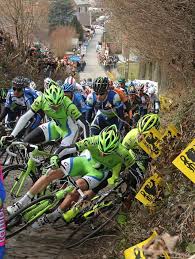
I was watching the highlights of the Tour of Flanders – or should I say Ronde van Vlaanderen? – last night. What a gruelling race that is. It’s one of the one day classics and a highlight of the Belgian racing calendar. A lot of the top racers are there. It was 256km long yesterday. Flanders isn’t generally noted for its hills, but around Oudenaarde, the race’s destination, there are a few, so they went up and down them three times! Nasty stuff too – sharp climbs on narrow and cobbled pathways in the main. The cobbles look brutal – you’ve enough to worry about getting up the hill and staying on your bike, without being shaken to the core.

And it was really cold!

Watching the ascents up the cobbles – the Oude Kwarement and the Paterberg in particular – made me think that this was the elite cyclists’ version of one of those horrible cross country runs we had to do at school in ankle deep mud and across cow-pat strewn fields. Ah, the memories!

images

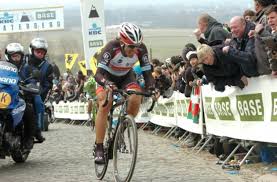
The Swiss cyclist, Fabian Cancellara, crashed in this race last year and broke his collarbone. This year he won it in magnificent style, his second victory in the race.  It all came down to the last ascent of the Oude Kwaremont and Paterberg. Cancellara and Slovakian youngster Peter Sagan had broken away from the Peleton, in pursuit of one of the earlier breakaway riders, Jurgen Roelandts. The latter accepted the game was up and the three of them rode together for a while. Then Cancellara made his move. He turned up the pressure on the first of the two climbs and then, on the Paterberg, stepped up another gear.  Sagan couldn’t follow him; Roelandts was never going to. In a few seconds Cancellara was away and with 13km to go the race was as good as over. Cancellara switched to the turbo-charged time triallist that he is, and was unstoppable. He won by about one and a half minutes, which is a remarkable margin in a one day race.

A classic sporting moment. On the last brutal climb of the race. Bodies shaking on the cobbles. The champion finds new reserves, takes the gamble and destroys his rival in a matter of seconds. In a six hour race.

DownloadedFile

Cancellara makes the break

I’m only really getting to understand the cycling outside the Tour de France now, inspired by the triumphs of Bradley Wiggins and Mark Cavendish and the fascinating autobigraphies of Wiggins and especially David Millar. I read Millar’s book, “Racing through the Dark”, recently: an engrossing tale of his descent into the bleak world of doping, and his escape from it. (I shall be reviewing it at some point!). It also describes some of these Belgian races vividly. How tough they are, how the weather is often awful, how cobbles wreck you. Watching yesterday, I could imagine all of that.

And, with that lack of knowledge, I always had Cancellara down as an ace time triallist and sprinter. A bit short on the stamina needed for the Tour de France, often withdrawing as the first mountains approached, after some glory in the first week or so. A bit flash. Surprising perhaps, given that he is Swiss.

But seeing him win the Tour of Flanders on those cobbled hill roads yesterday put paid to that image. He must be as tough as they come. I guess the Alps and Pyrenees require a different kind of toughness. An ability to endure over days, weeks. Cancellara must have a more finely-tuned engine.

Next up is the Paris-Roubaix. 260km and on the cobbles for about 50 of those.

They call it “The Hell of the North”!


(Photos from Google Images. Cancellara pics both from Roadcyclinguk.com and the crash on the cobbles from USA Today)

Posted in Sportsthoughts | Tagged , , , , | 4 Comments

Views from the Shard, London

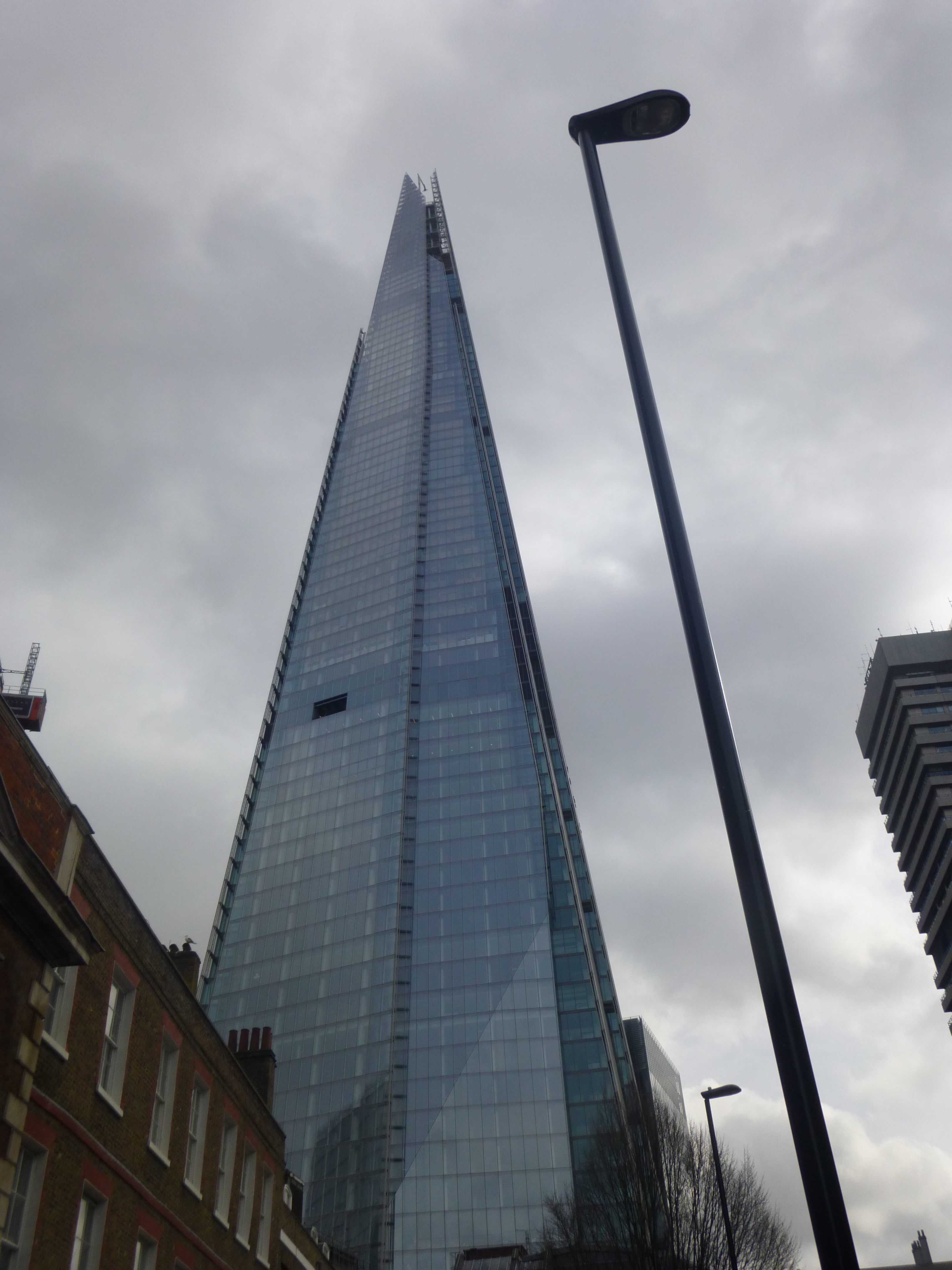
The Shard is the latest addition to the London skyline, the tallest building by far.

P1010877

You can go to the top now – 72 floors at the max. Costs you £25, which is a bit steep, but it’s worth it. The views of London are immense.

I went there with my good friends Jon, Dave and Tony on a day off on Friday, 15 March.  We watched the Cheltenham races in the afternoon, but in the morning had an excellent breakfast at Roast in Borough Market and then went on to the Shard. Built with Qatari money, meant to be part office, part hotel, and part swish apartments (suitable for the resource-rich oligarch). Still a way to go in securing the inhabitants, but the viewing facility now established.

You take two lifts to the top. The first, to floor 36, gets you there in an amazingly quick time. Someone said six floors per second. Not sure it was quite that, but it was extraordinary. How do any wires pull you up that quickly? Then it was up to floor 68. That was the first viewing gallery, indoors. And then you could walk up to floor 72, which was outdoors, but still had a glass frontage, so the only difference to 68 was the breeze. Cold in this wintry march we are experiencing.

When you get to the top – 68 or 72 doesn’t really matter – it’s one of those moments when you feel a childlike sense of awe and fun. Where’s the London Eye? Can you see the Olympic Stadium? Oh, there’s the Millennium Bridge. Is that Wembley in the cloudy distance?

All London is before you.

Here are some photos. Shot through the windows, so a bit opaque, with some reflections too. But you’ll get the sense.

P1010881

Railway leading into Waterloo Station.

P1010884

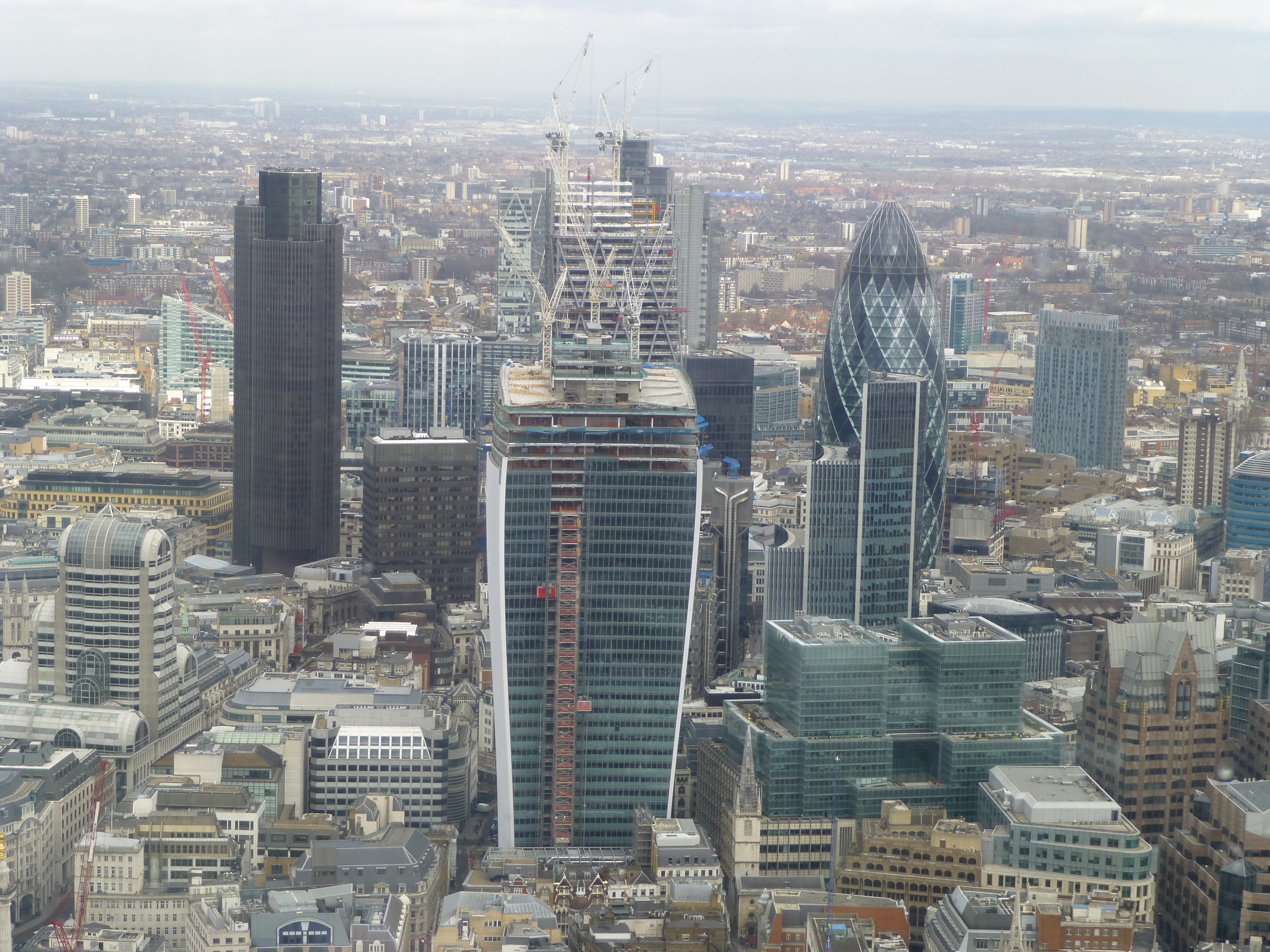
The City in yer face.

P1010886

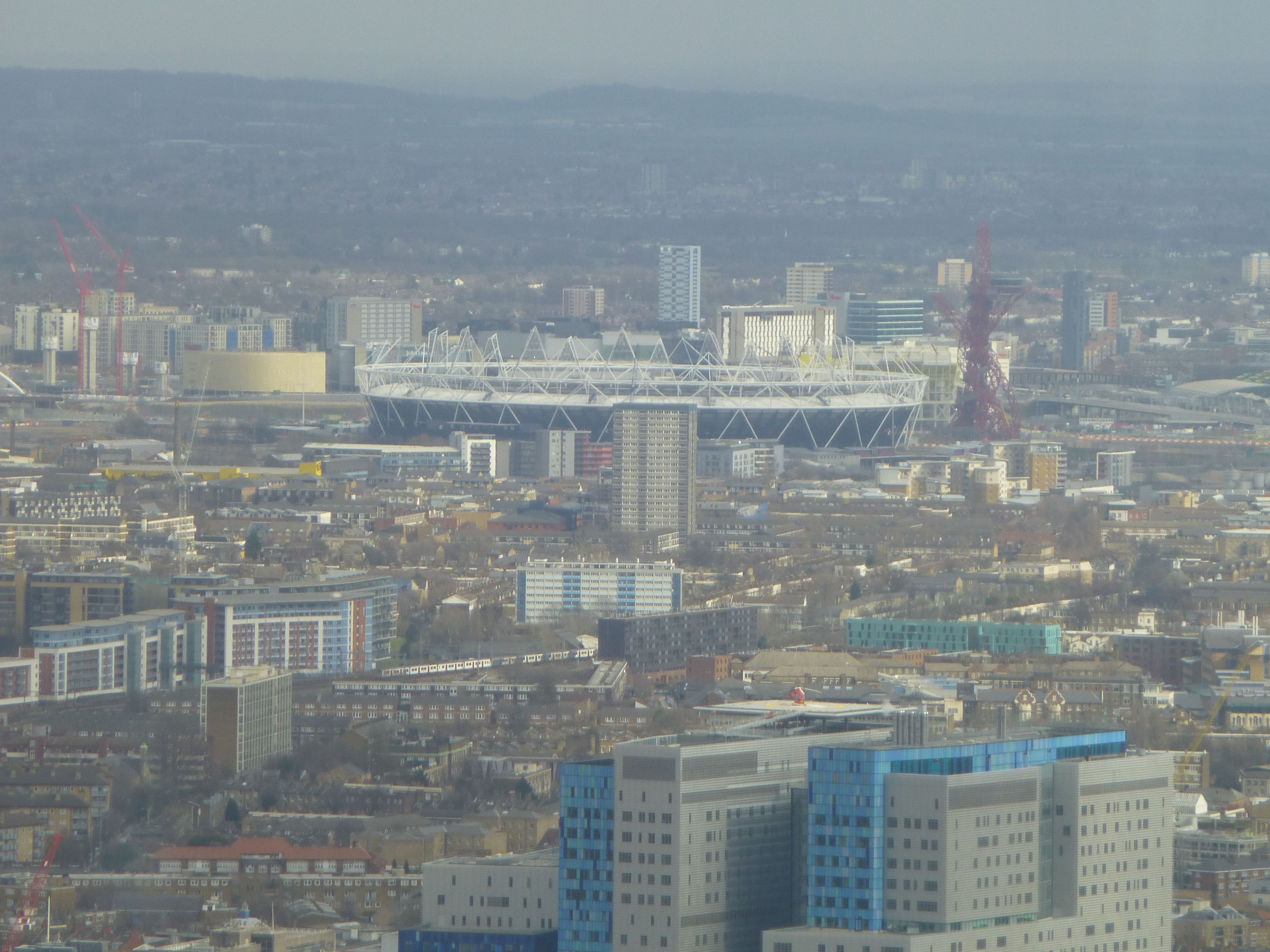
The Olympic Stadium

P1010887

Tower of London, Tower Bridge, City Hall, HMS Belfast

P1010894

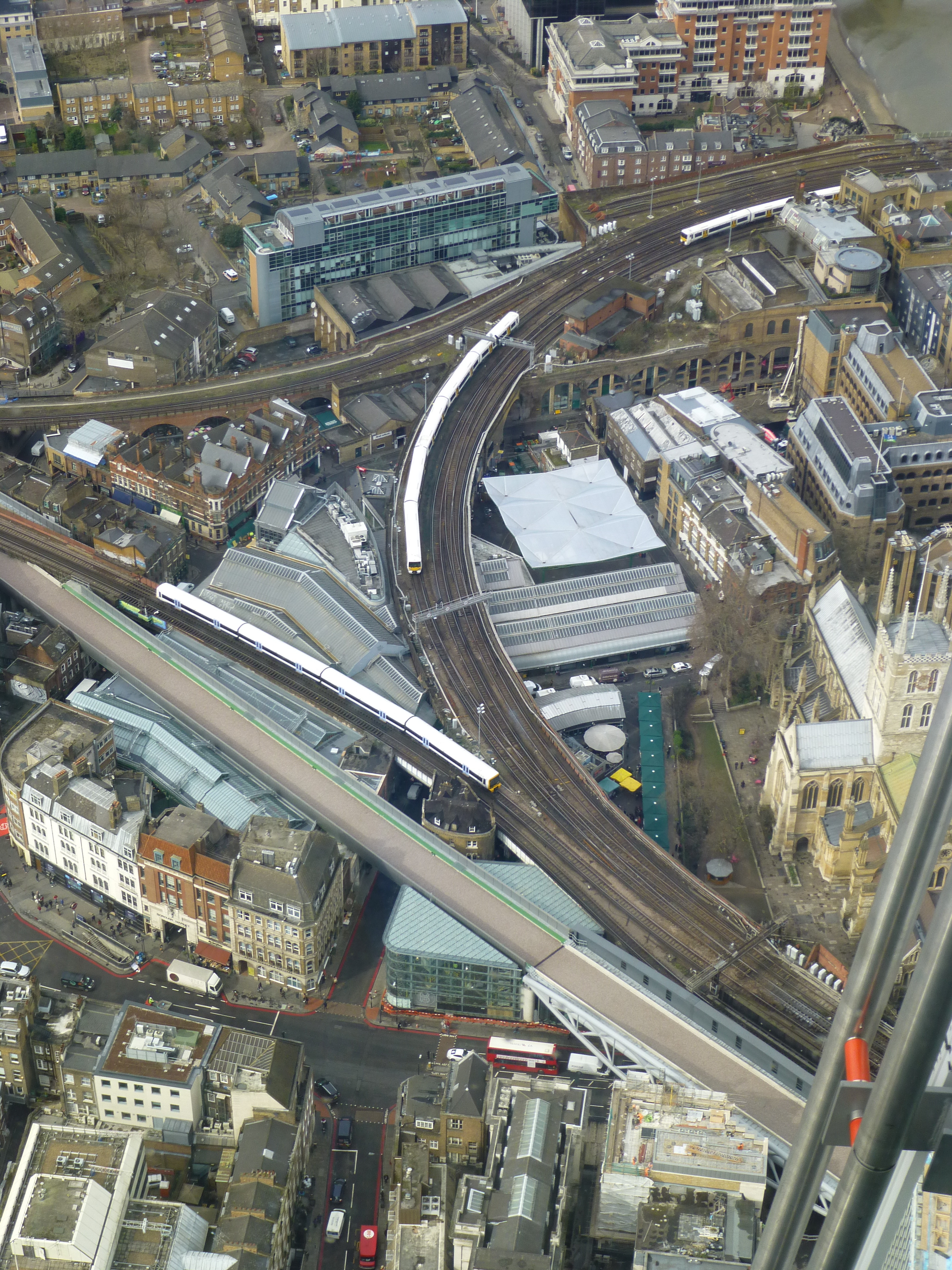
Railways over Borough Market.

P1010896

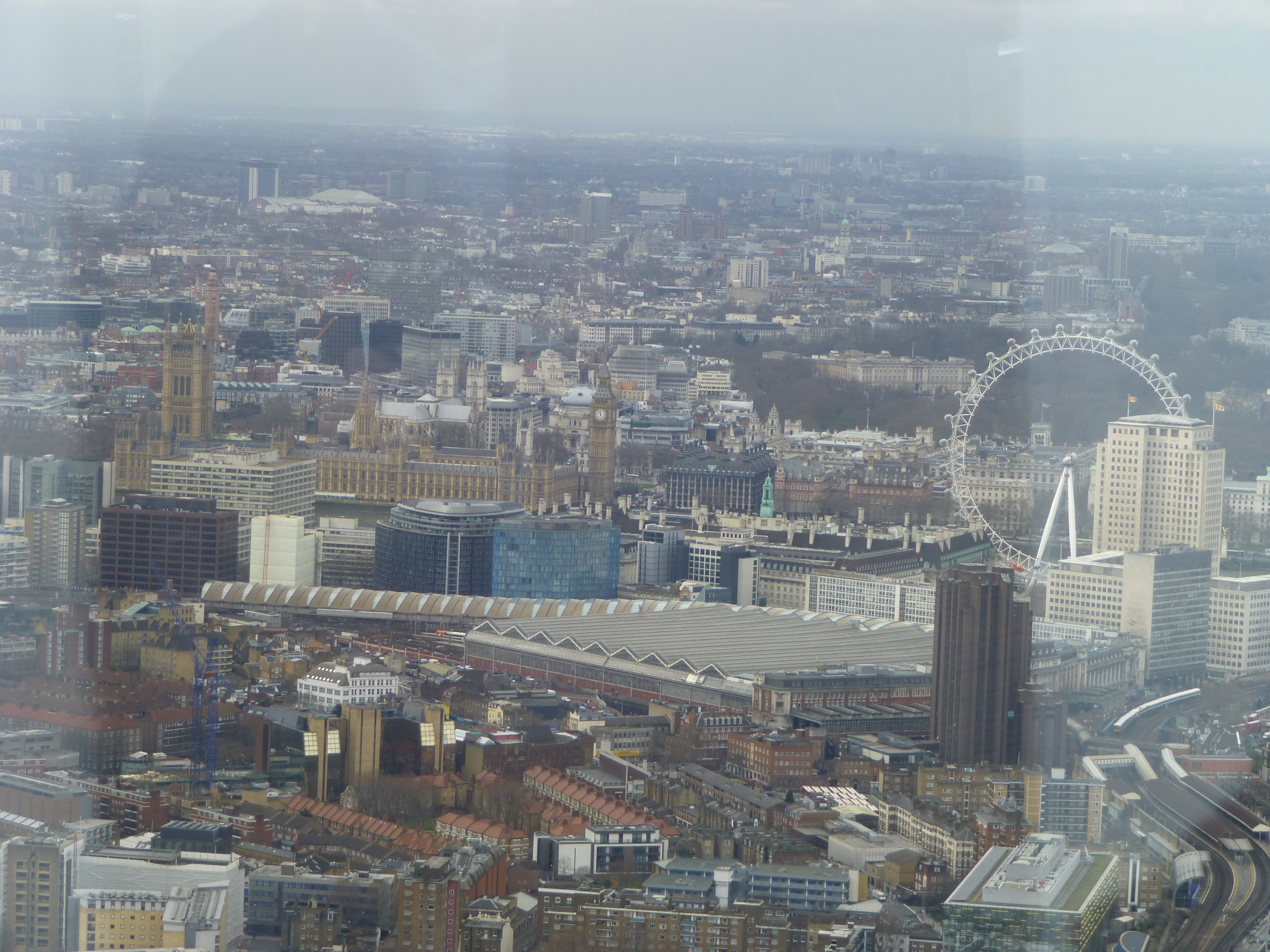
Houses of Parliament – and the Eye.

P1010898

Canary Wharf behind the winding Thames.

P1010903

St Paul’s stands supreme.

P1010904

Tate Modern and Millennium Bridge, amongst others.

P1010907

Wembley stadium in the distance.

P1010911

Battersea Power Station. Remember Pink Floyd!

P1010918

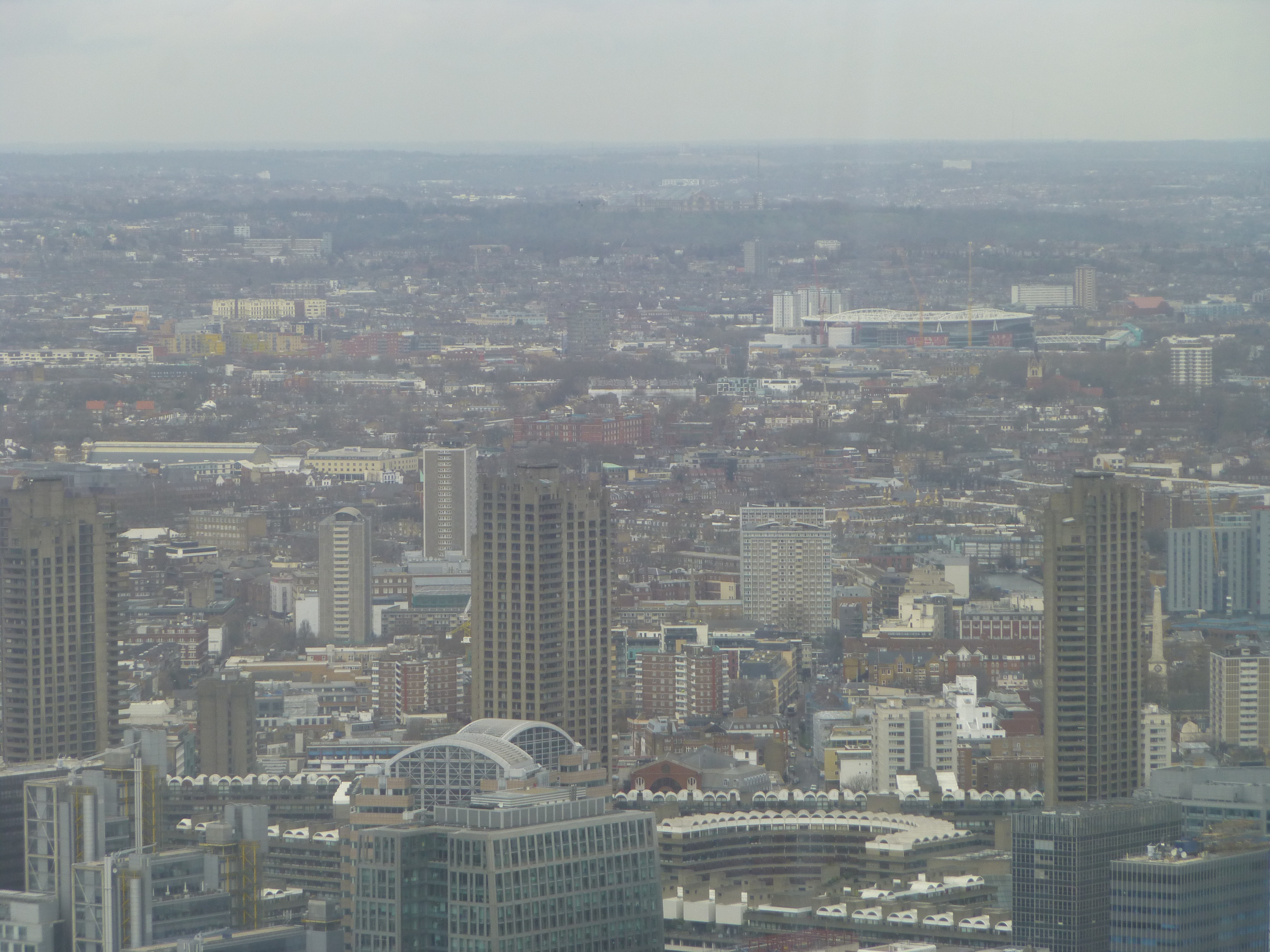
Through the Barbican towers you can see the home of great football, the Arsenal Emirates Stadium.

P1010937

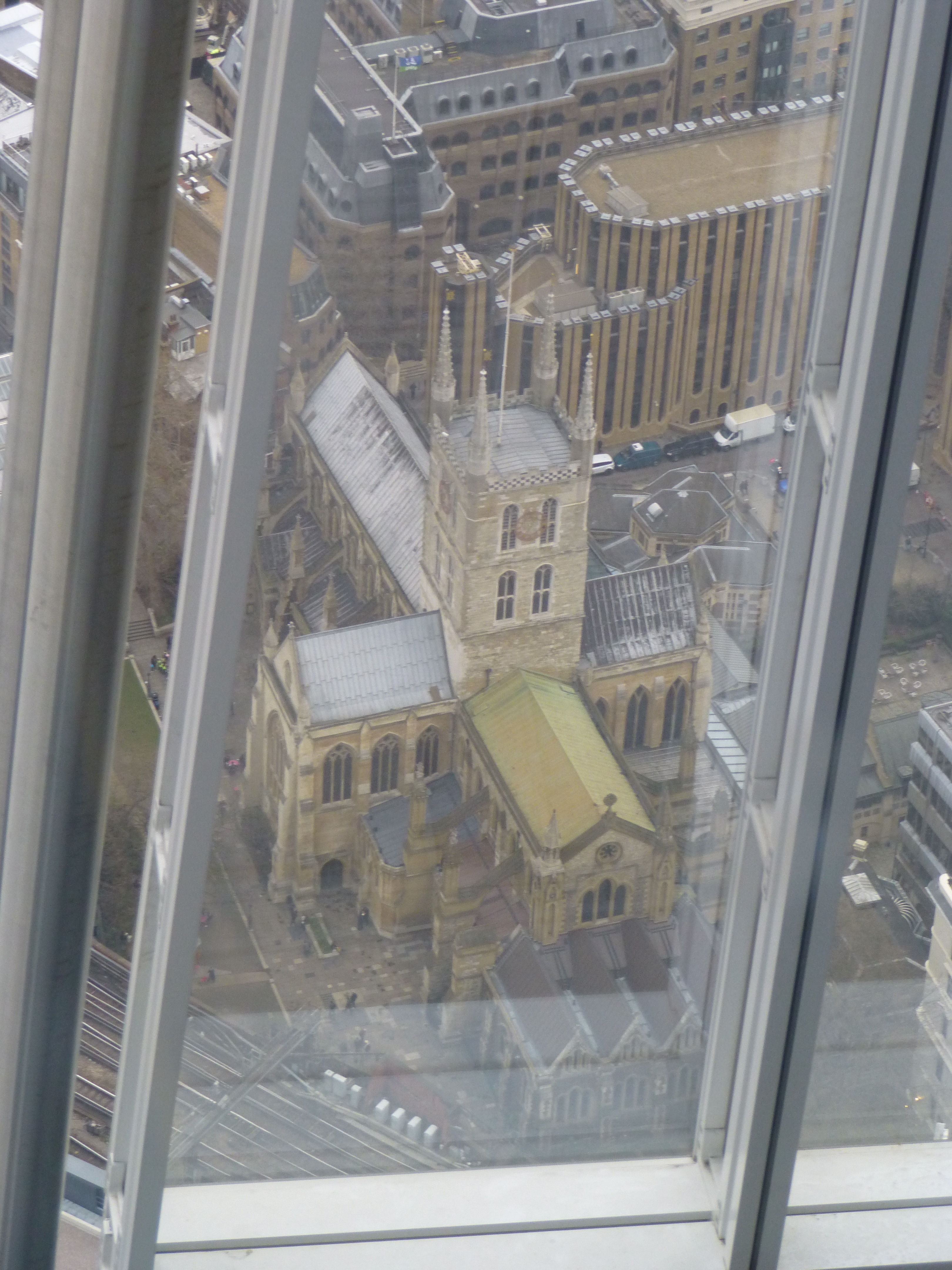
Southwark Cathedral through a window.

London. My City.

The Shard. A fantastic addition.

Posted in London, Photos | Tagged , , , | 12 Comments

Have You Heard? – (35) “Man Next Door” by Massive Attack

DownloadedFile


In 1998, Massive Attack released their third album “Mezzanine”. While I love its predecessor, “Protection”, I’m coming round to the view that “Mezzanine” is Massive Attack’s finest work. It’s a dark and foreboding album, full of sinister sounds and lyrics.  A lot of the songs start sounding beautiful and ascend (or descend?) into harsh guitar workouts. There’s more rock than any other Massive Attack album, but again, the drums and bass are resounding and heavily based in hip hop and reggae.  I’ve been listening to the album a lot in the last week or so, as I’ve been writing about the band for my musical journey book.  And, as I’ve done so, more than I ever did when the album first came out, I’m realising what a magnificent album it is. Layer upon layer of sounds reveal themselves with each listen. It’s a completely gripping album, disconcerting in its intensity, engrossing in its fusion of musical genres.

At the heart of the music is a dub-wise reggae sound, and “Man Next Door” is the best example of that. It’s not the best known track on the album by any means, but I love the echoey bass, the hip hop drum beat and the roots reggae vocals of Massive Attack stalwart, Horace Andy.

DownloadedFile

Because I’ve been listening to the album on my iPod a lot, I’ve noticed the lyrics rather more than usual. Generally I just enjoy the vibe, pick up snippets, but don’t analyse too much. The greater scrutiny may not have been such a good thing for “Man Next Door”. It sounds like a classic conscious roots reggae song. Probably about Rastafari, or a call to arms, to fight injustice, or something. Actually, it’s a bit of a moan about a noisy neighbour!  I kind of wish I hadn’t figured that. But it’s OK.  It sounds too good to think too much about the words. If you know what I mean.

If you haven’t heard “Mezzanine” give it a go, and then another go. After a while you will be hooked. Massive Attack are one of the great fusion bands: reggae, hip hop, soul, jazz, rock, electronica. They called it trip hop in the nineties. Massive Attack are that and so much more.

images

Posted in Music - Have You Heard? | Tagged , , , | 12 Comments

Sportsthoughts (67) – Wales win the Six Nations

So, when I last wrote about the Six Nations rugby, after two games, England were looking good, after victories over Scotland and Ireland. At the time, the main surprise was that France had lost their first two games, first against Italy and then at home to Wales. Wales had lost at home to Ireland in their first match before recovering against France.

It got better for England. At home to France they struggled for a while against the power of the French forwards, but after half time, and some barmy substitutions by France, which involved taking many of their best players off, England took control of the game, aided by some good substitutions of their own. Ran out 23-13 winners. Three out of three: looking good.

Last weekend, another home game, against Italy. People were taking this one for granted, and talking too much about the final game, against Wales, in Cardiff. Whether the team were distracted, who can say, but after a good start, and some fluffed chances, things went from bad to worse, and Italy dominated the second half. Fortunately the defence held out well and Toby Flood kicked the penalties. 18-11 victors.

Four out of four – we could hardly criticise, though some in the media were jumping on the performance against Italy to predict a tough time against Wales. The Welsh themselves had kept on winning and were getting all their best players back after a bad run of injuries.

So it came down to Wales v England at the Millennium Stadium yesterday. Like most England supporters I was a bit worried, but reasonably confident that England could do it. They’d shown resilience when it was necessary in previous games and Owen Farrell was back to pop over the penalties. Wales had to win by more than seven points to win the Championship; England were on for the Grand Slam.

The first half was intense. Both sides running hard at each other. The tackling ferocious. The Welsh forwards were on top at the scrum. It seemed that the Australian referee, Steve Walsh, didn’t like something about the English front row. He didn’t much like their tactics at the breakdown either. The penalty count was in favour of Wales, and the half ended 9-3 to Wales. A deserved lead, but close. England had had their chances but blown them. Wales too. One break stopped by a brilliant tap tackle by Quins’ very own Mike Brown.

And then it all went pear-shaped. For England. Wales took up where they left off. England slowly and then rapidly fell apart. I do think the refereeing decisions sowed seeds of doubt in the players’ minds about how to approach the game. And maybe they didn’t have the experience to cope with that and adjust. But I’m not going to claim it was the ref wot won it for Wales. They were superb in all areas of the game and the pressure on England eventually told. Two excellently executed tries for Alex Cuthbert did the business. And Lee Halfpenny, the Welsh full back,  was flawless in putting over the penalties.

Final score a devastating 30-3 to Wales. Can’t argue with that. They were magnificent. Worthy champions for the second year running.

I won’t deny I was fuming at the end. Partly at the way England failed to take their chances in the first half (same as against Italy). Partly at the referee, but mindful that it is always a feeble excuse to blame the ref. And mainly because WE LOST! On for the Grand Slam and comprehensively trashed.

Back to the drawing board. No panic – it was a good tournament overall for a young England side. But changes are needed in the playing style. In a nutshell, play more like Harlequins and less like Saracens. Against Wales the two certainties – dominant forwards and reliable penalty taker – evaporated. It’s not enough. The Quins attacking game – pace, offloads, a bit of risk taking, need to be incorporated in the England approach. There are plenty of Quins players ready to implement it.

Alright, I’m biased. But attack is where England haven’t got it right yet. So learn from the best. New Zealand at international level… and Wales. Quins and Wasps in the Premiership.

Other thoughts about the Six Nations. Wales on yesterday’s form are a seriously good team.  France were astonishingly awful. The wooden spoon for a team with players of France’s calibre is inexcusable. Ireland were disappointing in the end, but had horrendous luck with injuries. Lost their whole back line apart from Brian O’Driscoll. And he took some hits. A sad end to a brilliant international career, if it is the end.  Scotland upped their game and showed some attacking verve for the first time in ages. And Italy had their best ever season. Slowly but surely developing a stronger squad. If that encourages more of their young athletes to play rugby, they will be winners one day.

In the end it wasn’t one of the best Six Nations. The first round promised a lot, with loads of tries and exciting play. But the weather did play a big part thereafter. It was mostly awful and made all the teams resort to the kicking, safety-first game.  The stakes are high, so it’s no surprise. Occasionally people suggest that the Six Nations should move to the end of the season, when the weather is better, the pitches harder and truer. But it would be such a move against tradition. The Six Nations is our sporting winter warmer. The best thing about the early months of the year. A time of renewed rivalries and camaraderie. The best of the rugby spirit.

Gutted that England blew it, but enjoyed the contest, as ever.

And here are my predictions versus outcomes. 100%…. wrong!

1. England. 2nd.

2. France. 6th. LAST!

3. Ireland. 5th.

4. Wales. 1st. WINNERS!

5. Scotland. 3rd.

6. Italy. 4th.

Better luck next time? Doubt it!

Posted in Sportsthoughts | Tagged , , , , | Leave a comment

My Top Ten – “Duende”… Sad Songs

Back in 2008 – it doesn’t seem that long ago – the music journalist Laura Barton wrote a wonderful piece in her Guardian column, “Hail, Hail Rock’n’Roll” about what she called Duende, or what the singer Nick Cave described as “the eerie and inexplicable sadness that lives at the heart of certain works of art”.

The description struck a chord with me. While the column went on to describe the blackness of spirit that often lies at the heart of music that could be called Duende, I thought of it more widely, as that ineffable melancholy in so much of the music I love most. A melancholy that might be a darkness of the spirit, or a lost love, or just a sense of melancholy. An E minor rather than an E major. And often a sadness which is so beautifully expressed that it becomes uplifting.

Yes, it’s the music you might listen to most late at night after a few drinks. The music that might just squeeze out a tear. Music that might hold a memory, or might just be the sounds that touch the very strings of your bow.

In the ten that follow, the most common musical genre is country. Even though that’s way off being the music I listen to most. It’s not even necessarily the most soulful music in my book. But the melancholy that runs through so much of it perhaps makes it the most likely source of that duende. 

Maybe I’m just talking about sentimentality really. But the ten that follow are all songs that truly move me, and uplift me just as I empathise with the sadness that lies within them.

There’s no Dylan or Springsteen here. I could fill a whole sad ten with either. So I decided to leave them out on this occasion and focus on some songs that might not be as well known, but mean just as much.

Pour yourself a whisky and wallow!

10. Roll On Arte – The Felice Brothers

DownloadedFile

It’s the voice as well as the tune that does it for me in this song. A ragged, vulnerable voice – that of Ian Felice – that feels like a man who no longer knows where to turn. But who feels there is hope somewhere.

9. Talking In Your Sleep  – Grand Drive

DownloadedFile

I had to have a Grand Drive song. Danny Wilson sings with such tenderness and hurt. “Talking In Your Sleep” is off their last album, “Everyone”. This was one of those songs that, when it came out, I just played constantly on repeat on my iPod. Simple, but so very touching.

8. Give Up The Ghost – Radiohead

DownloadedFile

This is Thom Yorke at his most frail and eerie, off the most recent album, “King Of Limbs”. I could just as easily have included “Codex” off the same album.

7. Please Be With Me  – Eric Clapton

DownloadedFile

This song is off the 1974 album, “461 Ocean Boulevard”. It was a time when Eric Clapton was recovering from drug addiction and most likely lost love as well. And finding new love. It’s a plaintive cry for help. Just beautiful.

6. Through The Morning, Through The Night  – Alison Krauss and Robert Plant

DownloadedFile

This is from the 2007 collaboration “Raising Sand”, which was a big success. Robert Plant’s participation got the notices, but Alison Krauss led the songs, as she does on this one. A perfect example of country sadness:  but to know that another man’s holding you tight…

5. The Whiskey Makes You Sweeter – Laura Cantrell

DownloadedFile

Laura Cantrell was one of the late John Peel’s favourites. Absolutely one to cry into your beer with. The title says it all. Laura has the loveliest voice to make it a spiritual experience.  Especially if the whiskey is making it sweeter…

4. Fade Into You – Mazzy Star

DownloadedFile

Mazzy Star are a nineties indie band fronted by the beautiful Hope Sandoval. The songs are slow and fuzzy. “Fade Into You” is, I think about a love that never happens, about someone who is lost. Hope’s voice is dreamy, other-wordly, full of a beautiful melancholy.

3. In Your Back –  Keren Ann

images

Keren Ann is Israeli-Dutch-Indonesian and has based herself in Paris and New York. Her music has a strong French element and you could imagine ‘In Your back” being sung in a smoky Parisian cafe. It’s a bitter post-love story, but her voice and the music is so dreamy that it becomes a love song. For a while a few years ago, I just couldn’t get this song out of my head.  I still love it.

2. Pause – Emily Barker and the Red Clay Halo

DownloadedFile

Anyone who reads my blogs will know how much I like Emily Barker’s music. This is my favourite song. It’s great on record and even better live. A simple strummed electric guitar, Emily’s singing so plaintive, the harmonies so uplifting. Atmospheric.

1. Ventura  – Lucinda Williams

images

I think this might be the saddest song I have ever heard. Lucinda is so down about her lost love, that it hurts even to listen. She sounds woozy and so lost.  But there is salvation – watching the ocean waves, maybe Ventura

If this isn’t Duende, I don’t know what is.

Posted in Music - Top Tens | Tagged , , , , , , , , , , , , | 11 Comments