lovelondonscenes – 94

No sooner do I capture one St Luke’s church in Chelsea, that I come across another. In the borough if not the heart of it. This one’s in Earl’s Court, heading towards the river. It’s the site of a primary school too.

IMG_2394_2

And, knowing how much my good friend DC misses the bluebells, here’s something for him along similar lines. Taken as I walked down to the river. I’ve given it a little tint.

IMG_2395_2

Posted in Photos - lovelondonscenes | Tagged , , , , | 2 Comments

lovelondonscenes – 93

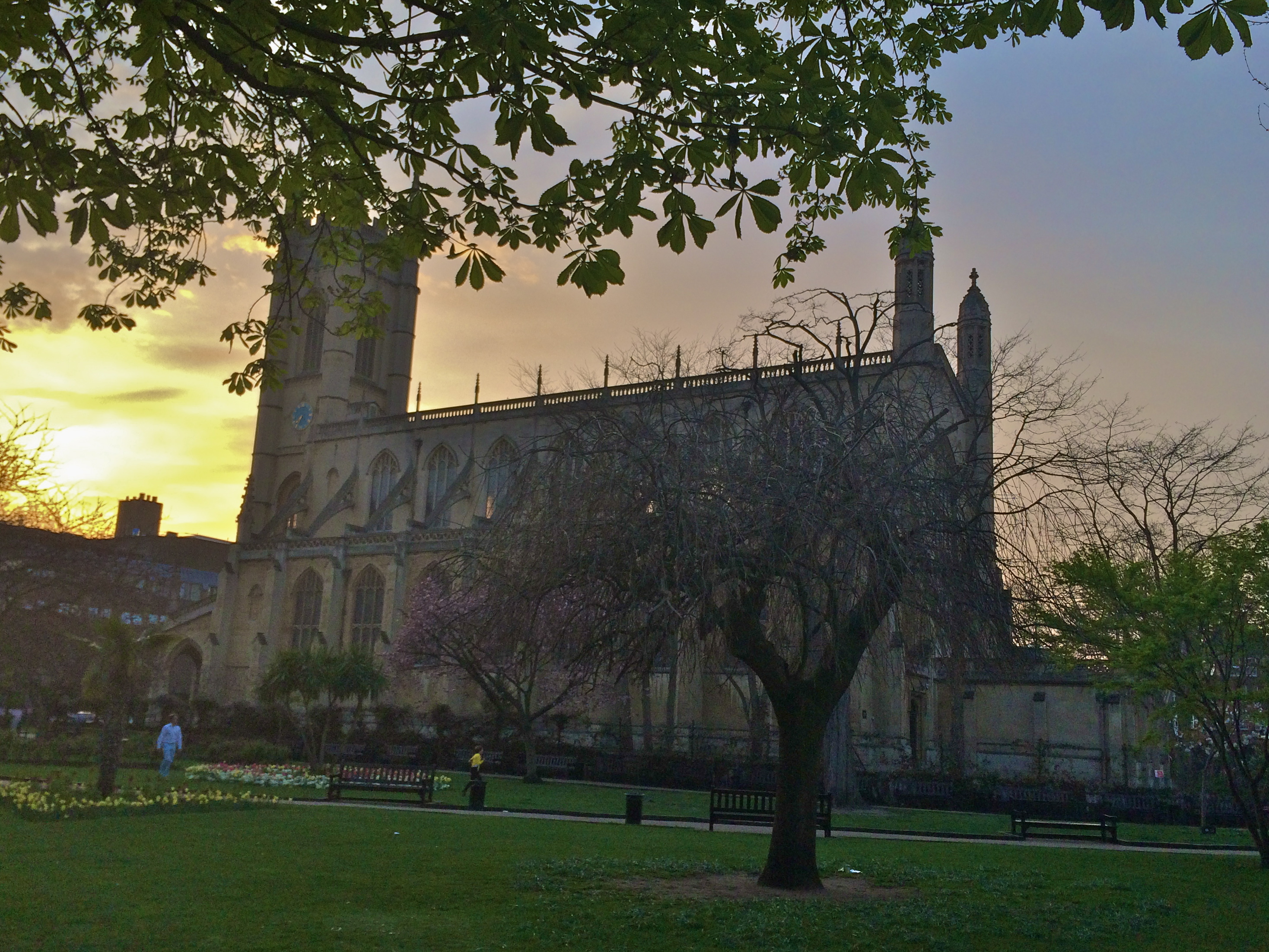
The last couple of Friday evenings, after finishing work, I’ve walked to South Kensington tube from my place of work on Millbank, by the Thames. It takes about 45 minutes, winding through Pimlico, the bottom end of Belgravia, Sloane Square, the Kings Road, deepest Chelsea and then South Ken. Posh London, you could say. It’s a lovely walk, and one of the highlights is St Luke’s church, hidden in the middle of Chelsea’s opulent housing. Until I started doing this walk a couple of years ago I had no idea that the church existed.

Not exactly hidden London, but undiscovered on my part. It has some attractive gardens on one side and a load of five-a-side football pitches on the other. The church was designed by James Savage in 1819 and was part of a Gothic revival architecturally. It was built as Chelsea expanded from a village on the fringes of London to an integral part of the city. Charles Dickens married Catherine Hogarth there in 1836.

IMG_2361_2

Posted in Photos - lovelondonscenes | Tagged , , , , | 8 Comments

Robin Trower at the O2 Shepherd’s Bush Empire, 11 April 2015

IMG_2382_2

After the brilliant Courtney Barnett on Thursday, a journey back in time…

One of the first concerts I ever went to, in 1975, was a Robin Trower gig at Hammersmith Odeon. We came down to London, from Oakham, in the East Midlands, on a school trip. I think we were meant to be doing something cultural in the afternoon, but went to see “The Exorcist” in Leicester Square and then headed off to Hammersmith for the mighty Trower. A big adventure for a few provincial 16 year olds!

Trower was amazing that night. At the time he was one of my favourite artists. His Hendrix-like guitar, married to the soulful vibes of bassist James Dewar’s singing, was perfect for my rock-loving, but sentimental self. He was up there with Bad Company, Free and Led Zep. The very best, until Dr Feelgood and then the punks came along and blew everything away. I never stopped liking Robin Trower though; his guitar-playing was an amazing thing: so expressive, so atmospheric; sometimes wild, sometimes incredibly tender. The spirit of Hendrix was undoubtedly there; and of course, as a youth, I thought he was better than Hendrix! Later I learned that no-one, before or since, has been better than Jimi Hendrix on the electric guitar.

And so, 40 years on – oh my God, forty years! – Dave (DC to blog comment viewers), Tony and I set out to Shepherd’s Bush Empire to see if the dream lived on. In the seats, so we could take in the spectacle in comfort, with beer in hand. Surrounded by lots of other people from our generation and older. Returning to remember…

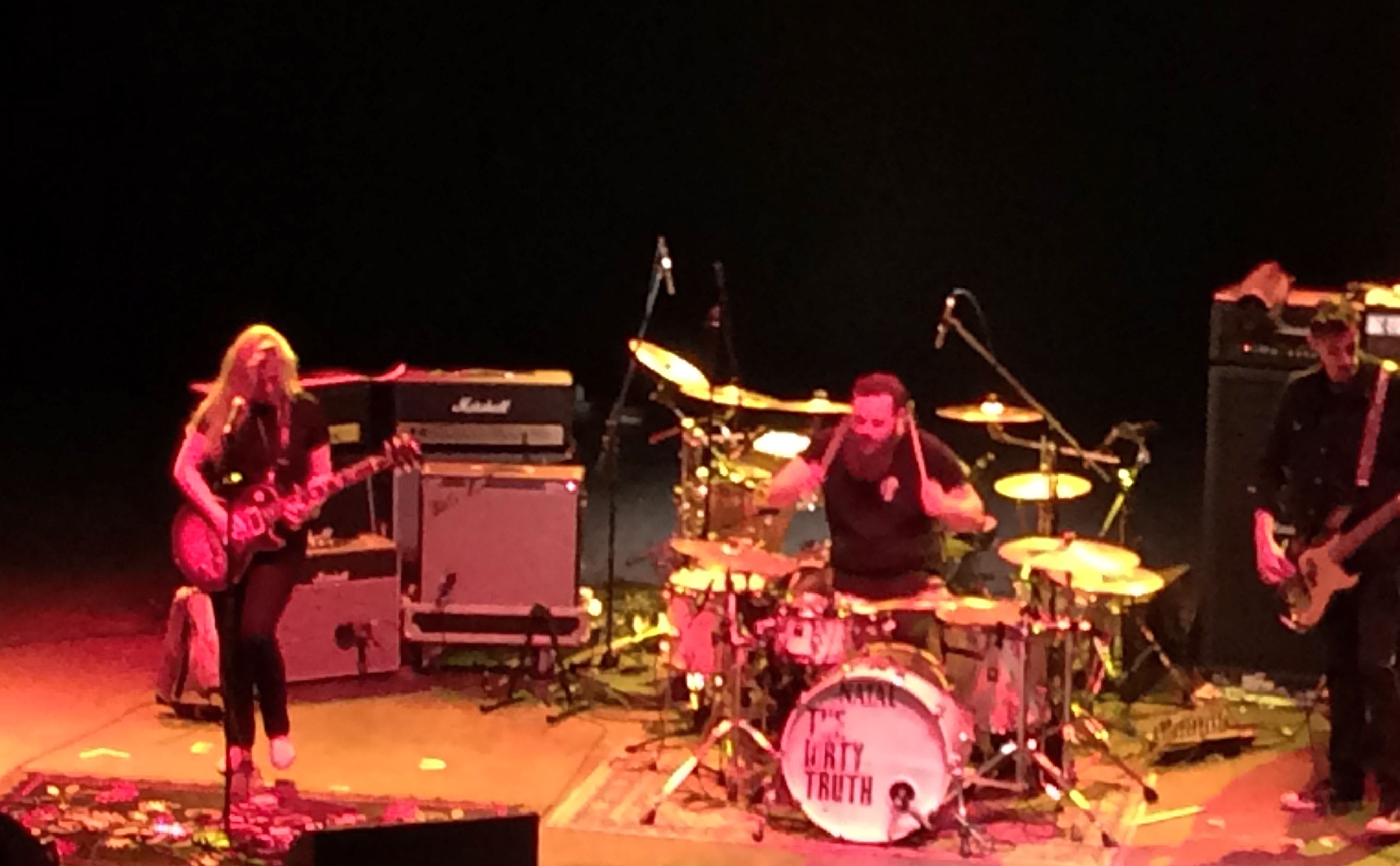
Supporting Robin was Joanne Shaw-Taylor. We caught the last two songs of her set – and immediately wished we’d seen more. She played the rocking blues, accompanied by drums and bass. And she was superb! A raspingly soulful voice, which sounded quite like Joss Stone, and great guitar. Classic Les Paul rocking solos. Really impressive. Set us up nicely for Robin Trower and his band.

IMG_2374_2

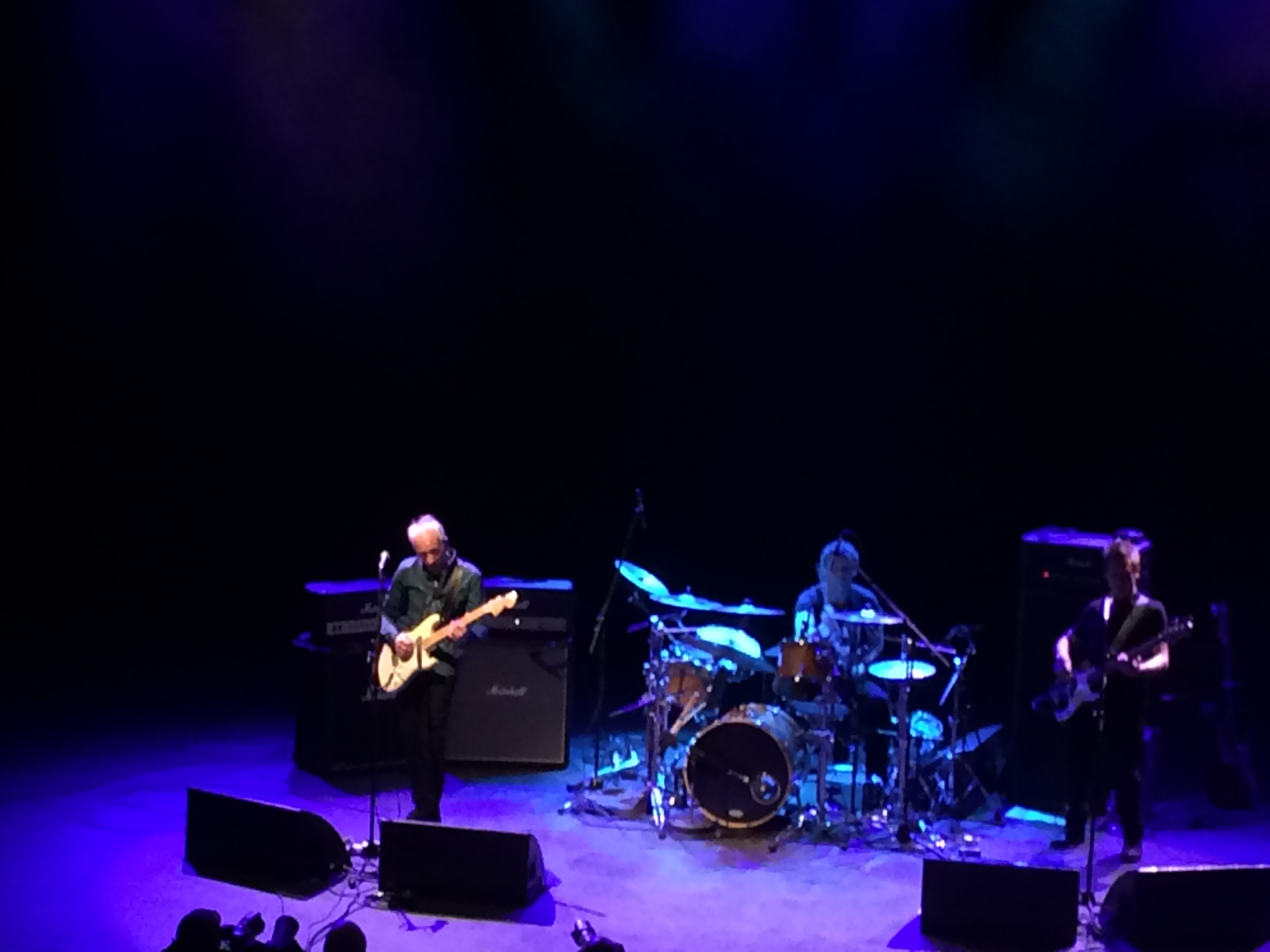
Robin Trower is 70 now. He’s backed by two young guys, Christopher Taggart on drums and Richard Watts on bass and vocals. It could be James Dewar! If you saw Robin in the street you wouldn’t know he was one of the great rock guitarists. He was always quite unassuming, preferring to let his guitar do the talking. And man, did it still talk!

I was just bowled over really. He obviously didn’t leap about, but when he got that white Fender Stratocaster going, I was was transported back in time. It wasn’t just the memories of youth: it was the awesome power and grace of his playing. As good as I ever remembered it. I knew most of the songs; but really, it wouldn’t have mattered if I didn’t. It was that playing, those sounds. As magisterial as a guitar can be. Those echoes of Hendrix as clear and true as ever, especially in the faster numbers.

IMG_2385

Inevitably, the highlights for me came in some of the slower pieces, when Trower let his guitar sing. The loveliness of “Daydream” from his first album; a wonderful “For Earth Below”, which ended the performance; but best of all, “Bridge of Sighs”. It sprung slowly from the preceding “Day Of The Eagle”: those swirling patterns as evocative as they were to me as a misty-eyed sixteen year old. Played with such grace and ease, but also passion. You could see it in his eyes, the facial expressions. Still lost in the sound.

It was an inspiration. Still going at 70, still plucking those impossible sounds from the Fender Strat. The same guitar all evening (unlike so many, these days); no endless tunings in between songs. Just a man and his guitar and a few pedals. A master.

IMG_2389_2

Posted in Music - concerts, lists, reflections | Tagged , , , | 3 Comments

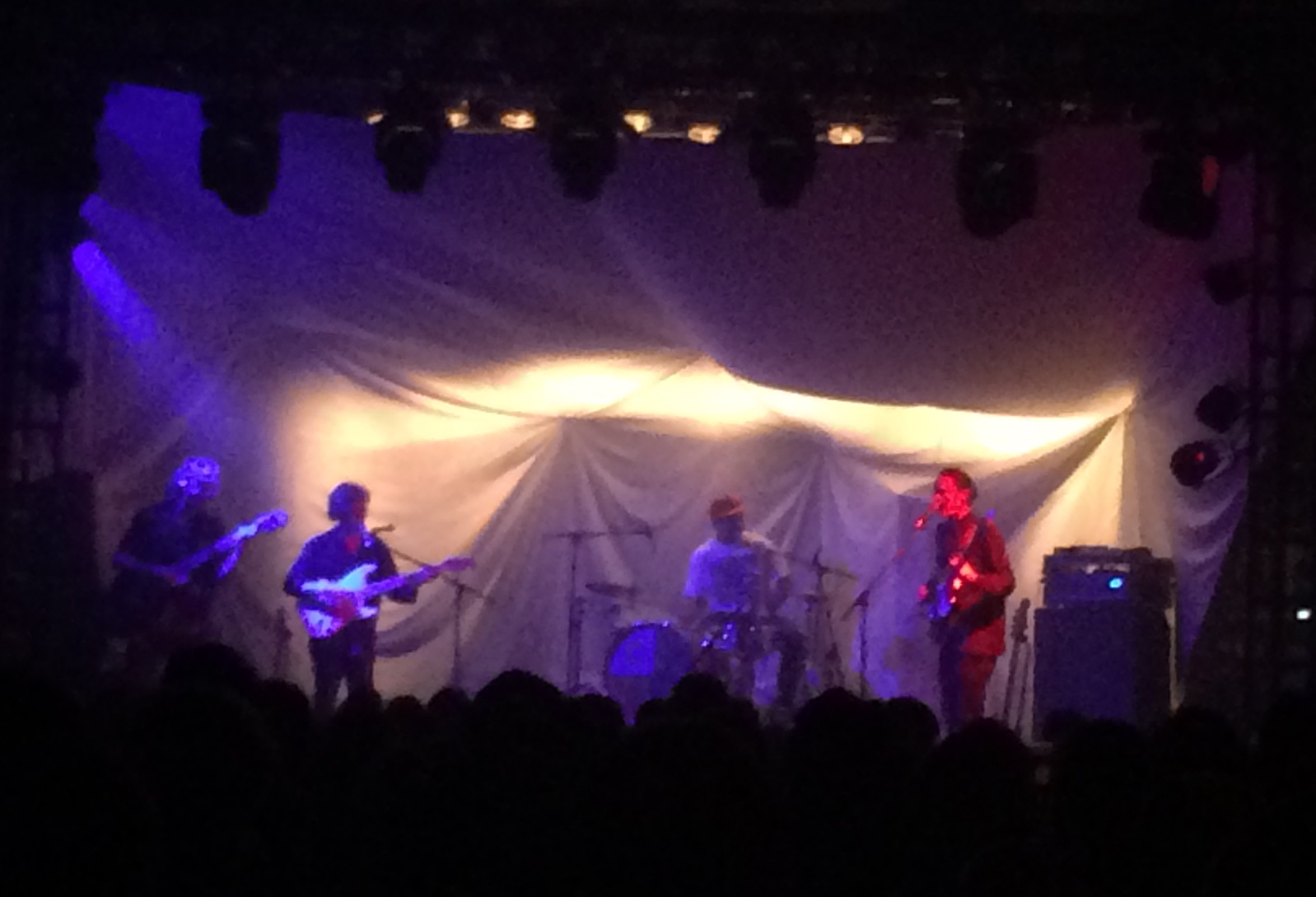
Courtney Barnett at the Electric Ballroom, Camden, 9 April 2015

IMG_2346_3

Courtney Barnett is an Australian rock’n’roller who has just released her first full album, “Sometimes I Sit And Think, Sometimes I Just Sit”, although she merged two EPs a while back for an album called “The Double EP: A Sea Of Split Peas”. That was a great collection: some excellent songs like “History Eraser”, “Avant Gardener” and my favourite, “Canned Tomatoes (Whole)”, which has brilliant rumbling bass line. She has a distinctive musical style: the music itself is stripped-down rock/punk/blues rhythms over which she extemporises about daily life, everyday traumas. It’s pretty personal at times: “Avant Gardener’ is well known for its candid description of an asthma and panic attack. The delivery is quite deadpan and the Aussie accent shines through. It’s a really intriguing mix.

She’s been building up a strong live following and the new album, in indie circles, was much-anticipated. It’s not disappointing. I haven’t listened to it enough yet to become really familiar, but there are some striking tunes, not least the single, “Pedestrian At Best”, which has had a lot of airplay from BBC 6 Music. Her latest tour was sold out – I just managed to get some tickets for the show at Camden’s Electric Ballroom before they ran out. And I’m sure glad I did!

There were two support bands. The first, Fraser A Gorman, we missed – we didn’t manage to extricate ourselves from the Sushi Salsa restaurant in time (it’s so rock’n’roll). But I really wanted to get there for Spring King, as I’d loved their track, “Better Man”, which I heard on the 6 Music Recommends Playlister on Spotify. ( I strongly recommend this as a great way of catching up with some of the best sounds of the moment). It was punk with a melodic streak; and the half hour show bore that out. A lively, tightly played sound. Unusually, the drummer taking lead vocals, which must be difficult when you are playing full-on rock’n’roll. Easy to make comparisons with the likes of The Vaccines and Palma Violets, and so, almost by definition, The Strokes and The Ramones. But these are good comparisons! It was an impressive cameo, and I shall definitely be checking out more of their music.

IMG_2337_2

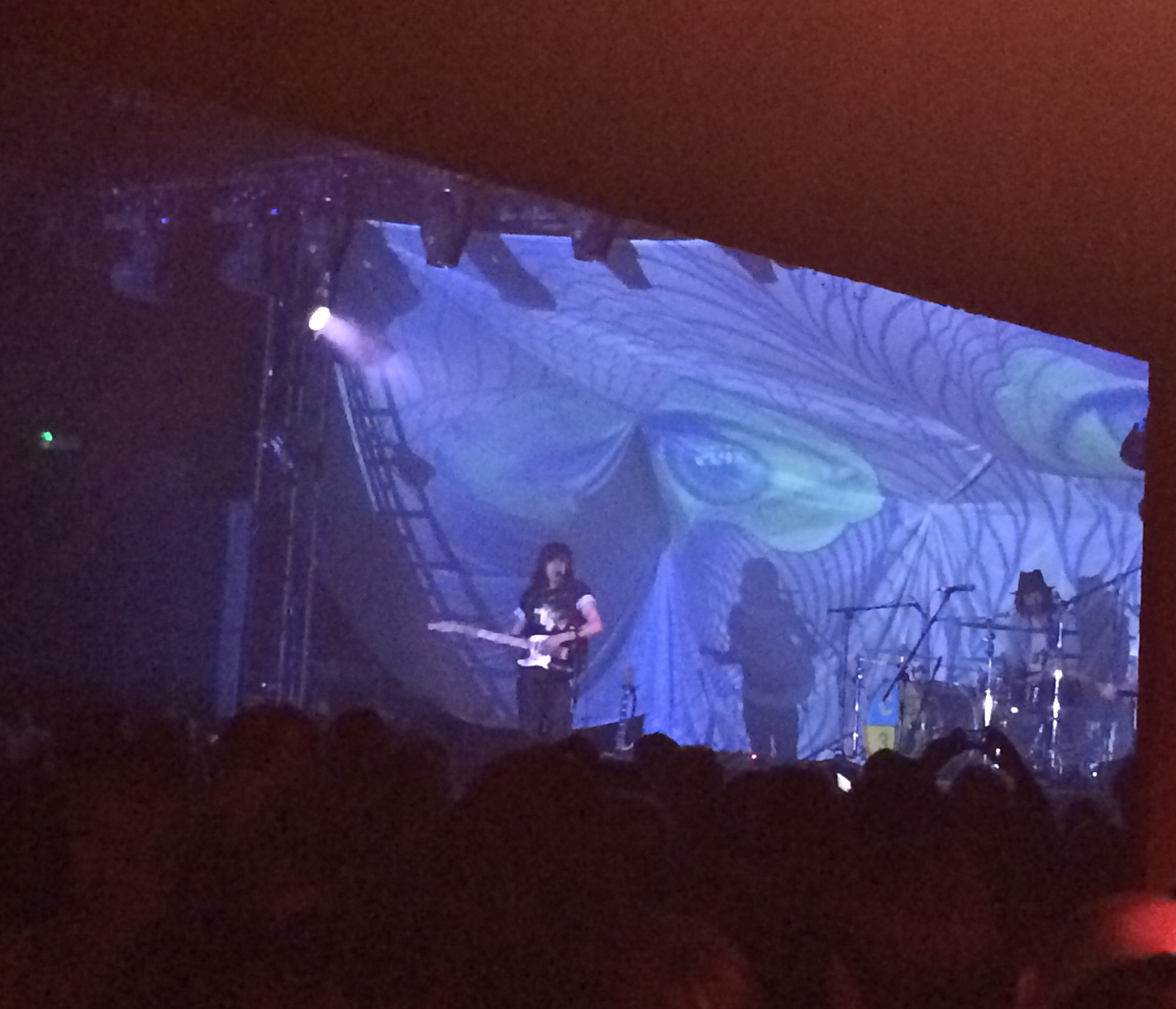
Courtney came on and gave us an hour and a half of hard rocking. The sparseness of the recorded songs give her plenty of room to improvise and rock out live, and this she most certainly did! She was accompanied by a bassist and drummer, Bones Sloane and Dave Mudie – a classic three piece. (On the new record there is another guitarist, Dan Luscombe). The music could have been from any time since the early seventies; but I kept on thinking of Nirvana, and grunge in general. In the noise of the live concert, you lost the subtlety and quirkiness of the lyrics, but you got some hard-driving rhythms and spiky guitar instead. Played with confidence and style. There is something about Courtney Barnett that makes me think she could become quite a big star – and that she might appeal to the Americans too. And if she manages that then she is laughing.

Highlights? A bit hard to say, because I’m still familiarising myself with most of the music, apart from those tunes I mentioned earlier. So “History Eraser” got an early airing; and “Avant Gardener” and “Pedestrian At Best” made for a magnificent climax to the show. Sadly “Canned Tomatoes” didn’t make the cut, but you can’t have everything!

IMG_2352

So if you like good rock’n’roll that both draws on past heroes and has a contemporary touch, buy the album(s) and try and catch Courtney Barnett live. Before she ends up just doing festivals and stadiums!

IMG_2338

Posted in Music - concerts, lists, reflections | Tagged , , , | 3 Comments

lovelondonscenes (92)

A couple of shots, turned into black and white, from Boston Manor Park, near Ealing. It’s a lovely park, but has the M4 cutting through it.

On its edges, down by the Grand Union canal, is the GlaxoSmithKline building.

IMG_2330_2

And then that M4. Well, it has to go somewhere.Has a certain impressiveness.

IMG_2332_2

Posted in Photos - lovelondonscenes | Tagged , , , , , | 2 Comments

Sportsthoughts (130) – Waiting for the Chelsea implosion

So the battle for the Premier League is shaking out the contenders. Spurs and Liverpool are falling short. No great surprise with Spurs; maybe a bit more with Liverpool, who’d started to look like they were getting it together. Biggest surprise of all is the slow deflation of Man City. A couple of losses have turned into a trend, and their superstars are looking jaded, uninterested. A defeat last night to feisty Crystal Palace said everything. The sort of game no serious contender for the title is going to lose.

Two sides, other than leaders Chelsea, are looking good. Man United have battled their way through the season, through a barrage of criticism about Louis van Gaal’s tactics, the quality of the players, and so on. Par for the course for United if they aren’t top of the tree. But they hung on in the top four and are looking pretty strong now. Rooney is playing well, the re-introduction of Mata has added some quality to the attacking, and this has been possible because Michael Carrick is back, holding together the defensive end of midfield. Commentators and fans are rarely sympathetic to teams when there are injuries; but they can have a major impact on the way teams are able to play. And that is exactly what has happened with Arsenal too. They are back to pretty much full strength, Spring is in the air, and they are playing football to dream about. The midfield maestros – Ozil, Cazorla, Sanchez, Ramsey – completely took Liverpool apart on Saturday at the Emirates. 4-1 and could have been more. Revenge for the traumatic collapse at Anfield the previous season. Giroud is strutting around like a French cockerel and the defence is more solid, helped by the emergence of Coquelin as an outstanding defensive midfielder. But it is so infuriating! WHY DIDN’T THEY DO IT EARLIER? Well, maybe it was the injuries. There were loads. It makes a difference.

The remaining doubt about Arsenal – OK, there are quite a few – is whether they can do it when there is a real chance of winning the League. Now there isn’t much hope they are turning it on. The pressure is off. It was the same in the Champions’ League. Total screw up in first leg against Monaco; brilliant in the second. What might have been…

And what might be. What if Chelsea implode? Like Man City have.

It’s unlikely. They are seven points clear, with a game in hand. They are not playing at their best, but they are still winning. There is depth and quality in the squad – and Jose Mourinho is the manager. He won’t take risks. He’ll grind out the edgy results. Until they are over the finishing line. The only hope for the chasers is that there are games for Chelsea coming up against Man Utd and Arsenal. If both those teams beat them – and on current form it is possible – then it will become even more a question of nerve. I’m clutching at straws, because, of course, I’d love to see Arsenal snatch it. But I wouldn’t put money on anyone but Chelsea right now.

And credit to Chelsea – and Mourinho. They have been impressive this season. And good to watch. Hazard, Fabregas, Costa, Oscar embellish any game. And there is a strong supporting cast. Worthy winners.

But come on the Ars-en-al!

PS. Sadly, after a brief moment of hope about bigger things just before Christmas, West Ham went into reverse and are now settling for relegation-free mid-table mediocrity. Entirely predictable. Grateful we aren’t in the relegation dogfight I guess.

Posted in Sportsthoughts | Tagged , , , , , | 8 Comments

A Song For Easter

Easter Sunday. In the Christian calendar, the day of hope, rebirth, resurrection. Even if you don’t subscribe to the story, this time of year, in our northern location, is a time of renewal. The four day break, the school holidays, give us a pause for breath after the rigours of winter and a chance to regroup before the challenges ahead – big ones for young people especially, as the exam season looms.

After going to church this morning, we headed up to the centre of Ealing for a family lunch. Walpole Park was vibrant. Kids playing on the climbing frames, birds whistling in the trees and the buds of spring beginning to break through on the trees. Cherry blossom, a few daffodils poking through (or hanging on – have they been and gone?). The sun bursting through the clouds – just a hint that it might soon get warmer. All around, signs of life, renewal.

Later I was walking through Boston Manor Park, after an unsuccessful visit to a computer store on the A4 – it was shut! – and I reflected further on the theme of renewal. Inevitably I asked myself what song best reflected this sense of rebirth, of hope.

I felt like it was going to be something by Bruce Springsteen. Songs about redemption, rising above adversity, are his staples after all. And yes, the song I chose was “The Rising”, from the album of the same name. That album was widely seen as Bruce’s response to the 9/11 tragedy. His summary of America’s mood. There was little explicitly referring to the attack; it was more about the aftermath, the effect on people’s lives. The loneliness, emptiness, anger. And the regrouping, the hope. “The Rising” came late in the album and felt like that moment of resurrection, even though the lyrics are still dark.

It’s an uplifting song, especially if you have been listening to the album all the way through. Just as with Jesus’s story, hope emerges from the darkest of times.

The clocks went forward last weekend; the days grow longer. Nature emerges from its winter retreat. Easter gives us perspective and energy. Bruce, as ever, gives us inspiration.

Posted in Music - concerts, lists, reflections, Random stuff | Tagged , , , | 2 Comments

Peter Ackroyd’s History of England

foundation-978033054428301tudors-978144723681801

I’ve recently finished reading the first two volumes of Peter Ackroyd’s history of England. Ackroyd, if you don’t know him, is an acclaimed novelist as well as a respected historian and biographer. His best known novel is probably “Hawksmoor”; his “London: The Biography” is probably the definitive account of the history of our great city. So when I saw the first two volumes of his planned six volume history on offer in Waterstones just before Christmas, I leapt at the chance to read them.

I’m reasonably familiar with the history of my country. I know some bits better than others – much still depends on what I learned at school; on top of that there are random chunks of history that I’ve read up on from time to time. Shakespeare, too, provides insight; although you cannot rely on him for the historical truth, always.

Come what may, though, it’s always worth revisiting history. It teaches you so much about the present as well as the past. Because yes, history does repeat itself and society is pretty useless at learning from it. The same mistakes are made again and again. It’s fascinating to read a narrative and see this so clearly.

England’s government too centralised? Most things made up as we go along? Drinking culture? Don’t get on with the French, although we are intimately connected? Unreliable allies? Not really that religious? Good at finance and commerce and therefore open to new people, foreign trade? Hard to invade because we are on an island, but prone to a spat with the Scots, who often lean to the French? Generally a bit arsey and anti-authority? But also, especially in the countryside, imbued with a deep sense of tradition, quite conservative really? Yes, yes, yes. It’s been like that since Saxon times, if not before.

And this is what comes through so strongly in Ackroyd’s histories, especially the first volume, which takes us from neolithic times, through to the first Tudor king, Henry VII. It’s a violent, brutal story, because it is, of course, focused on those at the top. The warriors, the governors, the religious leaders. Constantly at war, or on the verge of war, with each other. The struggle for power – and riches – is never-ending. Sadly, we know that hasn’t really changed. To an extent, in the modern West and other democracies, we’ve found ways of containing all that negative energy. But we see elsewhere, and in our own recent, twentieth century history, that man’s brutality to man continues.

Peter Ackroyd’s writing and insight really brings the history alive. We get the high level events; but also what was happening at ground level, in ordinary lives. In the first volume, the strongest theme is of continuity. Adaptation, yes, but from a solid base. Many of the field patterns, roads, religious sites, were established by ancient tribes, before the Romans arrived. They built on them; the Saxons arrived from Germany and Denmark first as mercenaries. They settled, integrated. Later more waves invaded; Vikings from further North too. But all in time were absorbed, became part of the tradition. From France came the Normans – Vikings themselves by heritage – and thus began the intimate relationship of France and England. Kings of England, from 1066 through to Richard III, who was defeated in battle by Henry Tudor in 1485 at the battle of Bosworth, were essentially French. Over time they became more English; but most of them had aspirations in France. Think of the two kings who are probably regarded as the greats of the mediaeval period: Richard I, the Lionheart; Henry V. Richard was French and hardly spent any time in England. His reputation was based on his participation in the Crusades. Henry V was renowned for his conquests of French territory. Had he not died prematurely, he would have become King of France.

So, amid all the turmoil, all the battles, the conflict between kings and their nobles, which saw the gradual development of Parliament as a counterforce to monarchical domination, life went on; traditions formed the basis of most people’s lives, adapting to changes in technology, religious movements, new ways of trading and travelling. It is fascinating to follow the narrative, to see how advanced in some ways people were by the 15th century, how the English character which we assume today, without making a big thing of it, had already been formed.

The second volume is about the Tudors, apart from the first king, Henry VII. That means mostly Henry VIII and Elizabeth I. Both iconic. Presiding over times when England went its own way religiously. Breaking with the Roman Catholic Church. Absorbing aspects of Protestantism; but ultimately coming up with a classic English, make-it-up-as-you-go-along fudge. AKA the Church of England! Henry made the break with the Pope, although he remained a practising Catholic to his dying day. The religious struggle was actually a battle for control, and money. The monasteries were looted to bolster the royal coffers, to finance pointless mini-wars with France and maintain the lavish royal lifestyle. Henry is, of course, best known for his six wives, two of whom lost their heads. His sickly son, Edward V, oversaw the strongest lurch to Protestantism; “Bloody” Mary restored Catholic hegemony and burned a lot of people at the stake; Elizabeth stabilised things and presided over the creation of the religious establishment which is not much altered to this day. She, of course, never married, though she came close. Ackroyd implies that she was so scarred by her early experiences, especially under Bloody Mary, that she could never bring herself to commit. She just didn’t trust anyone. Of course she had many favourites, notably Robert Dudley, Earl of Leicester. There may have been relations…

Intriguing times, and a period when England became a real sea power. Defeating the Spanish Armada, in 1588, with the help of the weather, is another of those moments which is ingrained in the English folk memory. Sir Francis Drake and all that. And of course, this was when we and others in Europe set our sights on the rest of the world. What consequences that had!

There’s a third volume out already. This one concentrates on the period of the Stuarts. The funny thing about England is that although it has forged such a strong, if unspoken, identity, it has actually had foreign monarchs ever since Roman times. In succession after the Romans: Germans, Scandinavians, French, Welsh (Tudors), Scottish (Stuarts), Dutch (William of Orange) and then German again – the Hanoverians, who morphed into the Windsors. We had the Oliver Cromwell interlude – he was English – but we didn’t much like that.

And because tradition has such deep roots, we are still quite happy with a monarchy whose antecedents are German, even if no-one really thinks of it in that way anymore. Its power is now theoretical anyway. Parliament is supreme, having begun as a way of letting the nobles have some say in exchange for giving the King lots of money! The government makes most of the decisions, of course; and just like those Saxon kings, it doesn’t like local government having too much say.

I shall get that third volume when it’s out in paperback. The first two have been an absolute joy to read. Again and again, I’ve said to myself, as I’ve been reading, you know, nothings’s really changed. We are still making things up as we go along, making money wherever we can, drinking too much and behaving boorishly, sticking two fingers up to continental Europe and bickering with the Scots. We are essentially quite tolerant of each other, sceptical about ideologies (including religious ones) and suspicious of authority. Our leaders and politicians might make you think differently; but they come and go. Eng-er-land lives on.

And that, despite all the tumult, is what I think Peter Ackroyd is saying too.

Mine’s a pint!

Posted in Art, books, theatre, cinema | Tagged , , , , | 8 Comments

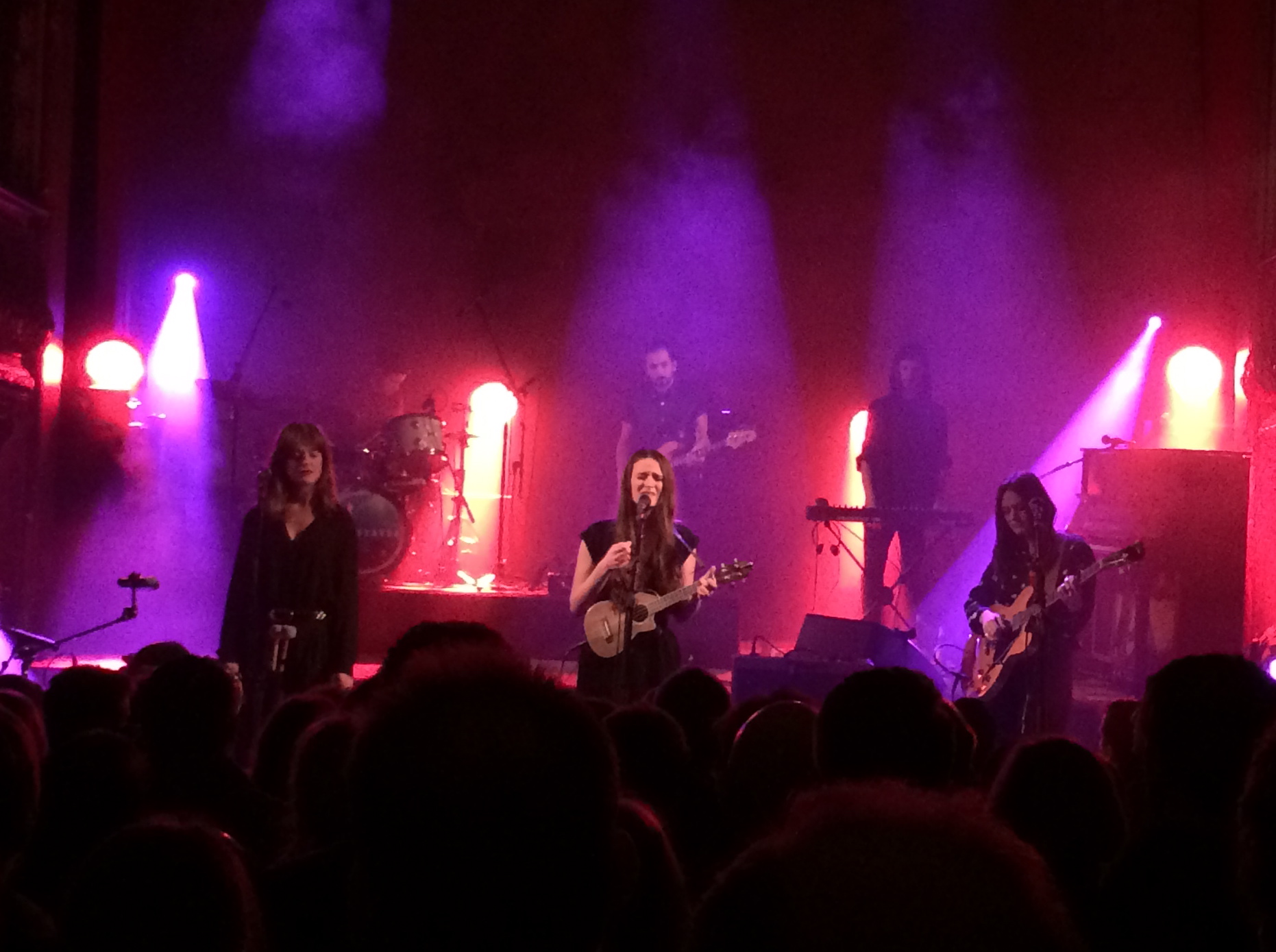
The Staves at Wilton’s Music Hall, 24 March 2015

IMG_2313_2

Another Staves concert, but one with a difference. This one was all about the new album, “If I Was”, which was released on 23 March in the UK. The album is produced by Justin Vernon of Bon Iver and has been getting a different level of promotion than before. The Staves are stepping up!

The Wilton’s Hall concerts, on Monday and Tuesday, weren’t part of a big tour; they were more celebrations of the launch of the album. And they played the whole of the album, in sequence. From start to finish. It was absolutely brilliant. Wilton’s Hall is in the East End, just – about ten minutes walk from Tower Hall. It’s an old music hall, which is being renovated. The structure, the potential, looks great; but right now it’s bare brick walls and sticking out wires. That’s fine – it will be amazing when it’s finished. And the acoustics, not surprisingly, were good.

I think I can say that this was the best Staves concert yet. Their voices are as wonderful as ever. The harmonies are more complex. There is greater depth to the music. It’s more electric – and more American. I’d wondered where they’d go after “Dead And Born And Grown”. I thought they might go a bit folk-prog, in the way that the last song, “Eagle Song”, hinted at. But I think the direction has shifted west; maybe not surprising, as a lot of the album was recorded in Wisconsin, with Justin Vernon at the controls.

Really, it was very, very good. “The Blood I Bled” took over where “Eagle Song” left off. The harmonies on “No Me, No You, No More” were extraordinary. And Jessica introduced “Let Me Down” beautifully.

IMG_2317

I loved “Damn It All”, which starts as a lovely atmospheric ballad and then shifts to a stuttering electric beat and defiant chorus slowly building. Something quite dark about the second half. It’s good on record, but live it was awesome. I think they could take this song to all sorts of places in the future.

“Teeth White” had an infectious Americana feel and the flagship single, “Black and White”, which I’d initially been a bit wary of – a bit too Corrs-like? – came alive, with the vocals really letting rip. One of the highlights. I have had a reappraisal!

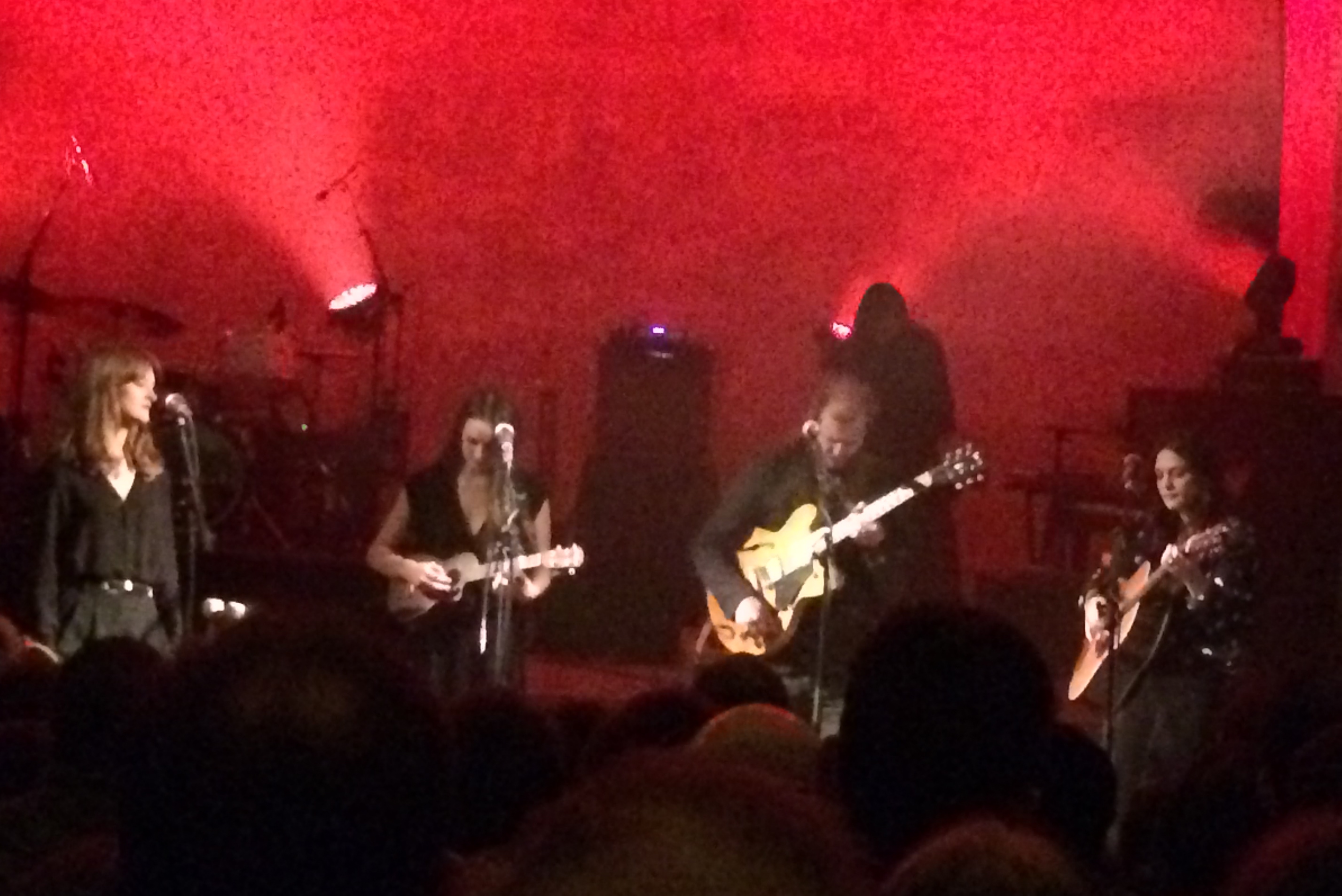
Yeah, the whole thing was wonderful.And then, to cap it all, Justin Vernon came on and sang with the girls. I’m struggling to recall how close to the end – I think it was “Make It Holy”, but I could be wrong.

The reason why I’m blurry is because Justin came back again, and I just can’t forget that. It was the first song of the encore, when the four of them sang – and played – the most beautiful rendition of Bruce Springsteen’s “I’m On Fire”. Oh my God! Not just the Staves with Justin Vernon of Bon Iver, but they sang one of Bruce’s great songs!

IMG_2322

Then we had the lovely “Facing West” and, appropriately, to finish the night, “Eagle Song”, the most ambitious track on the first album. Setting a bar for the follow up. Though prog has not been the direction followed.

Such a good concert. Such a good album. I’m pretty sure you are going to hear a lot more about The Staves.

Posted in Music - concerts, lists, reflections | Tagged , , , , , | 3 Comments

Have You Heard? – (63) A BBC 6 Music selection

Since finishing my music book I’ve been listening to a lot more new music, mainly via BBC 6 Music, a brilliant music station. Not only do all the DJs play great music, but they put most of it on what they call the Playlister. To listen to this you have to access Spotify; if you have it I would really recommend the BBC 6 Music Recommends playlist, an amalgam of the DJs’ favourites.

From this list and a few others I’ve heard on the station, here are ten tracks well worth listening to right now. Three videos to help you along.

Hotfoot by Doldrums. Punching electro.

Prison Blues by Romare. A jazzy, soul electro thing.

Not Real by Stealing Sheep. A sparky pop confection.

Flutter by The Unthanks. A really beautiful, atmospheric piece by a band that are folkies at heart, but are embracing new sounds. At the same time this has a sixties, almost James Bond-like feel.

Don’t Take My Soul by Jane Weaver. A quirky pop beat and a lovely voice over it that quivers and shakes.

Back To You by Twerps. Not a great name for a band, but this is a good indie, lo-fi rock’n’roll song.

Better Man by Spring King. A great shouty rush of Strokes-like rock and punk.

Animal by Moon Duo. This is 70s psychedelic rock speeded up. Hawkwind looms large; Hookworms from recent times too.

New York, New Dorp by SBTRKT featuring Ezra Koenig. Jazz rap that has a strong feel of Prince. All good!

Feverhead by Barringtone. A really catchy pop-punk thing.

There are loads more. But all these tracks are worth trying in whatever way you access music. I’ll come back with more in the future.

Enjoy!

Posted in Music - Have You Heard? | Tagged , , , , , , , , , , , | 4 Comments