The Scotland Referendum – are we family?

This Thursday, 18 September 2014, the Scottish people (or, more precisely, the people registered to vote in Scotland) have the chance, in a referendum, to take Scotland out of the United Kingdom. While most polls have the “No” vote in the lead, there are a lot of don’t knows, so it looks like it’s going down to the wire.

My view, as a London-based Englishman who always identifies as British on forms – partly, but not only, because my mother is Northern Irish – is that I will respect the Scottish people’s decision on what they want to do. The sensible, low risk, thing to do is stay in the Union. But the exciting, once in a lifetime opportunity, is to gain political control of one’s own country. To escape from the rule from Westminster, often by political parties which have little support in Scotland.

If I was Scottish, and had the vote, I think I would be tempted to vote Yes. It’s too good an opportunity to miss. Self-determination, escape from the London elite. I’d be worried about the economic consequences, but I’d shut my eyes and hope for the best, assuming that human ingenuity would solve the potential problems.

As an Englishman and Londoner, I kind of hope the Scots don’t want to leave our country. We’ve done pretty well together over the past 300 years. We’ve had a prosperous economy, a strong democracy, we’ve fought together against powerful enemies. We had an Empire too, although we accept that that isn’t necessarily something to be proud of in this day and age.

We bicker and express our opposition through sport, especially rugby, these days. But we also experience unity through sport: the 2012 Olympics, the British and Irish Lions  tour of Australia both being fantastic examples.

At the end of the day, I’d support the Scots if they want to leave, but I can’t really see the point of doing so in this modern age, where national borders have less relevance, with the internet and international capital flows.

At the same time, I must admit that the “No” campaign in Scotland has been pretty poor. It has emphasised the economic risks of leaving, but has never really made the positive case for staying in the UK.

But what is that positive case? What is so great about the UK? You know,  if I got asked that by a pro-independence Scot, I would struggle to articulate the case. I guess I would say we have done alright for the last 300 years. We have a democracy, rule of law and freedom of speech which we should treasure, but none of that is unique to the UK. We have a beautiful island and brilliant culture. We come together in times of need – those two world wars, for example. English people live in Scotland, while London is Scotland’s third biggest city.

Is that enough? Quite a lot of it looks back. Looking forward, there is nothing new to offer, whereas the independence cause clearly does offer a bright new future.

Really, what the case for staying in the UK says is we are family. Like all families we argue, fall out, get back together, carry on. It’s where we can be our natural selves. But when anyone or anything threatens us, we close ranks: we know that, ultimately, we are one.

So the question for Scotland on 18 September is, are we family?

A very big question.

Posted in Random stuff | Tagged , , | 5 Comments

Sportsthoughts (119) – Quins 0 Saracens 39 – what’s happening?

First home game of the new rugby Premier League season last night. A tough one against Saracens, winners of the league last year in regular time, although they lost in the play-off final to Northampton. Got there 15 minutes into the game as a result of work problems, but it was only 3-0 at that point and Quins seemed to be doing well. But it all went badly wrong…

Quins’ strategy is to build a team that can compete at the top largely through the development of home-grown academy players.  This is laudable. At the moment the first pick team has 14 Englishmen plus kiwi Nick Evans at fly half. Many of the team are either in the England squad, or are on the edges of it. The playing philosophy is attacking and entertaining. Everything that is good about rugby. It’s why I enjoy being a season ticket holder at the club.

It comes with a risk, though. Some of the other big clubs have bought heavily. Getting in seasoned internationals, players with experience and physical presence. Saracens, Northampton, Leicester, were dominant last season and every pundit at the beginning of this season predicted one of them to win the competition this season. The consensus was that Quins would be battling with Bath again for the fourth place.

It’s pretty hard to argue with that analysis, although I held out hope that Quins’ youngsters would reach the point where they could battle with the best, because they were the best.

Last night’s result damaged that hope, although it will be important not to overreact. The signs were there in the first match of the season, against London Irish, at the Twickenham double header. I just watched that one on TV. Quins won 20-15, but having cruised to a 20-6 lead in the first half, ill-discipline in the second half led to loads of penalties and two yellow cards against them. They defended well in adversity, but were lucky that Irish lacked the killer touch.

Against Sarries, it was again ill-discipline and basic errors that led to their downfall. Sarries’ first try came from a charge down of a Nick Evans kick and that set the scene for the rest of the game. So much poor decision-making: a few kickable penalties, which might have put points on the board, were declined in favour of kicks to touch in search of a try early on in the game, when there was time to claw their way back. Moves broke down, the ball lost in crucial positions, which allowed Sarries to break forward and win penalties, if not tries. And eventually morale sagged, the errors multiplied, the substitutions disrupted the team further and it all fell apart.

There was a leadership problem too. Chris Robshaw has relinquished the captaincy, presumably because of the demands he will have in World Cup year, as England captain.  That’s a questionable decision – even more questionable is the decision to make Joe Marler captain. Great man though he is, he’s a prop, always in the thick of the fighting, always on the edge of trouble. And likely to be substituted after sixty minutes or so. I’m sure he’s hugely respected by his teammates, but he just doesn’t seem the right man to provide clear-headed leadership on the pitch. What has been noticeable in the first two matches is that Robshaw is still half doing the job. But only half. So the clarity of leadership is missing. Uncertainty increases. And a team like Saracens exploits that brutally.

We have to hope the performance against Saracens is a one-off. It will surely lead to some serious reflection in the Harlequins camp, some challenges and a determination to put things right. The spirit of recent years can’t have dissipated, so hopefully they will rally and put in a great performance against Wasps this coming Saturday.

But this is the moment for the experienced players – Robshaw, Care, Easter, Brown, Evans, Robson – to take responsibility and show the youngsters the way forward. Even if Marler stays captain, which I assume he will.

Come on you Quins!

#COYQ

Posted in Sportsthoughts | Tagged , , , | 3 Comments

lovelondonscenes – 67

The City from the Tate Modern. Two Saturdays ago, when we saw the Malevich exhibition.

First up the Cheese Grater and Walkie Talkie. The Gherkin is obscured from this angle by the Cheese Grater. Love how all these tall buildings now have everyday names.

IMG_1431

But St Paul’s reigns supreme. Always will.

IMG_1430


Posted in Photos - lovelondonscenes | Tagged , , , , , | 2 Comments

Have You Heard? – (54) “Royal Blood” by Royal Blood

Royal Blood are a two piece band from Worthing, near Brighton, who make an awesome noise and have exploded on the music scene this year. They are singer/bassist Mike Kerr and drummer Ben Thatcher. Their debut album recently charted at No1 and their latest tour apparently sold out in two minutes. They have had an extraordinary surge in popularity over the summer, which is a result of their awesome live performances on the festival circuit. I saw parts of their performances at Glastonbury and Reading/Leeds and was really impressed. The crowds were going wild. It was hard, primeval rock. The essence. It is brilliant to see a band getting massive because of their live performances. It’s like a trip back in time…

The debut album is an awesome journey through their sound. Two piece, guitar and drum bands have been in vogue recently. The White Stripes started it, but others, like Drenge and Japandroids have taken it on. I saw both of them at Latitude in 2013 – they were two of the best things I saw that year. This year a band called Slaves did the two man thing and rocked.  But I think Royal Blood have been the most successful at translating their live sound to record. It might be because Mike Kerr plays a bass with guitar effects (and possibly strings). It gives the sound a lot of weight. Yeah, this is heavy music.

The album is a joy from start to finish. It’s one of those albums that would have had a big PLAY LOUD sticker on it in the seventies, and yes, it is best played at maximum volume. The seventies might be its spiritual home, or even the late sixties, with the blues rockers like Cream… and of, course Led Zeppelin.

I’m afraid I can’t help it – this album reminds me of so many other sounds. It’s not derivative, it is inspired. Opening track “Out Of The Black” gives me Metallica, Muse and Led Zep in the first minute, with a hint of Arctic Monkeys. The White Stripes are clearly an influence and Queens Of The Stone Age too.

This is the band doing “Out Of The Black” at Glastonbury.

If you like hard rock, blues rock, metal, punk, rock’n’roll, I’d be really surprised if you didn’t like this album. It draws from classic bands from the past, but it is also completely contemporary. The melodies, the choruses aren’t designed for old lags like me – they are for the youth of today. Which explains its popularity. But it’s great for old lags like me too, because it is the latest brilliant example of why rock’n’roll will never die.

My favourite track, so far, is “Come On Over”.  ( I really like “Careless” too). The verse vocals are a bit murky on this video, but the beat is supreme.

Posted in Music - Have You Heard? | Tagged , | 2 Comments

lovelondonscenes – 66

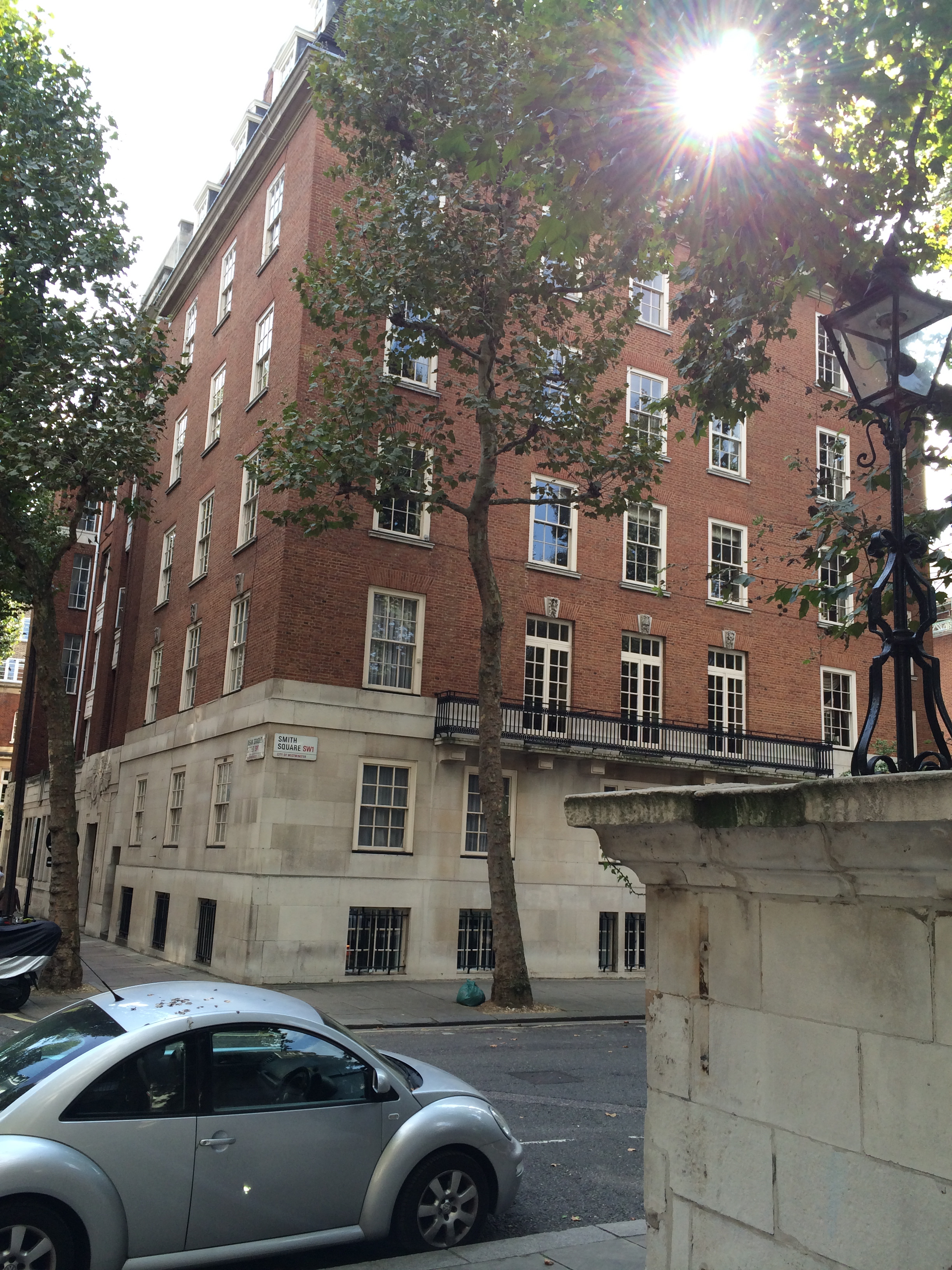
Smith Square, Westminster. Taken from the old steps of St John’s church. Stopped there today to eat my lunchtime sandwich.

IMG_1447

Posted in Photos - lovelondonscenes | Tagged , , , | Leave a comment

lovelondonscenes – 65

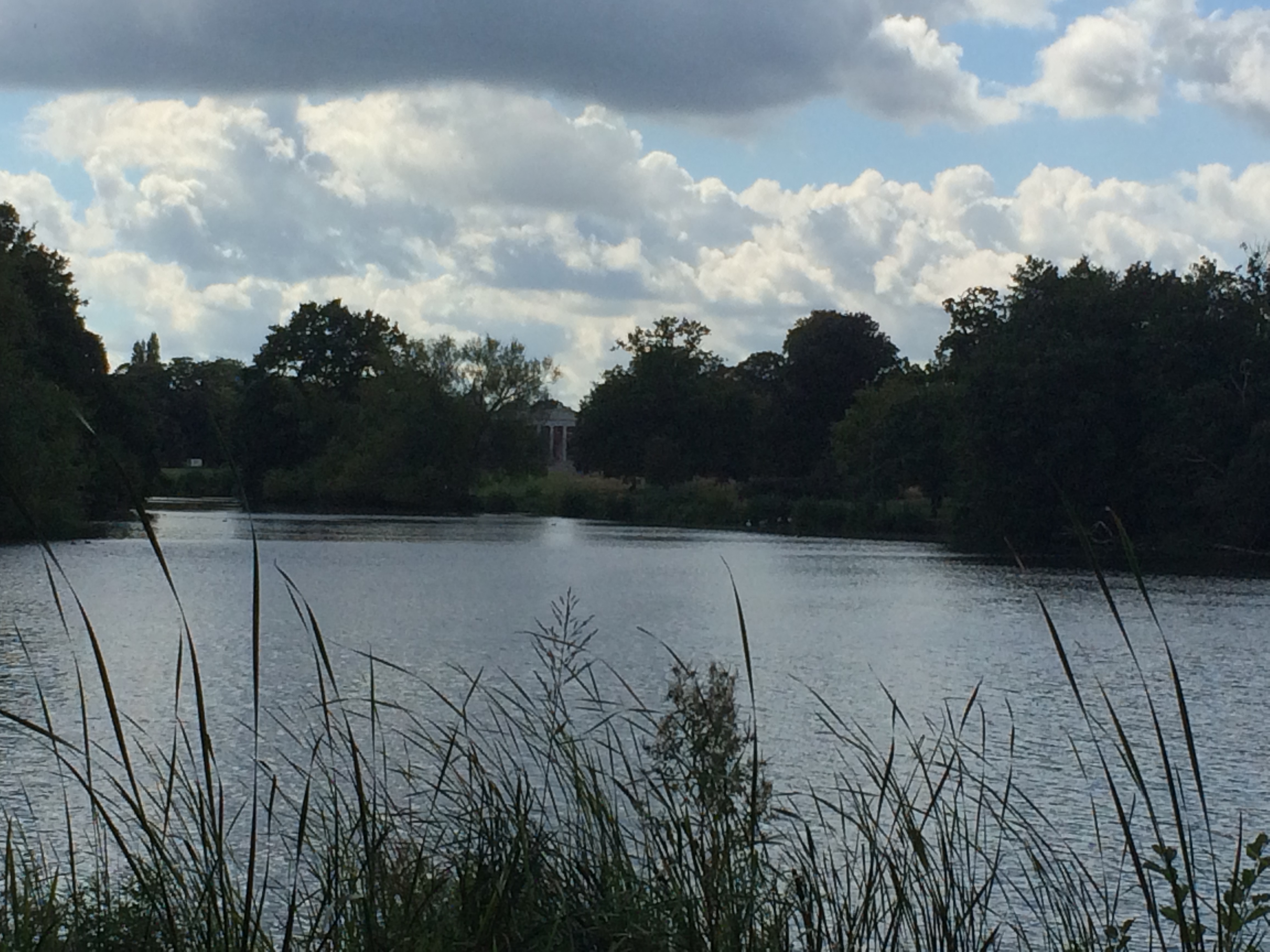
Osterley Park, West London, from across the lake. Taken from the dirt track/bridle path which runs close to the M4 – part of one of my favourite cycle routes (the dirt track, not the M4!). Took this last Sunday.

IMG_1442

IMG_1444


Posted in Photos - lovelondonscenes | Tagged , , , | 2 Comments

Matisse and Malevich at the Tate Modern

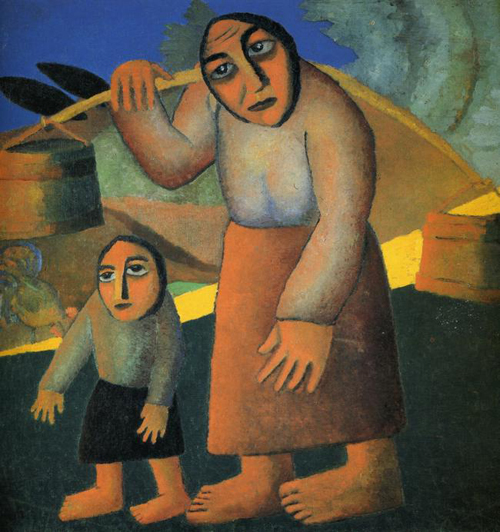
Over the last week I’ve been to see a couple of really interesting and enjoyable exhibitions at the Tate Modern: the art of Kazimir Malevich and Henri Matisse’s “Cut Outs”.

Malevich is a 20th century Russian artist, although he was born in Kiev, to Polish parents.  His art changed over time as radically as Picasso’s. In the first fifteen years of the century, his art mirrored many of the trends in the west dating back to the mid-19th century. Impressionism, Cubism, the idealisation of the peasant. The art was vivid, intriguing.

Self-Portrait_(1908_or_1910-1911)

Self portrait

86

Woman on a tram

08-Peasant-Woman

Peasant woman

Kazimir-Malevich,-The-Woodcutter,-1912_original

Woodcutter

Then he decided to create his own movement: Suprematism. It reflected what was going on in an increasingly revolutionary Russia, I guess. His big statement was a black square. Art “beyond reason”.

Malevich.black-square

Er, Black Square

Well yes. From this point I find his art interesting but not exciting or pleasing. He went back to more representative art in his later life. And that was good too. I’m always interested in the thinking behind the art-not-art. And often amused. But my instinct with Malevich, in his Suprematist period was, pull the other one, mate. This disqualifies me as an art critic, I know!

Everyone likes Matisse, don’t they? Beautiful colours, Mediterranean scenes, fresh, airy, look great on the wall of your living room. Nothing wrong with any of that. Art is allowed to look good.

The Cut Outs represent Matisse’s later work, in the 1940s and 50s, when his illnesses rendered him pretty immobile. So he began to cut out paper shapes, painted in vivid colours, and assembled them – or had them assembled by his assistants. The shapes were shifted around until his vision was fulfilled.

There’s something quite child-like about this. Who hasn’t, if they have children, painted bits of paper and made weird pictures with them? It is raw creativity, that takes no expertise, no prior experience. And it is such fun!

Yes, Matisse was more sophisticated than this, and grew increasingly sophisticated over the years of the Cut Outs. His work was described as a fusion of painting and sculpture.  But the pleasure in the paintings is primal and child-like. I loved the colours, the shapes. I wasn’t theorising, like I had to with Malevich. It was just pure pleasure. I liked the way he got involved with churches, and his “Blue Nudes” period, and the fact that he made a design for some limited edition carpets, negotiated a commission with some rich Americans. This is exactly what the Renaissance painters, Rubens and so many others did. Arts has always had patrons, who sometimes just want something nice, or big, for their wall!

Here are a few samples from the Matisse Cut Out canon.

Henri Matisse - The Fall of Icarus, 1943

The fall of Icarus

050rt_1

One of the Blue Nudes

voge1

Two Masks – I imagined it was a man crying

kr_matisse_cut_outs_070_071_top_41972_1404021745_id_802580

The Mermaid and the Parakeet – spot them!

matissethesnail1953

The Snail – think about it!

The Matisse exhibition ends on 7 September, so get in there if you haven’t seen it! Malevich runs until 26 October.

Posted in Art, books, theatre, cinema | Tagged , , , , | 4 Comments

Sportsthoughts (118) – The return of 3-5-2

The England team

England 1990. Photo David Cannon/Allsport, from Google Images

I apologise in advance if my statto tendencies have got the better of me in this blog! But I love the analysis of tactics and structures – and then the fact that the players can blow it all apart with a moment of genius, or an horrendous error…

A strange thing is happening in the Premier League. More teams are playing with a 3-5-2 formation. Man Utd, Hull, QPR, with others dabbling. Essentially that means three central defenders, three midfielders and two wing backs and two forwards. A few sides tried it from time to time last season, including Liverpool. But there is more this season, possibly encouraged by its successful use in the World Cup, by Holland, but mainly the Latin American teams: Mexico and Costa Rica, for example. Juventus have been using it in Serie A too, winning the Scudetto three times in a row.

What’s behind this trend? It’s very retro. It’s in tune with what’s happening culturally – fashion, music. Still quite eighties-influenced, moving into the nineties. It could be that players who played in the formation in the nineties are now reaching the higher echelons of coaching and management? But it’s also a response to previous tactical developments. Football is always changing. When one style becomes supreme, people work out ways of countering it. Look at the experience of Barcelona. The ultimate football team, playing a 4-3-3, with intense pressing in midfield and a high back line. No-one who could really be called a centre forward, just three highly mobile attackers, with Messi as the “false nine”. But the top teams started to work them out, sat deeper on the whole, surrendered possession and waited to pounce, attacking the vulnerable central defence. And the Barca team grew older, maybe not quite as mobile, or hungry. Their style could only work with the most intense and disciplined of approaches. So maybe it wasn’t built to last.

The main counter to the Barca style, and the one most favoured in the Premier League last season, and at the World Cup, was the 4-2-3-1. Designed for defensive solidity, with two midfielders protecting the back four. Allows the full backs to get upfield. But also needs the midfield three to act very much as auxiliary attackers, given that there is only one real forward. The best teams play it very well: Man City in England, Germany in the World Cup. But lower down, it can become over-defensive and the central striker can become isolated. Negative sides, sides just looking to survive, often turn it – and 4-3-3 – into a 4-5-1, a packed midfield clogging up the central areas of the pitch. One striker trying to hold the ball up, hoping someone in midfield might make it up in support. A reliance on set pieces to score. Sadly, this describes the West Ham of last season very well (but possibly not this one – there is hope).

So 3-5-2, apart from being a fad, and inspired by the World Cup, is a response to the 4-2-3-1. First, if you are only marking one striker, why do you need four defenders? Second, it allows the return of two strikers, one target man with the other playing off him – the classic No10. I like this. It gives two attacking players a chance to establish a really effective partnership, gives a team a better focal point and relies less on players arriving from midfield for goals. It means talented strikers don’t get shunted out into wide positions. It means the return of the “man in the hole”.

The midfield remains well-stocked, with three central players. Width is provided by the wing backs: overlapping full backs really, but with more licence to roam.

So, 3-5-2 is essentially an attacking response to defensive formations. So far, so good. There must be flaws though; otherwise everyone would be playing it. And yes there are. The good thing about football is that 11 players aren’t enough to cover all the requirements. Something must be sacrificed. Under 3-5-2 it is defensive cover out wide. In theory that cover should be provided by one of the centre backs, depending on where the threat is coming from. But it doesn’t always happen – centre backs are always wary of deserting the central positions and getting isolated. So the counter to a 3-5-2 is to put balls in behind the wing backs, or get your own wide men to attack that space. It was this defensive flaw that led to its abandonment in England after its use in the late eighties and early nineties. Its most famous use in England was by the national team in the 1990 World Cup after an awful start in the first group game, against Ireland – possibly the worst game of international football I have ever seen. It is said that the players insisted on the switch to manager Bobby Robson. In fact it was more a 5-3-2, with the full backs still cautious about advancing. But it tightened up the defence and midfield, and while it wasn’t used rigidly in every game, it gave England a solidity and freedom which allowed them to progress to the semi-final, where, of course, they lost to Germany on penalties.

The 3-5-2 system is essentially Latin American. Argentina used it in the 1986 World Cup, releasing Diego Maradona, and winning the tournament with a pretty average team (apart from Maradona!).

West Germany and Italy played a variant of it in the seventies and eighties, a 5-3-2, which had a sweeper, or libero, playing behind a four man defence, and having licence to roam forward. The great Franz Beckenbauer is perhaps the finest example. This never really caught on in England – it was far too sophisticated. And Steve McClaren’s disastrous adoption of it in 2007, in the last Euro 2008 qualifier against Croatia, looked to have killed it off forever. We have carried on with our essential 4-4-2 until quite recently, when the influx of foreign players and, especially, managers, has led to much greater variety.

I still quite like a 4-4-2, played intelligently, so your two wide midfielders don’t leave the two central midfielders vulnerable to being overrun by more numerous opponents.This has often been the problem for the England team. But it doesn’t have to be. The wide midfielders can tuck in, letting the full backs get forward. One midfielder can drop back, to provide defensive cover. In fact you can end up with a 4-1-3-2, which I reckon is the best system of all. The risk with 4-1-3-2 is a loss of width, unless the full backs get forward. And if they do, you are practically playing a 3-5-2!

All this shows is that none of these formations are really all that different. The virtue of 4-4-2 is its simplicity as a starting point. You can improvise from there. Improvise? It seems that some managers give such detailed instructions these days that players feel afraid to improvise. But the best ones still do: that’s how you win matches at the very top. And, as matches progress, players tire, and the best of systems can start to fall apart. That’s when simplicity becomes really important. And it’s why some English teams, notably Man Utd in this early part of the season, under Louis van Gaal, are struggling to adapt to 3-5-2. They’ll probably be OK when all their best defenders are fit and available, but right now it looks like the three centre backs don’t know who’s supposed to be doing what, and they have two wingers trying to be wing backs – not very well.

That’s the problem with sudden changes: players sometimes can’t adapt. You would think that they could, given that they are all highly talented at the top. But remember they have always got an opposition trying to outdo them. If you have too much to think about you make more mistakes, they get exploited and trust and confidence evaporates.

So will many teams adapt 3-5-2 as their default mode? I doubt it. It takes a degree of sophistication which isn’t inherent in English football (even when foreigners play it) and is inherently risky, if those wide areas get too exposed. It takes very good wing backs to make it work well. Super-fit and equally good in attack and defence. That’s quite a lot to ask.

But then, what do I know? Even Big Sam might have West Ham playing before we know it!

By the way, there is a very fine book on the history of football tactics, called “Inverting The Pyramid”, by British football writer, Jonathan Wilson. The title is relevant to the 3-5-2/5-3-2 debate. From the mid 1880s to 1925 apparently, most teams played with 2 defenders (full backs), three in midfield (half backs) and five forwards. Now that would be good to see! A pyramid on its point. In that 1986 World Cup, Argentina had reversed the formation. The pyramid had been inverted.


Posted in Sportsthoughts | Tagged , , , , | 7 Comments

Have You Heard? – (53) “Dear River” by Emily Barker and the Red Clay Halo

dearriver-albumcover-packshot-600

If you read this blog, you’ll know how much I like Emily Barker’s music. On my holiday on the Costa Brava, Spain, over the last couple of weeks, I made some good progress on my book on music. It included writing about three of my favourite artists over the past couple of years: Emily, The Staves and Lindi Ortega. As I always do, I listened again to the albums I was writing about. Emily and group released “Dear River” in 2013. I liked it, of course. It seemed a bit rockier than earlier albums and that worked well, including on the live stage. I liked “Letters” and “Ghost Narrative” best.

On holiday I really gave it a better listen than ever. Even had a good look at the lyrics. And what a wonderful story it revealed. It’s an album about place, about roots and being away from home. Having more than one home and loving both. And about the ambiguity of the feeling about your roots, when others – the native people of Australia in Emily’s case – have suffered as others dug their roots deep into the soil. There’s a metaphor about water, rivers, nature, that runs through the album, with a nostalgia for the Blackwood river back in her homeland of Western Australia. But there is also reflection on the turmoil of Europe in the second world war – Emily has Dutch ancestry.

The more I listened, the more profound I found the album. It is one to listen to the whole way through, which we rarely do these days, when you can just pick out favourite tracks early on, and neglect the rest. It was one of the previously neglected tracks that hit home for me on holiday.  “In The Winter I Returned”. A truly beautiful song, unassuming, but about how Emily feels as she returns to Australia, when her main home is now England. I was making salads for a barbecue when, one evening, the song came on. It sent a shiver down my spine. That love of place – more than one place – and a kind of sadness about separation, wherever you happen to be at the time, felt so real.

All the choices I have made lead me to this place…

This video of “In The Winter I Returned” is one of a series on the whole album, where you can read the lyrics as the song progresses. Produced by Emily, to make her music as accessible as possible. A great thing to do. I hope you enjoy – and go on to listen to some of the other tracks.


Posted in Music - Have You Heard? | Tagged , , , , | 3 Comments

Sportsthoughts (117) – “The Wasteland”, West Ham style

So West Ham’s season has started in the expected grumpy mood. 1-0 home defeat to Tottenham, after playing against 10 men for much of the game. Big Sam lamented the missed chances, but having invested a lot of money in three new strikers he started with none of them. It doesn’t feel good. Reminds me of the last time we went down. Always unlucky, you know.

That was in 2011. As we went down in May that year, a few of my friends resorted to poetical form to commemorate the moment. Not quite sure why, but it was amusing. I responded by taking the only poem I really know well, T.S.Eliot’s “The Wasteland” – I studied it at A Level – and turning it into a lament for West Ham’s plight.

You may notice that my biggest fear was that we’d respond to relegation by appointing…. Big Sam.

As we did. He’s done a job for us, but we will never be happy while he is in charge, I fear.

Anyway, if you know T.S.Eliot’s masterpiece and know what was happening at West Ham I hope you will enjoy the spoof. If you don’t I hope you might see what I was getting at and enjoy the wordplay.  Which was just a bit of fun really, as I travelled down on the train to Cardiff, to watch Harlequins play Stade Francais in the final of the 2011 Amlin Cup – rugby’s equivalent of football’s Europa League. Quins won 19-18. Some compensation for the Irons’ decline.

So here is the the alternative, claret and very blue “Wasteland”…

April is the cruellest month,
Breeding losers from the dead land,
Four defeats from four,
Three scored, 12 against.
Winter kept us warm, covering
Gloom with the occasional win,
Feeding life with Demba Ba and Hitzlsperger.
May surprised us, coming over Upton Park first with hope then despair and resignation.
We stopped in the Queen’s
And drank lager and talked for an hour.
Er ist der Bomber, wir resten auf.
When we were children,
Watching Trev and Devo,
My cousin, he took me into the North Bank hardcore,
And I was frightened. He said,
Marie, hold on tight when Cottee scores. And down we went.
In the North Bank, there you felt free to abuse Tottenham or the Mancs.
I read most of the night and we will go south in August.

What are the roots that clutch, what branches will grow
Out of this stony rubbish? Scotty Parker, we cannot say, or guess if you will stay, for You know only
A heap of broken defenders, when the ball descends,
And Robert Green gives no shelter, Carlton Cole no relief…

I will show you fear in a handful of Hammers…
We gave you millions first a year ago;
You bought Barrera and Reid and Piquionne,
We called you the lugubrious loser,
Your eyes dead, your shirts black.
I could not speak as we lost to Wolves, West Brom, Blackpool.
You could not speak, you were neither living nor dead, and you knew
Nothing.
Looking into the heart of defeat, merely silence…

Unreal City,
Under the brown smog of a winter’s day
The crowd flowed down Green Sreet, so many,
I had not thought hope had deceived so many.
Chants, short and infrequent, were exhaled,
And each man crammed his burger down his throat,
Flowing up to the Boleyn Ground.
There I saw one I knew, and stopped him, crying: Paolo!
You who were with Harry when we were good,
Those UEFA coaching badges,
Have you got them yet?
Oh keep Big Sam far hence, that’s enemy to football,
Or with his tactics he’ll turn us into Blackburn, or Stoke.
You! Slaven! – mon sembable – mon frere!…

What is that sound high in the air?
Murmur of managerial lamentation,
Who are those hacking hordes swarming over endless plains:
Millwall, Coventry, Brighton, Forest.
What is the League over the mountains,
Cracks of shins, and burst lungs in the violent air,
The fleeing Hammers
Parker, Upson, Green
Keane, Cole, Ba, Obinna
Der Bomber
Unreal.

I sat upon the sofa
Watching Sky Sports Super Sunday, with relegation behind me.
Will Karen Brady set my team in order?
West Ham United is falling down falling down falling down…
Datta. Dayadhvam. Damyata.
O’Neill O’Neill O’Neill

We wanted Martin O’Neill then. Maybe we could have him now…

Posted in Random stuff, Sportsthoughts | Tagged , , , , , | 5 Comments