
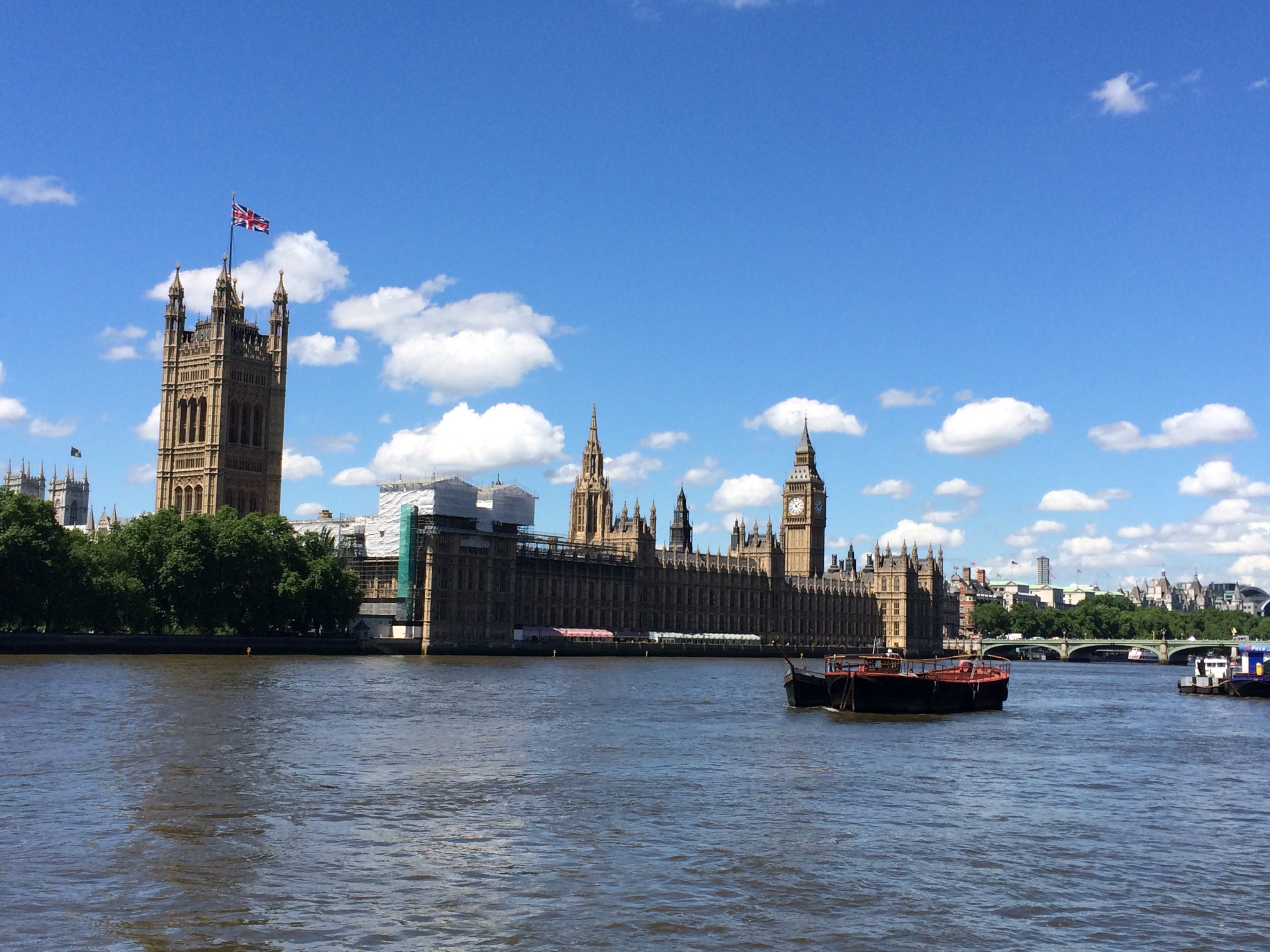
The Houses of Parliament from the other side of the river, on Albert Embankment.
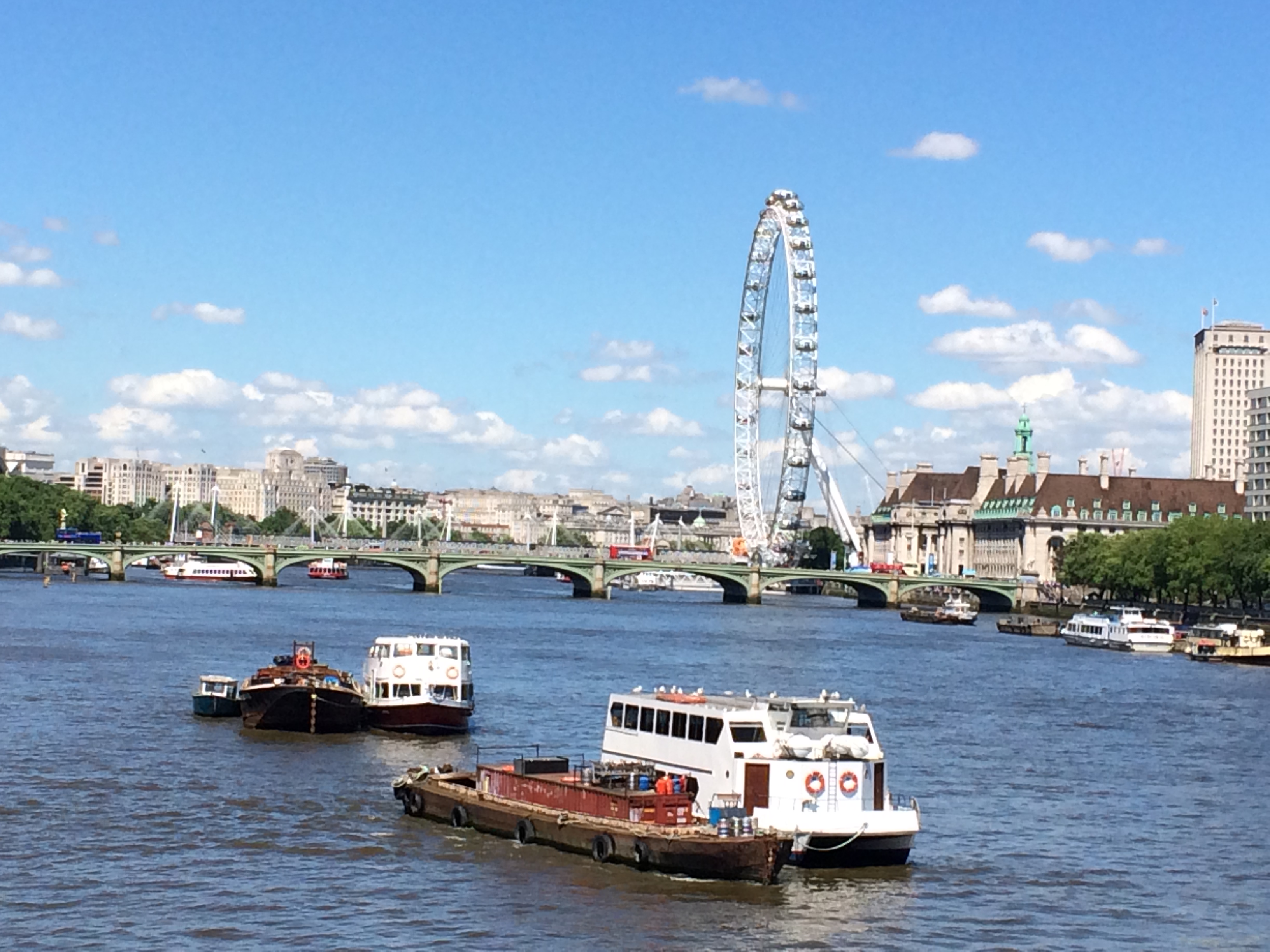
And the London Eye, from Lambeth Bridge.
Just popped out at lunch time today and tried that other side of the river…
The Houses of Parliament from the other side of the river, on Albert Embankment.
And the London Eye, from Lambeth Bridge.
Just popped out at lunch time today and tried that other side of the river…
One of those weeks when live music came to the fore. Absolutely love it.
Started on Wednesday with Prince at the Roundhouse in Chalk Farm. Absolutely magnificent and I’ve blogged about the concert already. You can read it here.
On Friday, a whole load of us went to see Graham Parker and the Rumour at the Shepherd’s Bush O2 Empire. GP was a big favourite at university, back in the late 70s. His blend of Van Morrison, Bob Dylan, a bit of soul and a lot of rock’n’roll worked perfectly and made him part of the UK new wave movement.
The concert didn’t disappoint in terms of the music Like Prince, GP gave the audience a lot of the favourites they had come for. And he had managed to reassemble his Rumours band. So they opened with “Fools Gold”, and over the course of the evening we had “White Honey”, “Howling Wind”, “Don’t Ask Me Questions”, “Hotel Chambermaid”, “Lady Doctor” “Love Gets You Twisted” and “Soul Shoes”, amongst others. A choice selection.
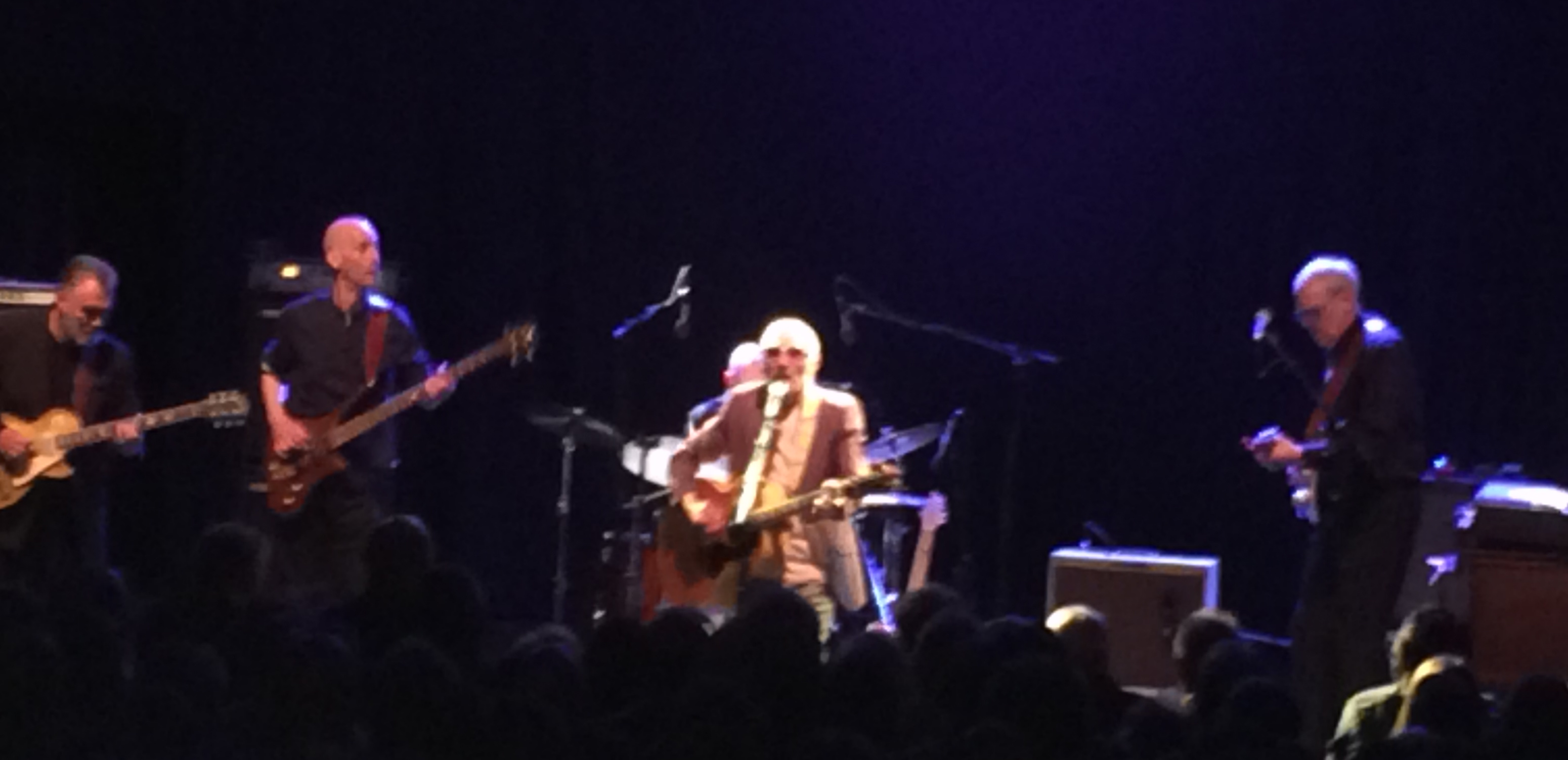
The only thing I’d say is that it all felt a bit sedate. These are guys in their sixties. Bruce Springsteen is still amazingly energetic at the age, but he’s the exception. GP and the Rumour were not in-yer-face. The old Parker snarl was a bit of a whimper. And that’s fair enough. But it meant that I didn’t get the buzz from the concert that I’d hoped for. I was still coming down from Prince, who was still out there rocking, I guess.
Then, on Saturday, I went down to a pub in Brentford called The Brewery Tap. In all my years living nearby, I’d never heard of it, even though it is a Fullers pub. It was on a road leading down to the river, amid garages and disused warehouses. The pub has live music most nights, mostly jazz, and today was the turn of Grape Juice. They are a bunch of young lads in their last year of A-levels. The saxophonist is the son of a friend of my friend Jon.

They were good! Playing not exactly jazz funk, but jazz with a bit of funk. They covered Herbie Hancock’s “Watermelon Man”, Stevie Wonder’s “Sir Duke” and ” Bill Wither’s “Ain’t No Sunshine”, and the standard “Caravan”, amongst others. At the end of their second set they played an encore of “Pick Up The Pieces” by the Average White Band. All with a lot of improvisation on sax and guitar around the basic melodies.
I was impressed by their musicianship and the fact that they were playing jazz at their age, given all the other influences these days. I asked them afterwards how they had got into it. And guess what. Kyle, the saxophonist, had learnt clarinet at school and his teacher was a jazz fan.
How important are teachers?

Prince, with his all-woman backing band, 3RDEYE Girl, are touring Europe at the moment and have come back to Britain for a few ‘Hit and Run” gigs. My friend Dave managed to get a some tickets for a show announced midday 3 June for a concert at The Roundhouse, Chalk Farm, the next day. I was happy to take one of the tickets. I saw Prince a couple of times in the 80s in London and then in Paris in 1990, when I was living there. The first time was the best, in Wembley Arena, in the round. It was an extraordinary show, with, amongst other things, a red corvette emerging from below ground, with Prince astride, playing his guitar; Prince showing off his basketball prowess, putting the ball in the hoop every time; Prince playing a swan-like guitar to “Purple Rain”. And Sheila E, amongst others, doing the business in the band. One of the greatest gigs.
Last night’s show was a different animal. About 3,000 in the Roundhouse. Short notice. two shows, one starting at 7pm, which we went to, the other about 10, I would guess. Some rather chaotic queuing, which we watched from a Brazilian bar on the other side of the street, until the venue saw sense and dropped what ever was holding up entry – probably checking photo IDs of purchasers, to stop the touts. Bucking the market isn’t easy.
But what a show! Anyone who loves Prince’s music would have had a large number of their favourite songs played. Just to toss out the ones I can remember: Let’s Go Crazy -Take Me With You – Raspberry Beret (which I hardly noticed) – U Got The Look – When Doves Cry – Sign o’ The Times – Hot Thing – 1999 – Little Red Corvette – Nothing Compares to U – Kiss…. and, of course, third encore in, Purple Rain.
Yes, yes, yes!
The sound was raw, stripped back, with a strong rock emphasis. 3RDEYEGirl really knew how to rock, and could lay down some cool funk too. I was really impressed about how Prince and the band interacted. Of course he was the star, but he didn’t behave like it. They played as a band. Donna Grantis, on guitar (and to the left on the photo above), got a very fair share of the soloing moments, and she was brilliant. Prince wasn’t flamboyant. He came on with a gold lame jacket, but soon discarded it and just wore a black T-shirt with a 3RDEYEGirl logo on it. He was working – in a team.
Highlights? Well, so many, and so obvious, but I’ll mention a few. I loved the way the band opened with a slowed down and metalled up version of “Let’s Go Crazy”. It set the tone for the rest of the show. “Sign o’ The Times”, by contrast, was faster – but also harder. “1999” was probably my favourite moment – absolutely joyous funk. Daddy, why does everybody have the bomb? There was a magnificent rendition of Wild Cherry’s “Play That Funky Music” which summed up the evening’s consummate merger of funk and metal. The guitars were absolutely ringing.
And then there was “Purple Rain”. A lot of bands play their latest music during the first part of the show and then pack the greatest hits into the last moments of the main show andFthe encore. Prince, typically, did the opposite. The series of encores were mostly ballads (including “The Beautiful Ones” from “Purple Rain”) and funk and metal workouts. But also “Purple Rain”. And what a rendition. For the first half, Prince stayed behind the keyboards and sang, slowly and sultrily. You wondered whether he was going to give Donna the guitar solo duties. That would have been fine – a very grand gesture, and undoubtedly a great moment, as she was so good with the axe.
But no, he wandered off stage, picked up his guitar and came back to play an awesome solo. Starting slow and steady, building up to the crescendo we know and love. A moment for shivers down the spine.
Prince is, like me, 55. He can still sing a brilliant falsetto, still dance, still rock out, still tinkle those keyboards, still pick up a bass and show us a rhythm. I doubt he needs the money. He is doing this for the love. He’s sharing the passion with the 3RDEYE girls. He is a modern day troubadour. Living for the music and spreading the love.
And we are his happy disciples.
(Photo copied from 3RDEYEGirls’ Twitter)
Last Saturday, another awesome game of rugby, as Northampton beat Saracens 24-20 in the final play of the Premiership final. Cruel on Saracens, who won the league in normal time by nine points. Even crueller, as they lost the previous weekend to Toulon, in the Heineken Cup final. To be so near to the two top trophies and to win nothing…
Do we sympathise with Saracens? Well, not really. A team who have bought their way to the top, with an emphasis on South African imports. But, in fairness, they now have a very good sprinkling of England players and some excellent youngsters coming through. Even so, they are the team in England that everyone loves to hate. I was cycling down to the Thames on Saturday and encountered some Northampton fans on Kew Bridge. I wished them luck. They said to me they had met a fair few Quins fans and they all wanted them to beat Sarries. I confirmed that and rode on.
The game was a cracker. Saracens dominated possession, but Northampton were more incisive. At 80 minutes the score was 14-14. Saints had scored two tries to Sarries’ one. So it went into extra time – another 20 minutes and two halves of ten. The players who’d stayed on for the whole game – top players – were out on their feet. Penalties were exchanged to make it 17-17. And then Saracens got another. 20-17. The clock ticked down. Saints had one last push. Inexplicably, as they pushed close to the Saracens line, they didn’t just feed the ball back to fly half Stephen Myler, who could have put over an easy drop goal. That would have been 20-20, and Saints would have won on tries scored. There was a suspicion that the players didn’t actually know what the rules were. That was sort of confirmed by the Northampton head coach, Jim Mallinder, afterwards. Then again, it might have just been that Myler didn’t fancy the responsibility.
Whatever, Saints pushed on and scored a try – allowed after intense analysis by the Television Match Official (TMO), who judged that a Saints player – Alex Waller – had grounded the ball just over the line, amid the general melee.
Result to the Saints!
It was harsh on Sarries, who had two tries disallowed by the TMO – one for obstruction of a defending tackler and another for a forward pass. The latter was disallowed after the referee, JP Doyle – who is very well respected – had given it. Both decisions in the end were correct, but they showed how important the TMO has become in rugby. It’s an admission that the referee cannot make the crucial judgements a lot of the time. It just about works in rugby, which is a stop-go game. But when it happens to football – which it will – who knows what the consequences will be.
I use the word awesome a lot when I write about rugby because the physicality of the game is so amazing these days. There was a moment in the Saints-Sarries game when the Northampton wild man, Courtney Lawes, took out Sarries’ substitute fly half, Charlie Hodgson, with a tackle which, while legitimate in rugby, would have led to an arrest in any other life. You do wonder whether, in the not too distant future, new rules will be brought in on tackling. Alternatively, the players will start to wear the same armour as American football players.
So now, the show, for us English, moves on to three tests against New Zealand! The Sarries and Saints players will miss the first test, this coming Saturday, as they will still be recovering from last Saturday’s slugfest.
And then they’ll be duffed up by the All Blacks in the next two!
Fingers crossed for the England lads, but three tests against the best side in the world, soon after the end of a tough domestic season, will be very difficult.
We have a good, young side right now. Three games against the All Blacks will show us how far we have to go. If I was going to bet on it, maybe I’d go for two defeats, by reasonably close margins, then a win in the last game. Hope I’m wrong, but this is New Zealand!
The War On Drugs are a band formed in Philadephia in 2005, fronted by Adam Granduciel and Kurt Vile. The latter left fairly quickly to pursue a solo career. And he has made some amazing records – perhaps the subject of a future blog. I saw The War On Drugs, minus Vile, two years ago at Latitude. I loved their meandering, spacey sound. It was Americana, sure enough, but with all sorts of other sounds flashing through my mind: Neil Young (of course), Pearl Jam, and even the Waterboys, for the way that the songs built slowly to a dramatic conclusion. They were promoting their album “Slave Ambient” at the time. I came back from Latitude and had to get it. It was good.
But the new album, “Lost In The Dream”, is even better. It came out in March this year. I read the reviews and bought it soon after. I played it and liked the vibe, but didn’t get too excited at first. But I felt there was something there, so it didn’t get filed in forget. And as I listened to it again – and again – I started to get hooked on the songs and realise that it was a brilliant album. Right now, I’m listening to it more than anything else. Some of the songs are big, with great guitar, and meandering riffs which conjure up images of Lynyrd Skynyrd, Neil Young, even Dire Straits. The magnificent opener, “Under The Pressure”, is one of those. Check this live version.
But there are a whole load of beautiful, fragile ballads, with echoey guitar, which remind me, more than anything else, of Bob Dylan when he teamed up with Daniel Lanois and made the wonderful “Oh Mercy”. The title track is as good an example as any.
This is an American album to its core. You can feel the history. A beautiful, poignant album, with some awesome, sparkling guitar. Melancholy, uplifting. In a grand tradition.
The band is returning to Latitude this summer. It will be top of my list to see – along with Parquet Courts!
Last night we went to see “Frank” – a recent release, but already on hardly any of the mainstream cinemas.
It’s too weird, presumably.

My wife and I went to see it at the Watermans Arts centre in Brentford. A very good place, and you get get some excellent Indian food beforehand if you want. AND you can take your drinks into the cinema. Civilised.
How would I describe the film? Well, there’s this young lad, Jon, from a seaside town, with aspirations to make pop songs; he bumps into a strange band, called soronprfbs, whose keyboard player is trying to drown himself in the sea; he gets roped into the band and ends up spending a year in Ireland with them, mostly not recording their album, but mucking around with sounds and arguing; the band’s main man, Frank, spends his life wearing a large papier mache head and acting very strangely; the lad Jon records loads of what they are doing and puts it on Youtube, building up a following; they get a gig at SXSW in Texas, fall apart as a band, and Frank freaks out at the point of delivery. Jon tries to pull Frank’s head off. Frank runs off. Jon tries to find him. Finds him, without head, sad and disconnected back in family home. Band regroups by chance and creates an impromptu song called “I Love You All”, which, back in the real world, has actually become a hit.
The Irish section is the central part of the film. There are all sorts of strange developments, building and then disintegrating relationships between the characters. But there is also a musical battle which seemed to me to be inspired by what we know of Captain Beefheart.
There is actually a sadness about the film as Frank is rediscovered in his family home after everything has fallen apart. He seems lost, oblivious. But then there is redemption with that song. I thought he was singing “I love you wall” at first. As he stared at the wall. It seemed in keeping with the film.
There doesn’t seem to be an official version of the song on Youtube, so this is the best available. Strange song and strange it isn’t being promoted. In keeping with the film, I guess.
Michael Fassbender plays Frank. It’s a great performance, mostly with the weird head on, but poignant when the head comes off at the end.
It’s one of those films which will become an art house classic. Generations of students will love it. You can make of it it what you will. There is so much room for interpretation. For me, it is about how music is the ultimate form of expression, but in being so, something that some artists can’t actually cope with. So they crack, doing the thing they live for.
“Frank” is described in most of the reviews I’ve read as a comedy. And it it has its funny moments. But actually I’d call it a tragedy. A small tragedy. But with a wider import.
If you’ve not seen it, give it a go when it comes out on DVD or on-line. You might just love it.
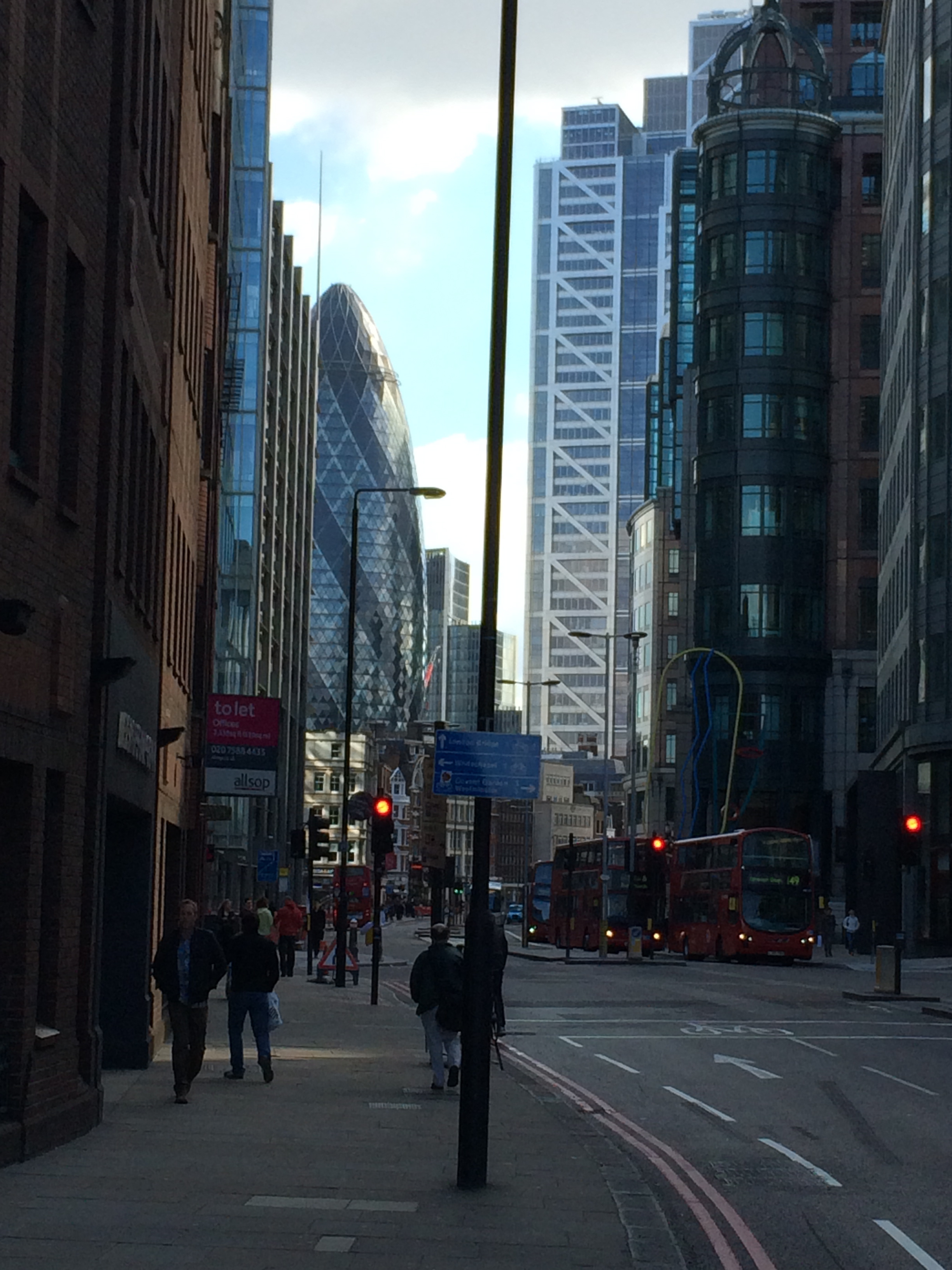
Looking into the City from Great Eastern Street after my trip to Shoreditch to see the Oasis Exhibition back in April. Can never get enough of the Gherkin!
On the long weekend when the political institutions and elites of Europe were blown a very large raspberry by voters across the EU, I shall stick to sport and reflect on two engrossing finals: Toulon v Saracens in rugby’s Heineken Cup and Real Madrid v Atletico Madrid in football’s Champions’ League.


It made for another bumper day of sport on Saturday. There was even a rumbustious aperitif, in the form of the Championship playoff – “the £130m game” – between Derby and QPR at Wembley. The Rs stole that one at the last with a goal from the rarely-seen Bobby Zamora, after being down to ten men for the last 30 minutes. Derby suffered that most agonising of fates: coming third in the league and then losing in the playoffs, the lucrative climes of the Premier League snatched from their grasp. I’m pleased to see QPR back in the top division though. I’ve always had a soft spot for them; in fact if I supported the team closest to where I was born, I’d be sporting blue and white hoops rather than claret and blue.
My fellow viewer, Jon, and I were spared a rugby vs football extra time dilemma when that Zamora goal went in, so it was over to the Millennium Stadium in Cardiff for the clash of the titans. Toulon, the holders, favourites, but Saracens mighty confident after their crushing victory over Clermont in the semis. From the off it was a series of brutal clashes, attritional, full of errors caused by the tension and the awesome speed of the defending. A game for the rugby fan rather than the passing viewer. But the half was lit up by a moment or two of genius from the Toulon 10 and 12 – Jonny Wilkinson and Matt Giteau. The Brit and the Aussie, old rivals now working in tandem for the French club. Wilko switched the direction of play with one pass to Giteau, who put in a curling kick for Aussie winger, Drew Mitchell, to run on to. The ball bounced kindly for him and he raced forward before offloading to a pursuing Giteau, who ran in for the try. A brilliant effort and a moment of incisiveness in a clogged up game. Toulon went in at half time 10-3 up after a classic drop goal from Jonny and it was starting to look tricky for Sarries.
It was more than tricky for Sarries in the second half – they were blown away. Not immediately, but you could see them tiring as Toulon got stronger. The decisive moment was another brilliant Toulon try. The move started well inside their own half. Strettle let Jonny get the ball too easily and he threaded it out to human bulldozer, Mathieu Bastareaud. The Frenchman showed rather more speed than a bulldozer as he piled into the Saracens half. And then the two flankers took over. South African Juan Smith took Bastareaud’s wayward pass brilliantly from behind without losing momentum. He fed it to Argentinian Juan Martin Fernandez Lobbe who then fed it back to him, for the try. A superb sequence of high speed pass-and-move that cut Saracens’ defence apart and clinched the game. Jonny converted, scored another penalty and Toulon ran out 23-6 winners.

A sobering experience for the best team in England. Overpowered, outhought, outfought, outrun.
Toulon are clearly now the best team in Europe and with the money behind them, they could be there for some time to come. The club has assembled some of the best players from around the world and especially South Africa. Bakkies Botha, Bryan Habana and Juan Smith were just three of them. Add in Giteau and Mitchell from Australia, Lobbe from Argentina and the three Englishmen – Delon and Steffon Armitage and Jonny – and you have a team which could probably win the World Cup if it could enter. That’s what it has been like in football for some time. Is rugby now going the same way? Well, maybe it is in France and Ireland, but the salary cap is holding English clubs back, just a little. That’s good for the competitiveness of the Premiership and for the financial stability of the clubs; less good for their competitiveness in Euope. Expect much hand wringing in the coming years.
Man of the Match was Toulon’s Steffon Armitage. A young Englishman who can’t get in the England squad because he plays in France and so cannot be guaranteed to turn up to all the in-season England training sessions. He has just been voted European player of the year too. Expect intense media pressure on the England management to change their policy, and a “Steffon for England” campaign. And if they succumb, expect an exodus of England’s best to the higher wages in France. Economics always wins in the end.
Jonny Wilkinson is at the opposite end of his career to Armitage. 35 and enjoying a renaissance in the Mediterranean sun after an amazing career of highs – the World Cup win with his drop goal in 2003 – and lows – all those excruciating injuries. The Heineken Cup final was his last game on British soil. Next weekend he finishes off with the French playoff final, Toulon vs Castres. Over the last 15 years he has been England greatest hope, its salvation, and sometimes its great disappointment. But mostly he has been the hero. The World Cup winner, the man who could always be relied on to turn penalties into points, the man who gave his all in every game. Can there ever have been another fly half who you would see so often emerging from the bottom of a ruck? That may have contributed to his injuries, but that was just the way he played. We loved him for it.
Off the field, he was dignified and modest – always seeking to deflect praise onto his colleagues. He was at it again this weekend, even though so much of the spotlight was him. A great sportsman – and a great man…

What a contrast with the second best footballer in the world who took part in the Champions’ League final on Saturday. Yes, second – Messi is still the best for me. I’m talking about Cristiano Ronaldo, who scored the fourth and last goal against Atletico, when they were dead on their feet. A dubious penalty secured by one of his trademark dives. So he snuck onto the scoresheet at the last, with the result decided. Any reason then to haul off his shirt and show off his pecs to the world? None other than vanity, arrogance and maybe some repressed anger at having been well short of his best during the game. Give me Jonny Wilkinson and Lionel Messi any time.
A great game though: intensely dramatic, cruel and redemptive, ugly and beautiful. Real Madrid 4 Atletico Madrid 1.
The first time a final has been played between two teams from the same city. We’ve had the same country a few times: Italy (Juve v Milan), England (Chelsea v Man U), Germany last year (Bayern v Dortmund). Never a Real v Barca, either, more’s the pity. The media portrayed it as the aristocrats (Real), desperate for the Decima after a twelve year wait, versus the artisans (Atletico), the grafters, the arrivistes. Never mind that Atletico have just won La Liga, breaking the Real-Barca duopoly for the first time since 2003; and have played some classy football on their way to the final, notably the way they dismantled Chelsea in the semis at Stamford Bridge.
I was trying to think of whom Atletico most resembled in style in England at the moment. None of the top four really, although Chelsea at their best might be closest. So looked back and settled on the great Nottingham Forest team of the late seventies, under the maestro himself, Brian Clough. Built on a strong defence, but swift on the counterattack and capable of pressing. Direct when necessary, but always playing the ball on the floor. Not spectacular, no preening individuals, but good to watch.
In contrast to Real Madrid. Fantastic to watch at times, but preening individuals a speciality. What other team has ever had galacticos?
When it comes to Spanish teams I’m always with Barca, but I love to watch Real and found myself wanting them to win, despite their pretensions and the fact that Jon had them as the last leg of a QPR-Toulon-Atletico treble. (Doubt the odds were much good, so I don’t feel too guilty!).
The game, just like Toulon v Saracens, was tentative and error-strewn at first. The stakes are so high, it’s no surprise. Atletico took the risk of playing Diego Costa, their star striker, although he’d suffered a hamstring injury a week earlier in the winner-takes-all game against Barca. He was off before ten minutes was up and the loss of a sub would hurt Atletico later.
The first goal went to Atletico. A messy affair after a corner, with Atletico pinging a header back into the box after the ball had been cleared, the great Real keeper, Iker Casillas, having a moment of madness, rushing out into no-man’s land, so that Godin was able to head over him into the net. Atletico deserved, as much as Real, to take the lead, but in doing so, started to sit back and defend what they had. That was the pattern of much of the rest of the game.
The second half became a question of when (or if) Real would score. Gareth Bale had a couple of half-decent chances. For the first he might have done better to pass to Ronaldo; for the second he should have struck the ball with his right, rather than favoured left, foot. Ah, so easy to observe these things watching from the sofa! The game really started to swing when Marcelo and Isco came on as subs. Marcelo, the Brazilian, is ostensibly a left back, but, like Roberto Carlos before him, he played more as a left-side midfielder, tearing into Atletico’s weary defences.
So yes, we waited for Real to score – but as we moved into five minutes of added-on time, they still hadn’t. Could Atletico hang on, like Chelsea did against Bayern in 2012? In the 93rd minute a corner from the right. Outswinging, firmly struck. Centre back Sergio Ramos rises, makes space and directs the ball brilliantly into the net. 1-1! No fancy football, just a good old-fashioned set piece and header.

Extra time was clearly torture for Atletico. They had given everything, but the persistent skills of Di Maria (man of the match), Modric, Isco, Marcelo, Bale – and yes, OK, the threat of Ronaldo – had taken its toll. Ten minutes into the first half of extra time, Di Maria scuttled through the Atletico defence and shot. The keeper saved but the ball bounced high into the path of Bale. He did superbly to leap, leaning backwards, to head the ball into the net. 2-1 and the killer goal. In the second half, Marcelo stormed through Atletico’s midfield and lashed in a third – a fitting tribute to his influence when he came on. And then Ronaldo got his penalty and tried to steal the show.
4-1 felt harsh on Atletico and you wonder how they would have fared if their two injured stars, costa and Turan, had been fit. Then again, Real missed Xabi Alonso in midfield (cruelly suspended), and Benzema, Khedira, Bale and Ronaldo were all carrying injuries.
In the end this was a magnificent performance by Real and an admirable, feisty one from Atletico. A game which will go down as one of the great European finals.
We saw, in both the rugby and the football, sport being played at the highest level, under intense pressure. We saw mistakes, we saw brilliance and in the end we saw the supreme skills and power of one side overwhelming the other. In neither case was it inevitable, but in the history of both games it will probably be written as if it were so. Because in the end, in any battle, the winners get to dictate the definitive story.
Photos all from Google Images. All Toulon photos via Daily Telgraph: team shot from AFP; Juan Smith from PA; Jonny Wilkinson from PA. Real Madrid shots both via BBC: team shot Getty Images; Ramos header AP.
A strange title. One of the least well-known tracks off Foals first, brilliant, album, “Antidotes”. While I associated Foals mostly with the Talking Heads and African beats speeded up, “Big Big Love” has a shimmering guitar which could take it into U2’s “Unforgettable Fire”.
I’ve been writing about Foals for my book recently. This is part of what I said.
But listen to “Big Big Love” as you read.
One of the many sub genres of indie, coming out of the US, was math rock. Math rock? Basically meant complex, jumpy rhythms as far as I can tell. The Wikipedia article on the genre – of course there is a Wikipedia article on it – cites a huge number of bands that I have never heard of, including one called Heavy Vegetable. 70s prog rock was an influence. Joy in the complex. That’s alright – there’s a place for it, though as this story has shown, I err towards simplicity when it comes to favourites. I only mention this because the next band I want to mention is Foals. Wikipedia has them down as math rock in their early days and I can see why. They even have a track called “Mathletics”, which was their second single, in 2007. The first was “Hummer” and the third was “Balloon”, which was also the first single off their debut album, “Antidotes”. I’ve got the NME to thank, once again, for introducing me to Foals. Both “Hummer” and “Mathletics” were in the upper echelons of NME’s top singles of 2007 chart. I gave them a listen and thought, wow, these are good. “Balloons” was there for download too. There was really something special about the band. The sound was dominated by a high register guitar beat that sounded like an African lilt speeded up so it pogoed rather than lilted. Singer Yannis Philipakkis’s voice was pretty high register too. It was all rather fraught, but really sharp and sort of funky. It was impossible for me not to make the inevitable Talking Heads comparison, but Foals didn’t sound like Talking Heads used to sound, but how they might have sounded in 2007 with the same technology at their disposal. The bands certainly shared the same spirit, with a clear love of dance and Afro beats meshed in with their new wave guitars.
“Andidotes” came out in 2008. It fulfilled the promise of those early singles. “Cassius” and “Olympic Airways” continued with the high pitched high step. “The French Open” introduced a shredded reggae beat with some French lyrics, which, on close inspection, meant nothing at all. The lyrics generally were an accompaniment to the beats. Intriguing allusions with no finishing place – not unlike their Oxford compatriots, Radiohead. Shards of words and music. Left to your imagination.
And throughout the album there were chiming guitars, pulsating rhythms, and those searching vocals. Towards the end of the album, things slowed down a little, and, if anything, got even more interesting. I liked “Big Big Love (Fig 2)”, which kept the chiming beat, but was deeper. I loved the opening riff, which, I have to say, could have been on U2’s “Unforgettable Fire”. “Two Steps,Twice” started with a some high-pitched plucking and then morphed into a drum-laden chant that became one of the band’s live highlights. They first appeared at Glastonbury in 2008, on the other stage, but were back in 2010 under the tent on the John Peel stage. By then they were featuring songs from the second album, “Total Life Forever”, which had a mellower sound; but the the energy of the band was extraordinary. “Two Steps, Twice” marked the point when Yannis leapt into the audience and took some time, and about six orange-coated security guards, to re-emerge. It was one of the most powerful live performances I had seen in a while, if only on TV.
Foals went down as my top indie band of the late 2000s, rivalled only by Glasvegas, in their moment of triumph.
If your acquaintance with Foals is “Holy Fire”. I urge you to go back to “Antidotes”, and “Big Big Love”. The best of the band.
Saturday was a great sports viewing day. I had a cycle down to Hammersmith beforehand, before settling down for two big deciders for two of my favourite teams: Quins and Arsenal. (West Ham are on their hols already).
For Quins, the Premiership play off semi final was something of a bonus. For much of this season we have been just outside the top four. A young team, still learning to cope with the absence of international players during the Six Nations and with some cruel injuries to key players, especially in the centres and the front row. But, when Robshaw, Brown, Marler and Care returned from England duty, things picked up and the team won five successive matches at the end of the regular season. They included an excellent performance away to Sale, an absolute humdinger at home to Leicester on a Friday evening under the floodlights, and then, in the last game, a win against Bath in what was a winner-takes-all match.
That was last weekend. Bath were 4th and Quins were 5th going into the game. I’d got it into my head that Quins needed to end up a point ahead to get into the playoffs, as Bath had a superior points difference (that’s points for and against in the games as opposed to those awarded for results) over the season. And I watched the game with that in mind. Quins were never behind, but I thought they needed to be eight ahead so that Bath wouldn’t get a losing bonus point. The score was 19-16 to Quins, which until near the end, I thought wasn’t enough. But everyone was celebrating! Turned out points difference wasn’t the decider, but number of games won over the season. Quins were through. But I never felt tense as the game reached its conclusion, as I thought we weren’t going to get it, with the scores as they were. Strange!
The reward for the victory was a tie away to Saracens, league winners and awesome victors over Clermont in the Heineken semis. (See my Sportsthoughts 100). Didn’t have too much hope – except, that run of form…
Things started pretty well. Quins confounded Saracens with their game plan, which involved more kicking than usual, and some very aggressive defending. Even the brutal Jacques Burger was shaken by a tackle by the young (and slightly crazy) prop, Kyle Sinckler. At half time Quins were 19-11 up and looking good. But the second half was so different. Quins had a couple of opportunities, but nearly all the game seemed to be taking place in their half. Saracens slowly ground Quins down and won the half 20-0, for a 31-17 victory. Did Quins get anything wrong? No, I don’t think so. Saracens just sorted themselves out, upped a gear and were too good. They go forward to play Northampton in the final.
So, it’s a season when Quins went slightly backwards in terms of results, but, at the same time, brought through some really promising youngsters. Charlie Walker, until he got injured, was sensational on the wing, Kyle Sinckler looks the business at tighthead, though he needs to control his anger. Luke Wallace forced his way into the first choice team as flanker, playing either role, depending on whether Chris Robshaw was around. He must be in the England squad soon. Joe Trayfoot also looks good at flanker and Ollie Lindsay-Hague covered well for Mike Brown. And Dave Ward, though not exactly a youngster, was a revelation at hooker. Third choice at the beginning of the season, injuries gave him the opportunity to make his mark. His pace would be good enough for the back line and he is always winning turnovers. Rumours are that he will make the England tour to New Zealand this summer.
So it all feels good for the future, and with Marlon Yarde arriving from London Irish, the attack could be even better. But is the progress of the youngsters enough to get even with Saracens and Northampton, who both have so much power?
Who knows? Quins in rugby are a bit like Arsenal in the football. Putting faith in youth, trying to play the game the right way, the attacking way. But hitting the wall against the big spenders (notwithstanding the salary cap, which is supposed to even things out).
Oh yes, Arsenal. Top of the Premier League for longer than any other team this year. But finishing fourth after those calamitous defeats away to Liverpool and Chelsea and Everton. Something in their psyche for the biggest matches that makes them freeze early on. Hugely talented and in the end, a comfortable fourth, thus ensuring Champions League football once again. But so many questions about their ability to sustain a challenge for top place.
And so the FA Cup became their salvation. The chance to win a first trophy for nine years. Their progress to the final was helped by some easy ties, although they did beat Everton along the way. The semi final against Wigan was tortuous, won only on penalties.
A final against Hull was surely winnable, with relative ease. My prediction was 4-1.
So, of course, they were 2-0 down after ten minutes! More static defending, freezing when the pressure was on. It was almost 3-0, but for a Kieran Gibbs clearance off the line. Surely, against Hull, Arsenal wouldn’t capitulate as they had against Liverpool and Chelsea? Nervy times.
But this time they regrouped. Santi Cazorla got one back with an excellent free kick on 17 minutes, and from then on, Arsenal stepped up the pressure. By the second half, Hull looked out on their feet, struggling to keep up with the Arsenal passing in midfield. But Arsenal weren’t incisive at the last and so while they got an equaliser, they went to extra time. Finally, in the second half of that, Aaron Ramsey, Arsenal’s man of the match (run close by Cazorla) poked in the winner, after a good move. There were some scares before the end, but Arsenal were dominant and the game ran out 3-2.
And so Arsenal have finally won a trophy, if only the FA Cup, which Arsene Wenger used to treat with disdain, putting out weakened teams who often did well, but not well enough to win it. Beggars can’t be choosers any more. The League seems beyond them at the moment, so they have to aim lower.
So what next? It looks like Wenger will renew his contract, so will he change his ways and splash out on three or four really high quality players to strengthen the squad – and not all silky midfielders? The money appears to be there – it’s the will. One, or even two, strikers. A powerful holding midfielder, another solid centre back. A spine. The thing that Arsenal have lacked since the days of the Invincibles.
At the top of the Premier League and in Europe, just growing your own doesn’t work, unfortunately. So do Arsenal have the ambition to make the break and force their way into the party? Does Wenger? I’m doubtful. Much as I admire Arsene, I think he should use the FA Cup triumph to exit (or move upstairs) with dignity, leaving the way open for a coach with a more ruthless mindset. Otherwise I think Arsenal will remain great to watch and continue to come third or fourth.
As a West Ham fan, I would love such a fate for my team. But Arsenal should be doing more. Carrying the candle for good football AND being strong enough to win. They have done it before – they can do it again.
But a change has gotta come…
 Thoughtsfromwestfive