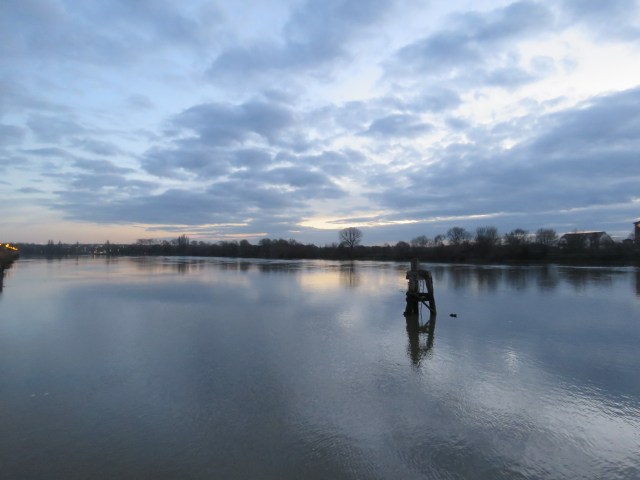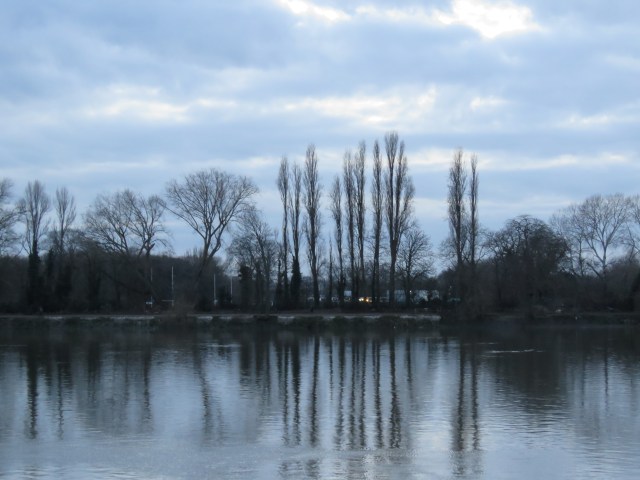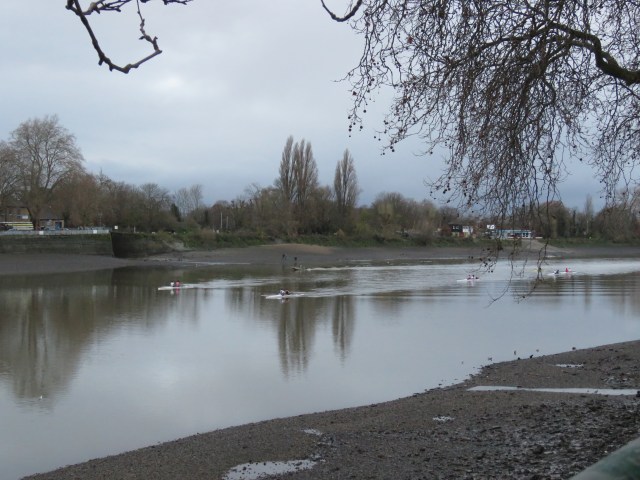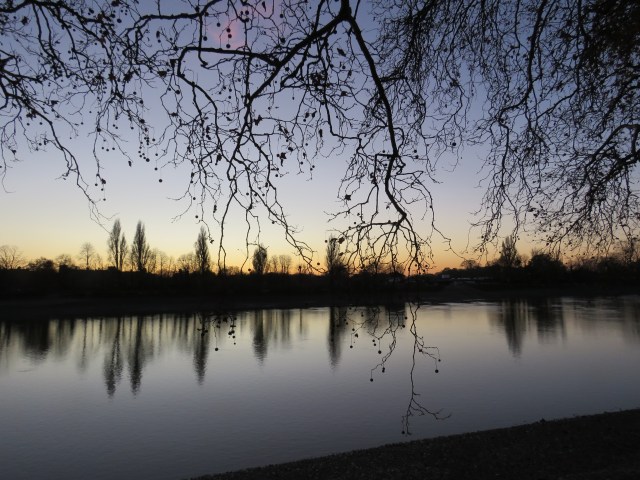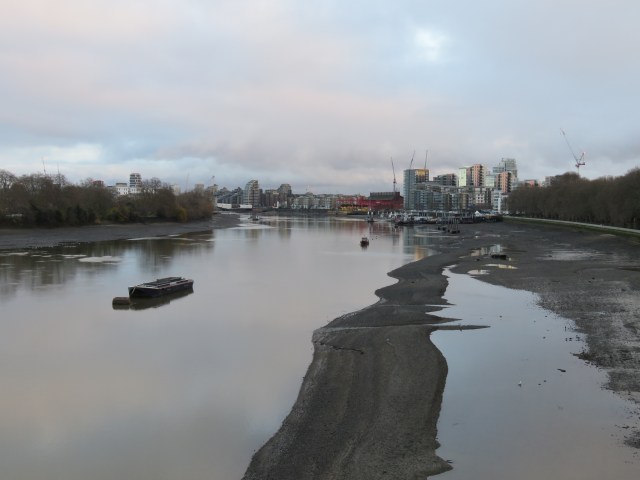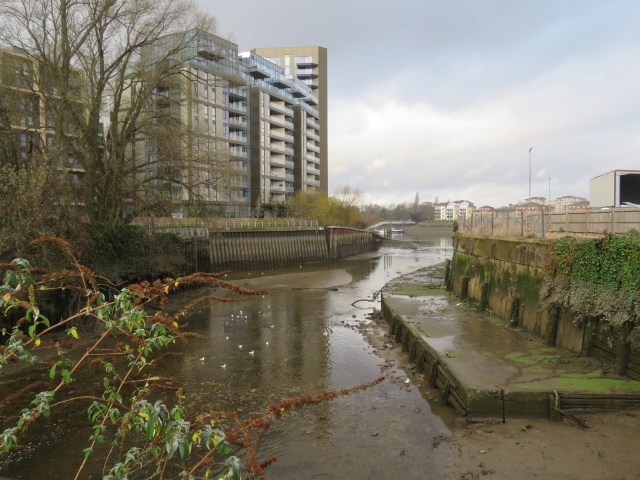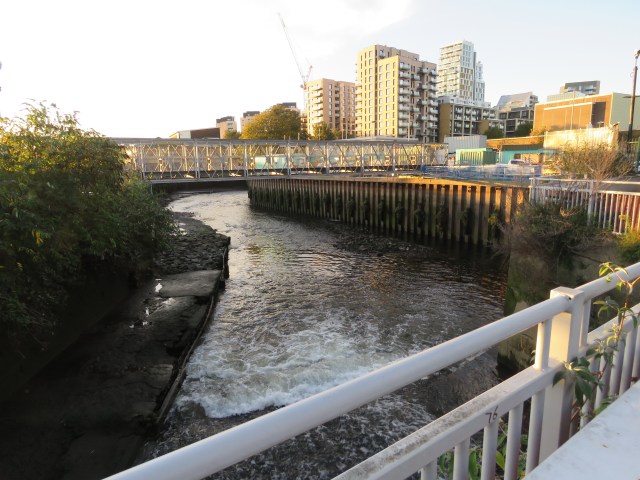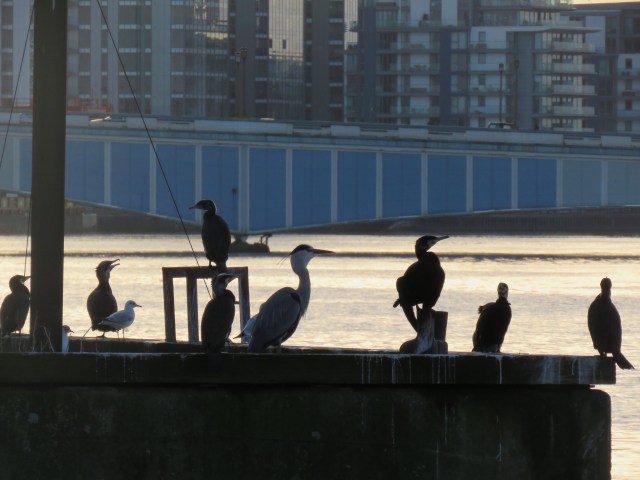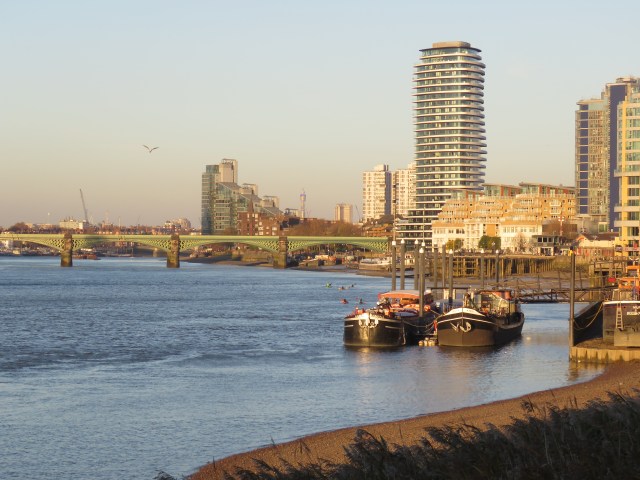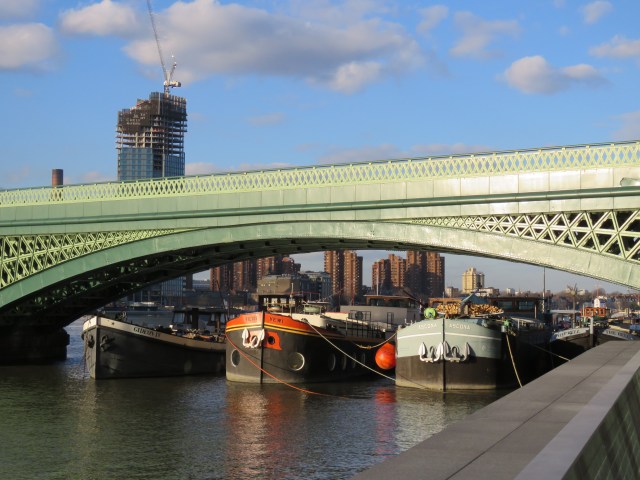
A Thames Journey: (9) From Hammersmith to Westminster

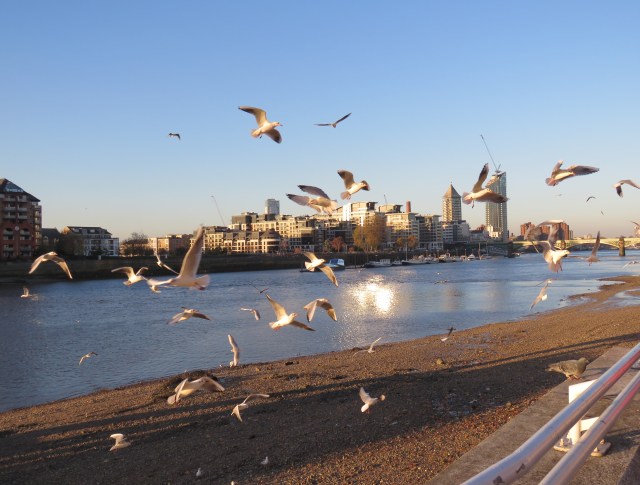
Down by Battersea

In the previous episode of this story, the story of the Thames’ journey from source to estuary, we ended at Hammersmith Bridge, just as it had re-opened to pedestrians and cyclists. I published that piece last September – where have the last ten months gone? But onwards we go, from Hammersmith Bridge – still closed to road traffic – to Westminster Bridge in the heart of London.

On this part of the river’s journey it drops to the south-east, past Putney, to Wandsworth on the south side, before it begins to snake its way north-eastwards to Westminster. The length of the journey varies according to which side you travel on; on the south side it’s around ten miles; on the north side, just under nine. You can walk both; but after Putney it’s better to walk on the south side, where there is a footpath path along the riverbank much of the way. On the north side you find yourself circumnavigating private property – notably the Hurlingham Club – or walking alongside roads. Either way there is plenty to see and do – this is London.

The journey from Hammersmith Bridge to Putney Bridge is a couple of miles. When I used to cycle this length of the river, I’d usually head towards Putney on the south side, which is largely straightforward towpath, and then come back on the Fulham side. Now I prefer to walk, I mostly take the Fulham/Hammersmith option, as I’m less likely to be doing both on the same walk. It’s more varied – and has plenty of pubs if you fancy stopping for a refreshment. If your preference is for a peaceful stroll, with trees along the bank and the gentle rippling of the river against the shore, then the south side is for you.

Setting off from Hammersmith Bridge you pass the Riverside Studios, a centre for the arts, which reopened in 2018 after a major rebuild. Nearby there is a statue of Lancelot “Capability” Brown, the 18th century landscape architect, who lived in the area. We are now in Fulham Reach and its new apartment blocks. I wouldn’t mind one of those flats overlooking the river, as I love the views on this stretch, particularly at twilight. On the south side it’s wilderness of sorts – the London Wetland Centre and then just downstream, behind the trees, the Barn Elms playing fields, which hosted, amongst others, the London Oratory school. My son Kieran and all his friends used to love the annual 5-a-side football tournaments there – the one time they were allowed to play football rather than rugby.
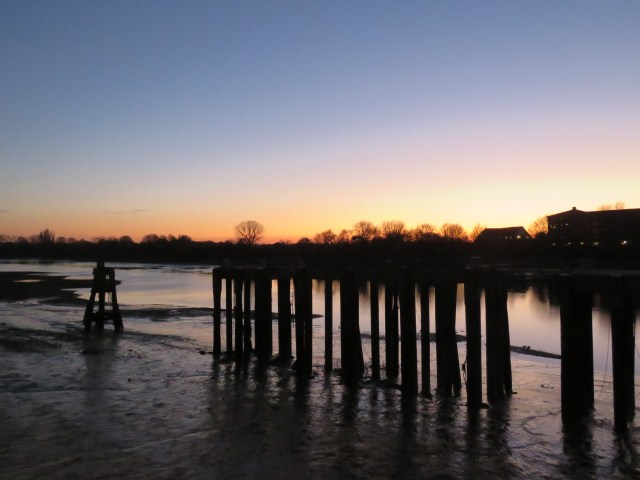
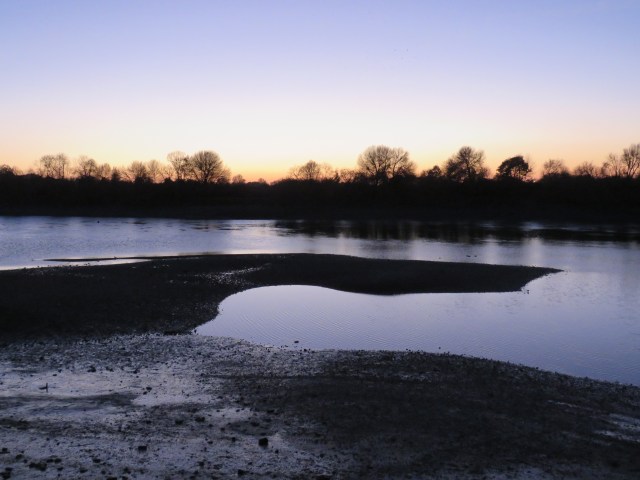
Barn Elms opposite

As you head towards Craven Cottage, the home of Fulham FC (newly promoted – once more – to the Premier League) you pass the River Café, one of London’s most popular restaurants. I’ve been there once, and yes, the food and everything else was outstanding. I tried not to think about the impact on my bank balance! There’s nothing flash about the place – it’s just really good.
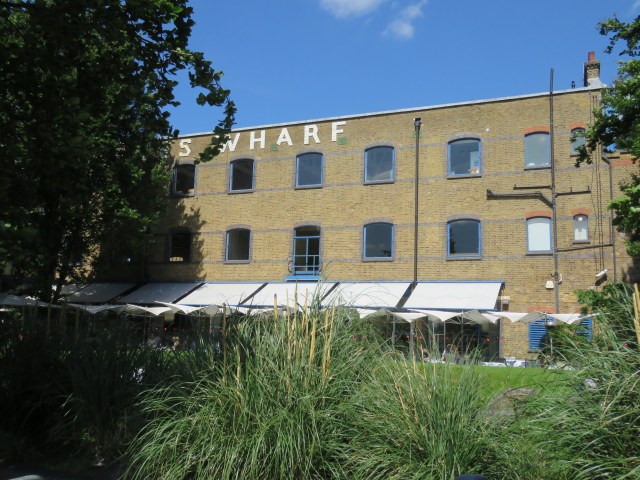
River Cafe

In June last year, as we were coming out of covid restrictions, I had a stroll from Hammersmith to Putney, and was surprised to see a flotilla of boats on the river near the football ground. Maybe it’s a regular occurrence in summer, but it was the first time I’d seen it here. There’s usually more activity down by Putney Bridge. It felt good to see them, a symbol of our release.
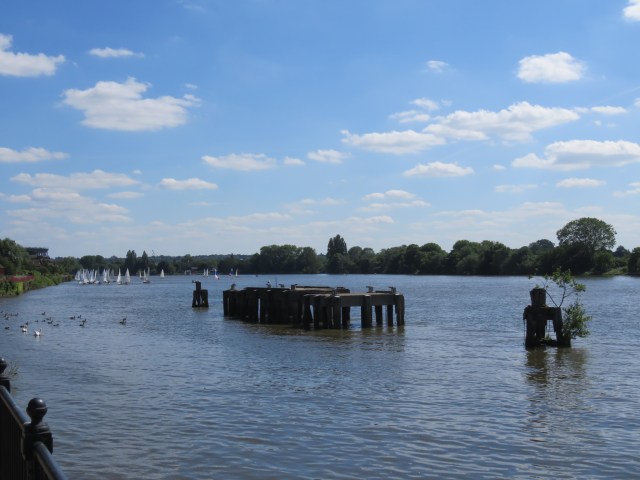
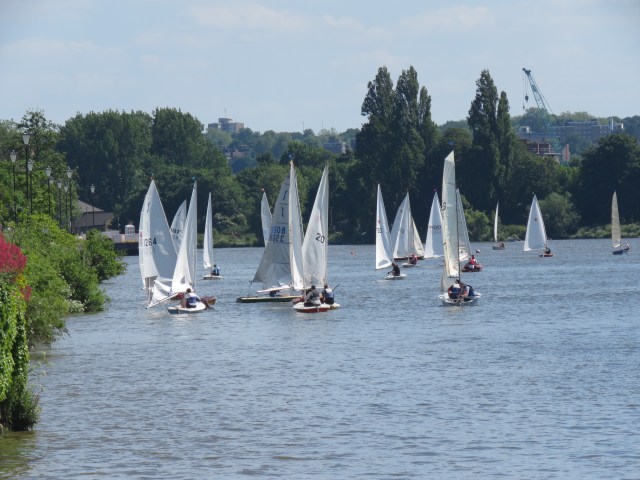
Oddly I have never been to see a football match at Craven Cottage. Brentford, QPR, Chelsea, in West London, many times. West Ham, Arsenal, Tottenham many, many times. But not Fulham, one of the nearest. No reason, really, just never happened. The ground has had a major rebuild, which is still going on. The photos below are from last year and were taken from the other side of the river, the best way to get the full picture.
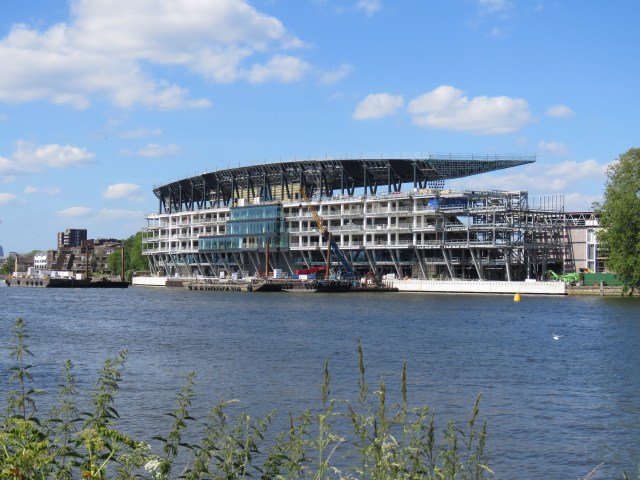
Craven Cottage 2021

After you’ve walked around Craven Cottage you come to Bishop’s Park, which extends all the way to Putney Bridge. It’s a multi-purpose park: first, as you walk towards the bridge, there’s an open space where people play football, cricket, have picnics or just lie in the sun, when there is sun. In the middle is a large children’s play area, facilities for tennis and bowls and a pond; and then the more manicured gardens take over. Adjacent to the park is Fulham Palace, which has its own gardens, and is open to visitors. It was the home of the Bishop of London until the 1970s. And right at the end of the park lies All Saints Church (see below). Alternatively, you can walk alongside the river on a path mostly separated from the rest of the park by trees and bushes. This is my preferred route, looking across to the Putney boathouses and then towards the bridge. As with Fulham Reach, some of my favourite views are at twilight, which, in winter, is happening in mid-afternoon.
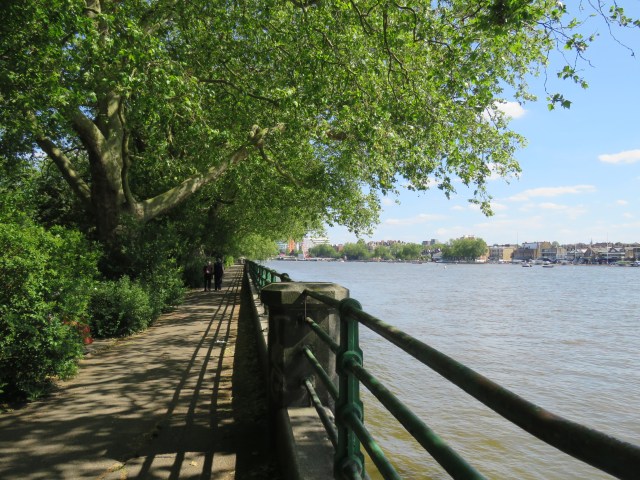
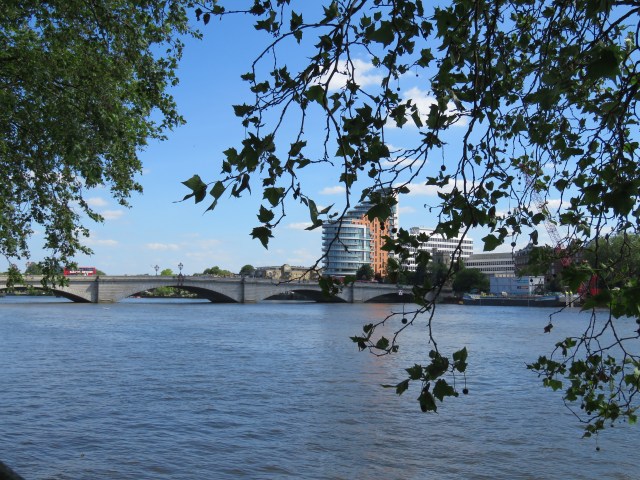
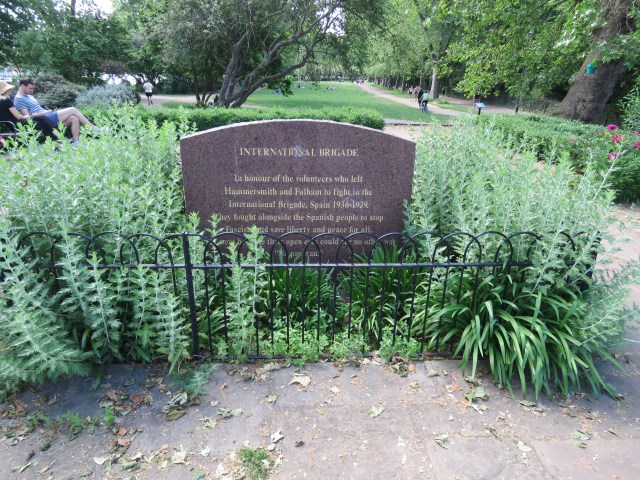
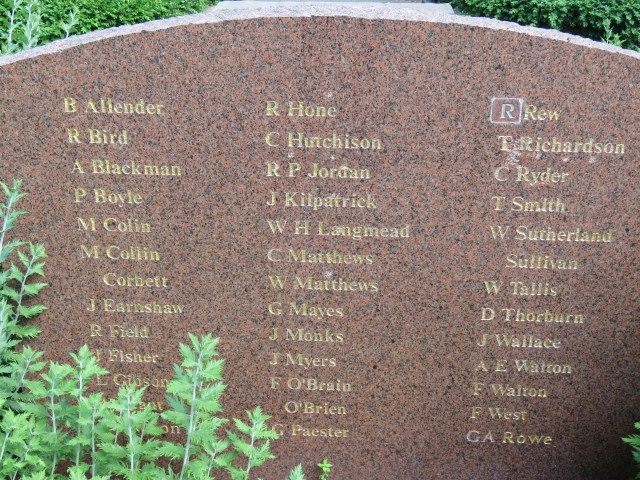
Bishop’s Park was opened in 1893 by London County Council, on land provided by the Ecclesiastical Commissioners, now the Church Commissioners. Wikipedia tells me that scenes for The Omen were filmed here! Something I only discovered last year, because I usually walk along the river path, is a memorial to members of the International Brigade, who died fighting for the Republicans in the Spanish Civil War in the late 1930s.
Fulham and Putney are regarded as twin towns either side of the bridge. Putney Bridge tube station is on the Fulham side. There are churches on both sides; the aforementioned All Saints in Fulham, St Mary’s in Putney. St Mary’s now opens up to a café called the Putney Pantry. You can get a nice breakfast there. There’s a farmers’ market there on Saturdays.
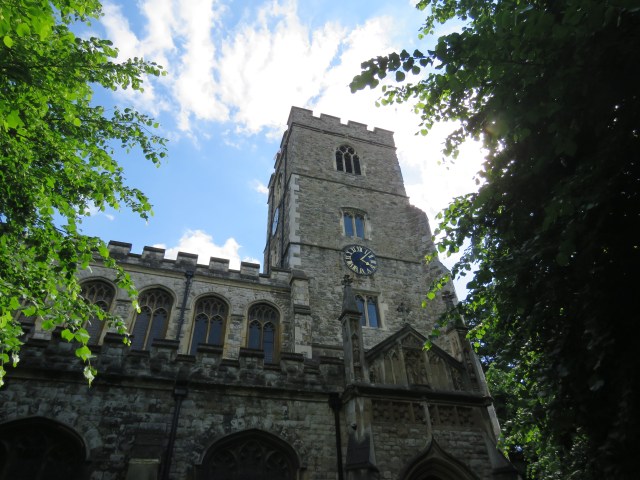
All Saints, Fulham
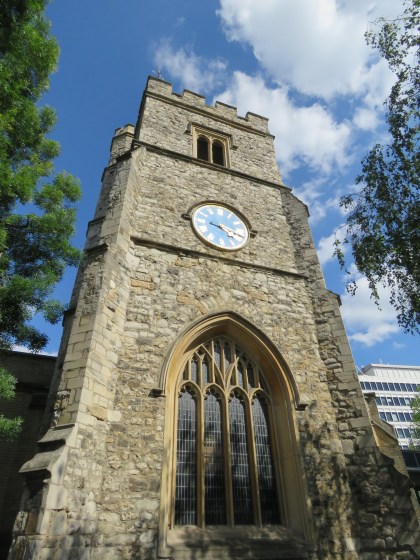
St Mary’s, Putney

Peter Ackroyd retells a story of how both places got their names. Two giant sisters, building the two churches, only had one hammer. They would throw it across the river to each other, crying, Put it nigh! and Heave it full home!  More prosaically, the names may derive from landing place of Putta and the place of fowls or foul home, a muddy settlement.

The first bridge at Putney was opened in 1729, although during the English Civil War, a temporary bridge of boats had been improvised. Prior to the construction of the bridge, there had been a ferry between Fulham and Putney. Legend has it that in 1720 Sir Robert Walpole, soon to be Prime Minister for over twenty years, was hurrying back from Kingston, where he had been to meet King George I. The ferry was on the Fulham side at the time, and the waterman, who was drinking in the Swan pub, ignored Walpole’s calls. Walpole vowed then that a bridge would replace the ferry. According to Peter Ackroyd, a London MP denounced the bridge, claiming, “The erection of a bridge over the Thames at Putney will not only injure the great and important city which I have the honour to represent, not only destroy its correspondence and commerce, but actually annihilate it altogether.” MPs talking utter nonsense is nothing new.

The current stone bridge dates from 1886, though it has had a few repairs along the way. It’s not the most beautiful, and walking across it with all the traffic is not the greatest of pleasures. But the views up river both from the bridge and the boathouse shore are great. there’s one spot when you can see the Wembley arch lurking behind the trees, most unexpectedly. This where the Boat Race has started most years since 1845, something I wrote about in the previous piece.
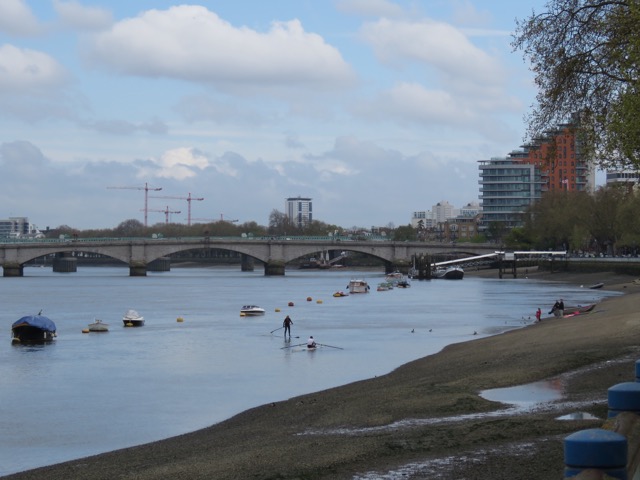
The bridge from the boathouses
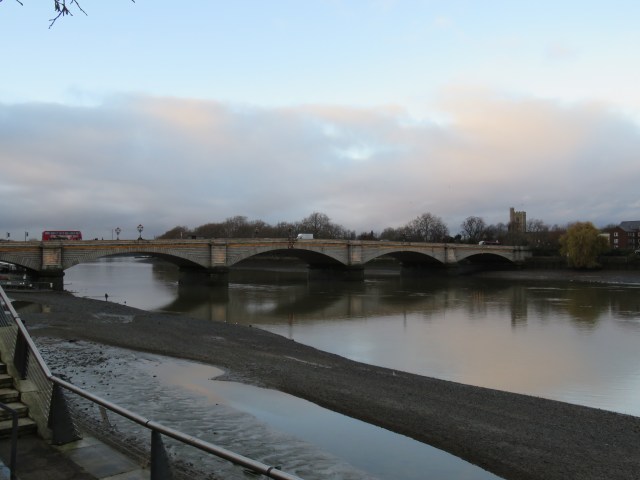
View from downstream
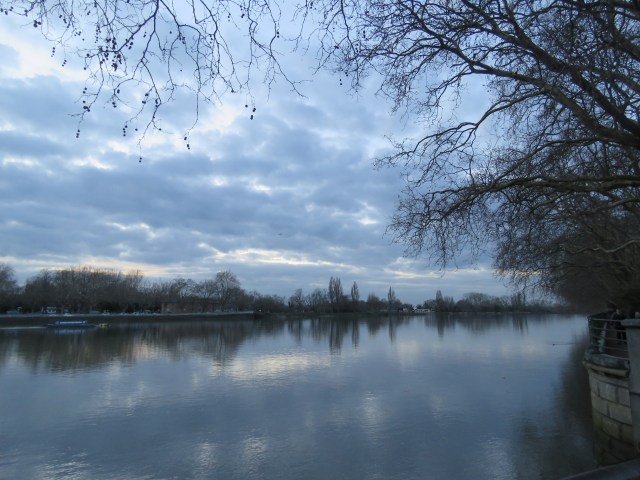
Looking upstream
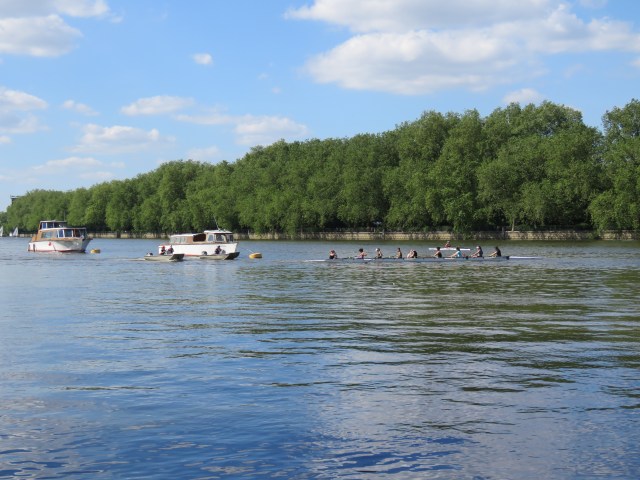
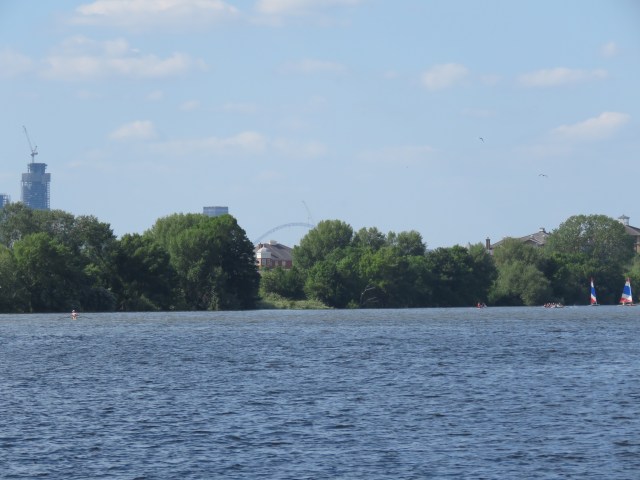
Spot the arch
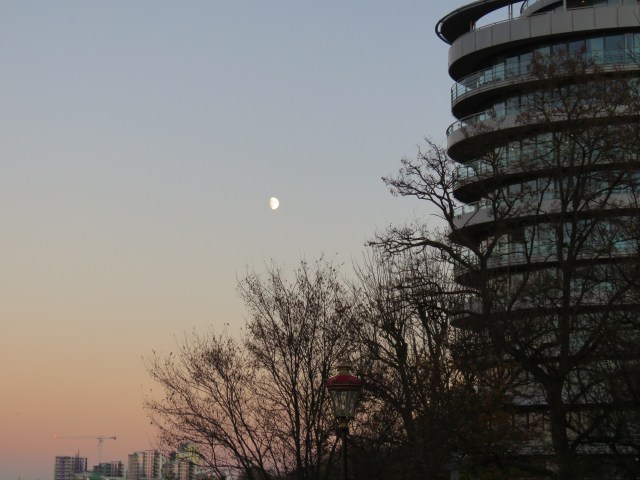
Half Moon, Putney

Putney can lay claim to being a home of democracy and individual rights in England, and, indeed, around the world. In 1647 what became known as the Putney Debates took place in St Mary’s Church, chaired by Oliver Cromwell, soon to be victorious over the Royalists in the English Civil War. The discussion centred on a manifesto proposed by the Levellers, who had gained support in Cromwell’s New Model Army. An Agreement of the People argued for a range of parliamentary and voting reforms, religious freedom, equality before the law, and the abolition of conscription, amongst other things. The Levellers were ahead of their time – Cromwell eventually executed most of the leaders. But their manifesto was an inspiration for the United States’ declaration of independence 150 years later.

On a somewhat different note, Putney was the second place I lived in London. I was in a five bedroom flat at the top of Putney Hill for a year, mostly in 1981. The local pub was called the Green Man, on Putney Common. It’s still there. Apart from the flat and the Green Man, the place I probably spent most time in was the Our Price record shop on the High Street, not far from the bridge. I was earning reasonable money for the first time in my life, and a lot of it was spent completing my collection of the likes of Bob Dylan, Van Morrison, Bob Marley and Stevie Wonder, as well as devouring the new music of the time.

But back to the river! it’s best to stay on the south side at this point, although you do have to walk along a residential road for a bit, until you reach Wandsworth Park. You can walk along the river briefly on the north side, crossing over at Putney Railway bridge, which has a walkway. Absurdly, I only realised this last year, after so many years walking or cycling past it.
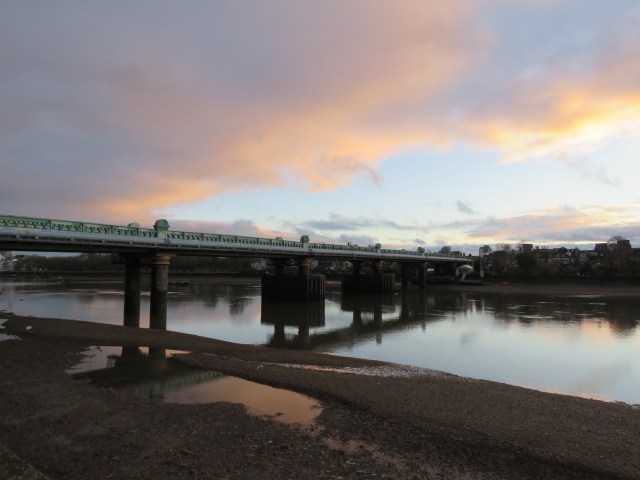
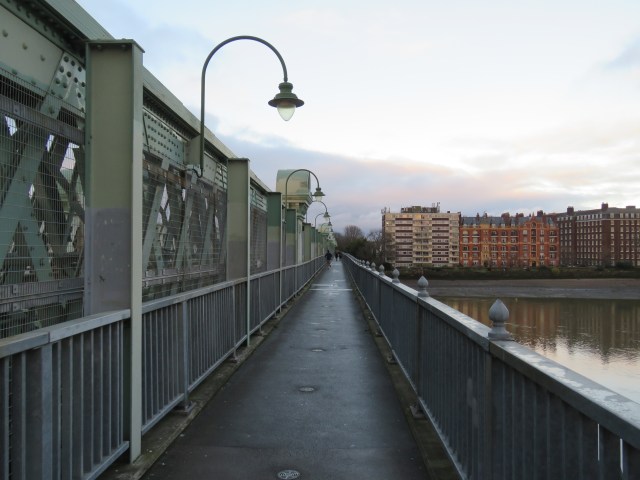
Looking downstream towards Wandsworth

After the railway bridge the north side is blocked for a while by the grounds of the Hurlingham Club, one of London’s posher institutions. I don’t think it should be allowed to prevent access to the riverbank: there should be a public pathway, separated from the club’s grounds by all means. But the river is for the people! The Thames path doesn’t really get going along the river again until after Wandsworth Bridge. It then takes you past a number of new housing developments, with all the usual accompanying infrastructure, until you get to Chelsea Creek and the site of the old Lots Road power station and the pumping station. The new London super sewer is also being built underground round here. I’ve only ever walked this stretch once, preferring the south side. Once you reach Cheyne Walk though, it becomes very familiar. You do have a road alongside you at this point, but there’s an interesting walk up to Battersea Bridge, past the huge houseboats on the shore and the plush houses on the other side of Cheyne Walk – home to the rich and famous.
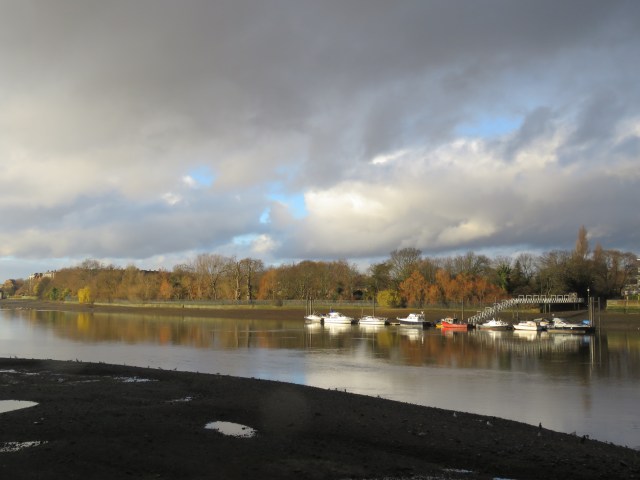
Hurlingham opposite
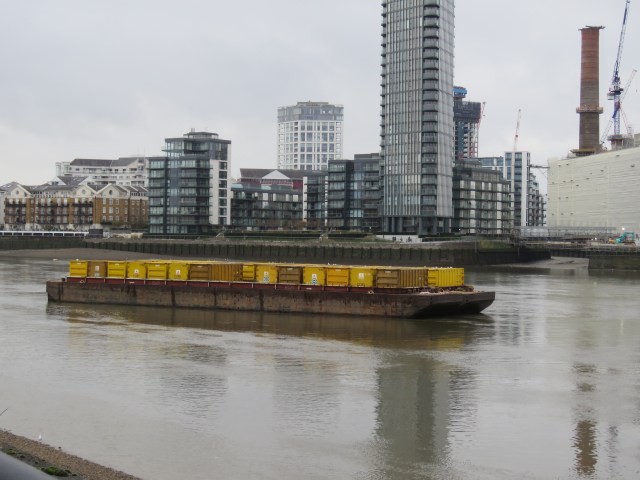
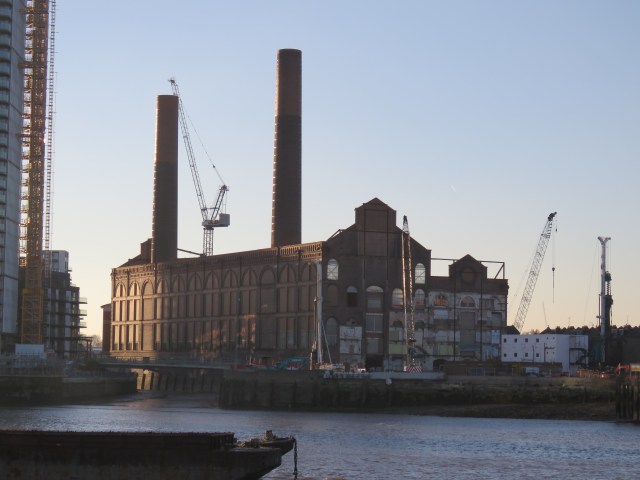
Lots Road power station
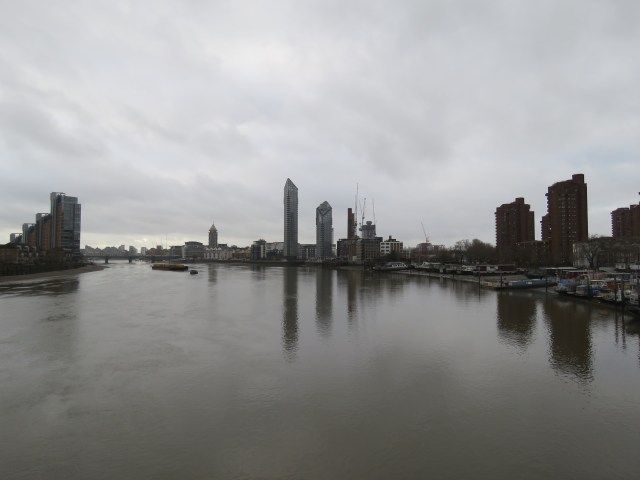
View from Wandsworth Bridge
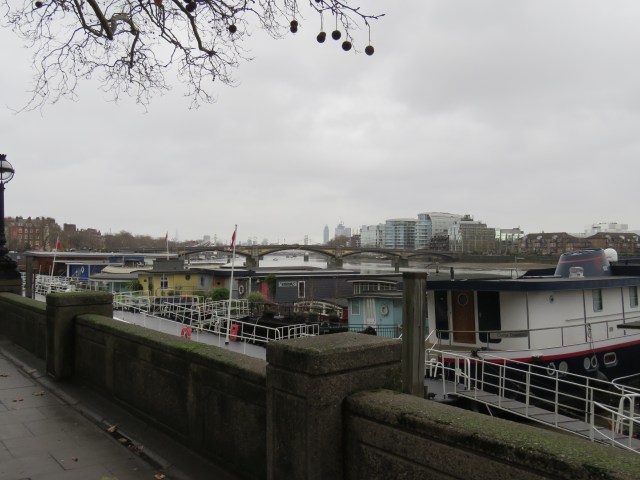
Houseboats near Cheyne Walk
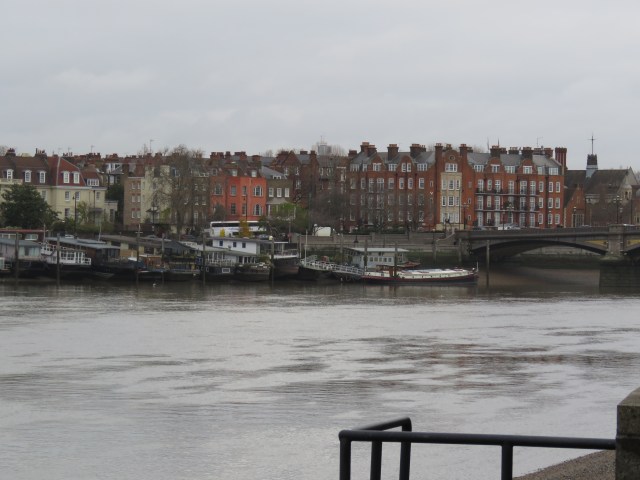
Cheyne Walk near Battersea Bridge

Wandsworth Park, on the south side, isn’t particularly glamorous, but it’s well used, and I do like the views of the river, especially at low tide.
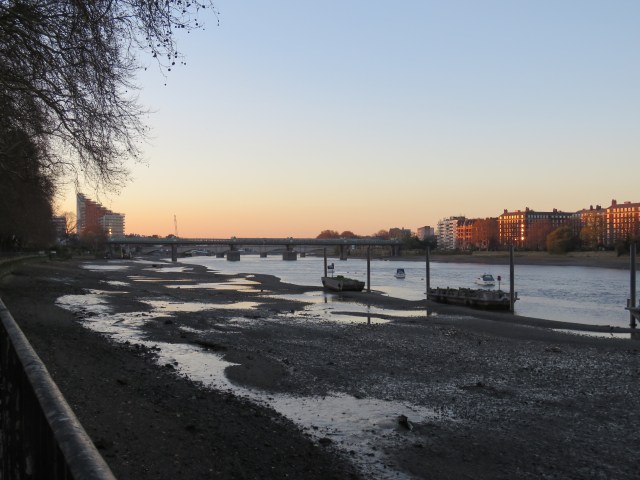
After the park, there’s a new apartment block development called, imaginatively, the Riverside Quarter.  I can recommend a pub on the edge of the development, near the park, called the Cat’s Back. It serves Harvey’s Sussex ales, one of the few London pubs to do so. On the other side of the development we come to where the River Wandle joins the Thames, known by some as the Wandle Delta! I’m rather a fan of the river, having walked the length of it a couple of times. It rises in the Croydon area, in two places, and winds its way through south-west London to Wandsworth, which takes its name from the river. If you visit both sources, the length is about 14 miles, one of the longest in the capital. You can read my blog about the Wandle here. The mouth of the river used to be the site of the Youngs Brewery. That has now moved out of London, to be replaced by residential developments in what is still known as the Ram Quarter; but the smaller Sambrooks brewery remains in the area. It brews some very fine beers, including its Wandle best bitter. There’s a pub near the Wandle in Earlsfield called the Wandle. It serves Sambrooks beers, so you can be drinking Wandle in the Wandle by the Wandle!
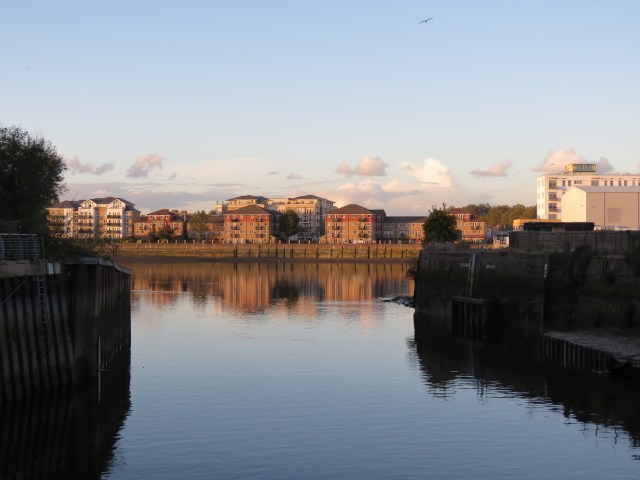
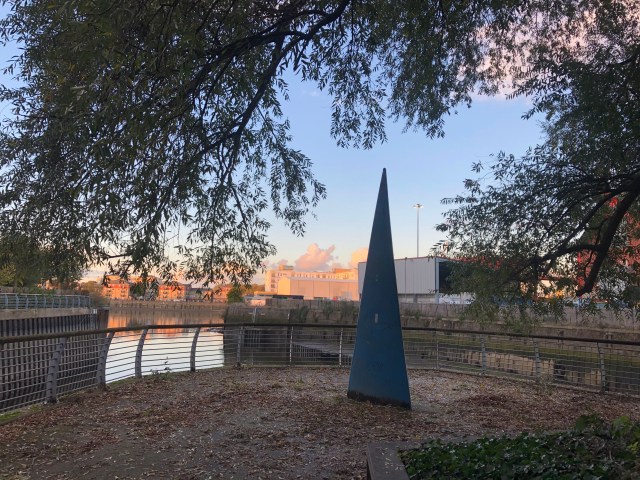
On the other side of the Wandle you have to walk off river, on Smugglers Way for a short stretch, before returning to the riverside. There’s an old and popular pub called the Ship just before you come to Wandsworth Bridge. It’s a very functional bridge, which apparently was painted blue in its most recent incarnation in 1940 to disguise it from German bombers. You can’t even see that at the moment as it is being refurbished, while remaining open to traffic. The next stretch, on the way to Battersea Park, is mostly apartment blocks, but has a few interesting sights, including Battersea Railway Bridge, London Heliport and a lovely church called St Mary’s, Battersea. There’s a lot of birdlife along the shore too.
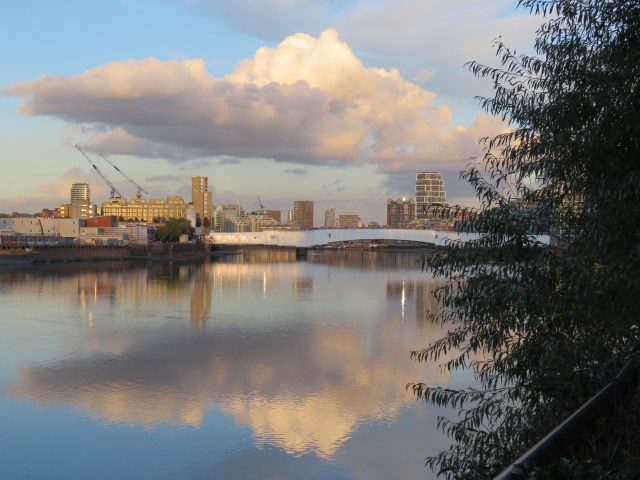
View of Wandsworth Bridge from the Wandle, 2021
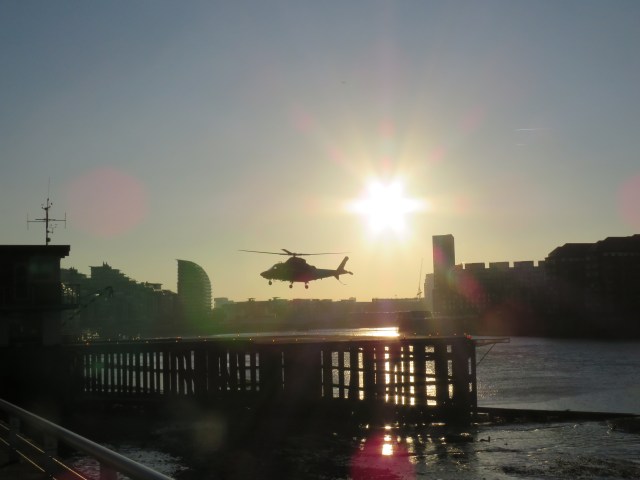
London Heliport

These photos of the birds are from 2018. Wandsworth Bridge, blue in the background.
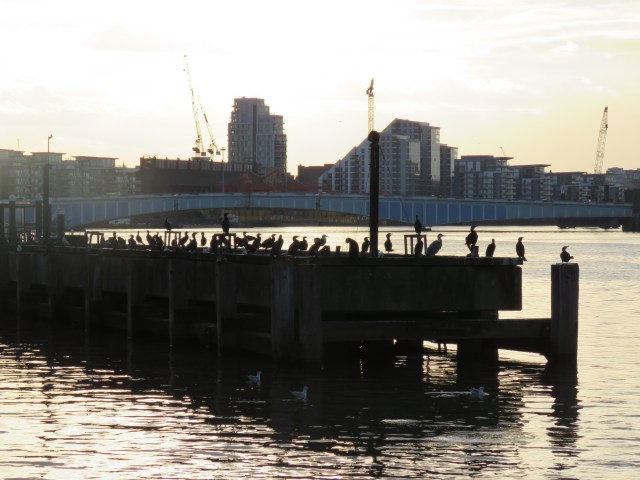
Looking toward Battersea railway bridge

Low and high tide contrasts in the next two.
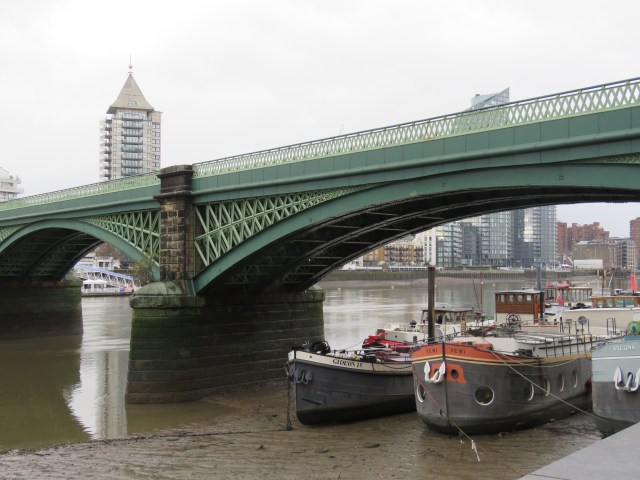
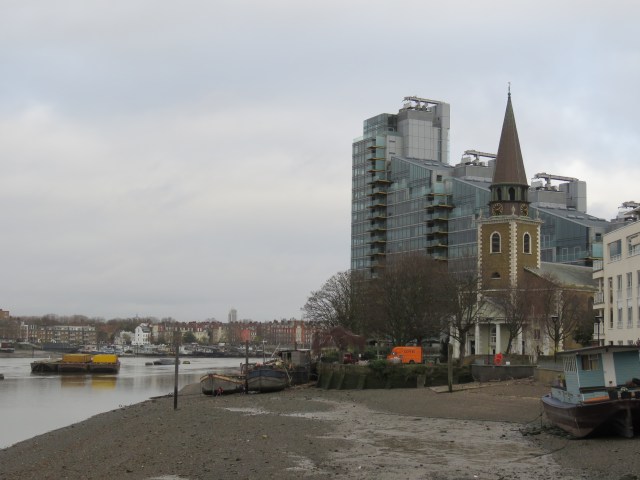
St Mary’s, Battersea

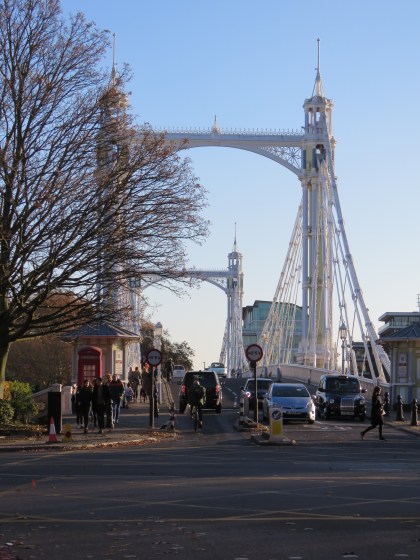
Just before Battersea Park there are two road (and foot) bridges: first Battersea Bridge and then the more photogenic Albert Bridge. Battersea Bridge was opened in the 1770s, like Wandsworth Bridge, and was an equally unsuccessful toll bridge. For a while it was known as Chelsea as well as Battersea Bridge, until Chelsea Bridge was opened in the 1850s. It was neglected and became quite dangerous to cross. It was the last London Bridge to remain built of wood. Perhaps because of its position, connecting Battersea with prosperous Chelsea, and at a sharp bend in the Thames, it has been painted by a number of notable artists, including Turner, Whistler and Pissarro. On the Chelsea side there’s a statue of Whistler nearby.

Competition between bridges intensified in this part of London in the 19th century, with Vauxhall Bridge opening in 1816, Chelsea Bridge in 1858 and Albert Bridge in 1873. The Vauxhall Bridge owners had to pay Battersea Bridge compensation for loss of income and the Albert Bridge company had to purchase Battersea Bridge to keep it going. Eventually this was all resolved by a good bit of state intervention: in 1877 the Metropolis Toll Bridges Act was passed, which allowed the Metropolitan Board of Works to buy all the London bridges between Hammersmith and Waterloo and end all the tolls.

Battersea Bridge was rebuilt in the late 1880s and reopened in 1890. Trams operated on it until 1950. Its position on a bend in the river has made it a hazard to shipping, and there have been collisions throughout its history. In 1950 a coal barge hit the bridge, causing significant damage. The tram held the bridge together, but it was removed during the reconstruction. Another large barge called the James Prior collided with the bridge in 2005, causing structural damage, and a closure to all but buses until January 2006. I must admit I have no recollection of this, despite being a London resident since 1980. But I do vaguely recall the incident of the bottlenose whale, which made its way up the Thames to Battersea Bridge in January 2006. Sadly it didn’t survive, and its skeleton is now in the Natural History museum.

The original Albert Bridge has never been replaced – a rarity in London – but it has been significantly modified, with suspension added to its “cable-stay” design ten years after it was opened, and supporting concrete piers added in 1973. It was known as “The Trembling Lady” in its early days, on account of its tendency to vibrate, particularly when used by the nearby troops from Chelsea Barracks. (A similar wobbliness afflicted the Millennium Bridge when it first opened in 2000.) Because of its position on the bend in the river, it has been lit at night for some time. It was painted green between 1905 and 1981, changing to yellow at that point. In 1992 it acquired its pink blue and green hue, and new low-voltage lighting. Because of its structural weaknesses there are restrictions on the traffic that can use it, which include the “Chelsea Tractor” four wheel drive vehicles popular with the denizens of Chelsea and Battersea. In the early 70s there were proposals to turn it into a “garden bridge” for pedestrians only, but the motorists won the ensuing debate. So the short-lived (and expensive) Boris Johnson/ Joanna Lumley proposal from a few years ago wasn’t the first of its kind!
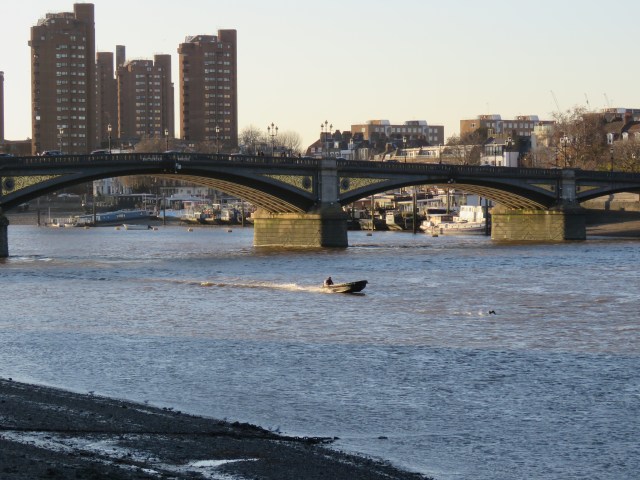
Battersea Bridge
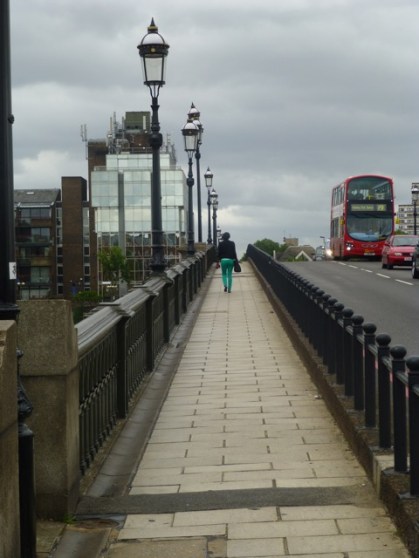
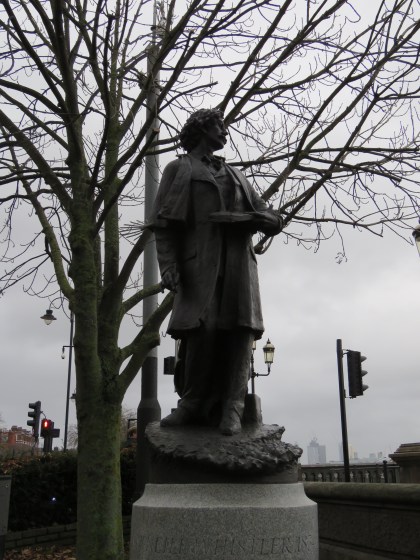
Whistler
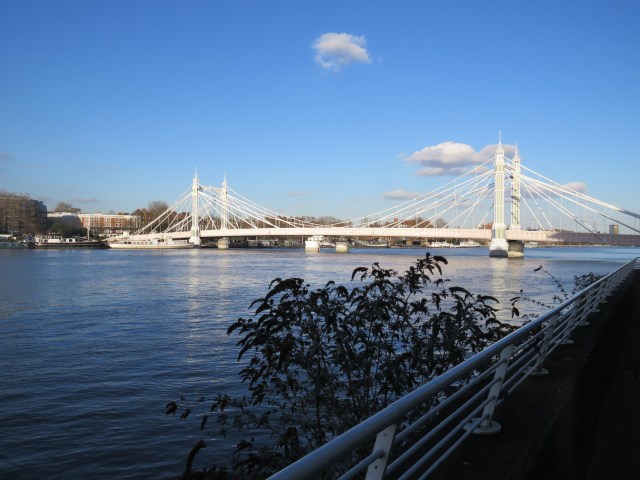
Albert Bridge
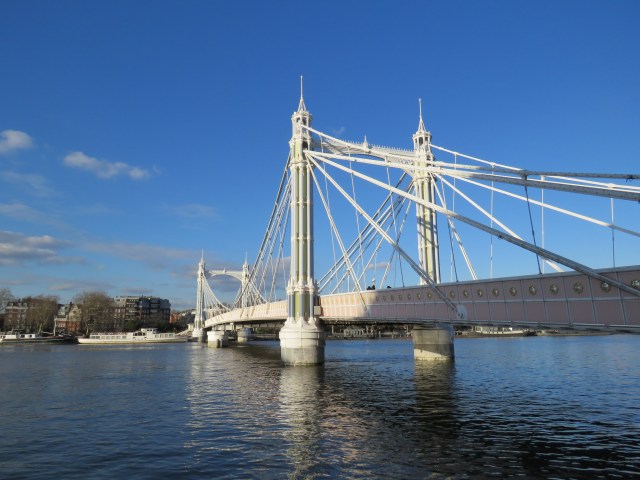
View from the Chelsea side

Battersea Park is a large and varied space, with sports facilities, a lovely garden area and large pond, a bandstand, children’s play area and a nice spacious path along the river, where you can’t miss the Peace Pagoda, built in 1985. From the riverside you get some interesting perspectives as you look east. The Shard lurks in the background, but looks like it’s in completely the wrong place, on the wrong side of the river. It’s those bends – it is actually further north than Battersea.

Interesting fact: Battersea Park hosted the first ever football match played under Football association rules, in 1864. And Wanderers FC, the first winners of the FA Cup in 1872, were based there.
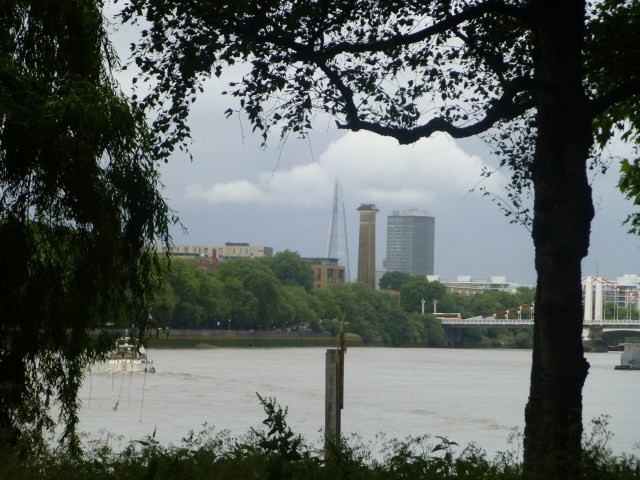
The shifting Shard from Battersea Park

Bordering Battersea Park on its east side is Chelsea Bridge. This was first opened in 1858, and like Battersea Bridge, was soon deemed structurally unsound. Initially it was called Victoria Bridge, but was renamed to avoid the royal family being associated with its potential collapse! The bridge was demolished in the 1930s and replaced in 1937 with the current suspension bridge. It was popular with motorcyclists who staged races across the bridge. In 1970 one such meeting erupted into violence and one man was killed. Whether that signalled the end of the races, I’m not sure. On the south side the Thames path goes under the bridge and you come out to a stretch of modern apartments, which I think look quite interesting, especially when you set them against the background of Battersea Power Station, which now comes into view.
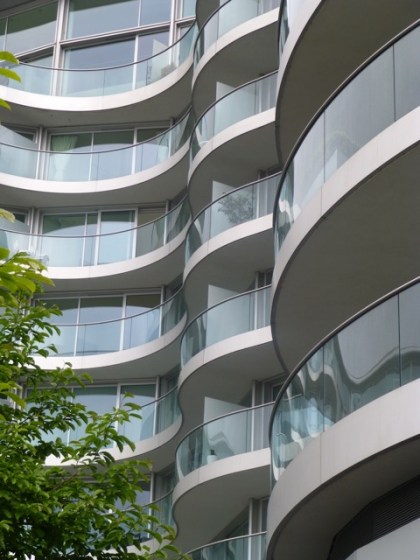
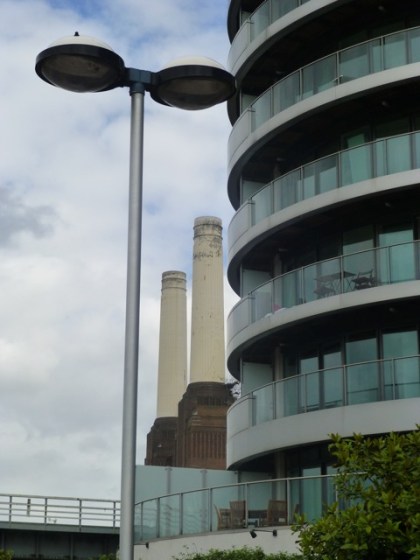
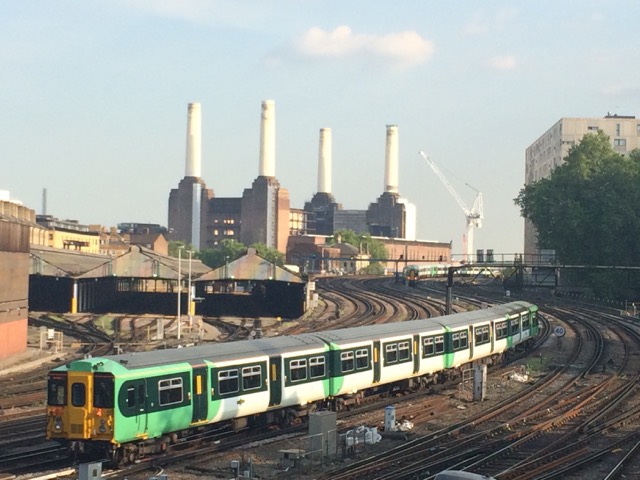
Battersea Power Station is now free of scaffolding and other works and looks every inch one of London’s most iconic buildings. Music fans will remember it adorning the cover of Pink Floyd’s 70s album Animals – complete with floating pig! I wrote about the power station and the new tube station last September. You can read the blog here . It began life as power station in the 1930s and was finally decommissioned in 1973. From then on its fate hung in the balance as a variety of proposals came and went. Finally it was acquired by a Malaysian consortium, which has restored its structure, including the four chimneys, and installed a range of apartments, offices and shops. Around it, a variety of other blocks have risen up – some are still being built – primarily for residential purposes. These and other developments in nearby Nine Elms have attracted quite a lot of criticism for ruining the character of the area, but I think it was pretty desolate beforehand. My main objection is that many of the apartments lie empty for the most part, being investments by foreign owners, rather than somewhere to live. In a city where there is an acute housing shortage, and young people in particular struggle to afford exorbitant rents, this is a scandalous waste of valuable resources – a classic example of where a market is so dysfunctional that state intervention is needed. Just like when all the bridges were bought up in the 19th century. I wouldn’t go that far, but I’d like to see rules whereby any apartment that is unoccupied for more than, say, six months every year has to be rented out at an affordable rate. No doubt people would try find ways around the rules, but something needs to be done to address the problem.

On the positive side, not only does Battersea Power Station look splendid, but an infrastructure of bars, restaurants and entertainment has sprung up around it. I’m a fan of Battersea Brewery, under the railway arches, where you can get a very nice unfiltered lager.
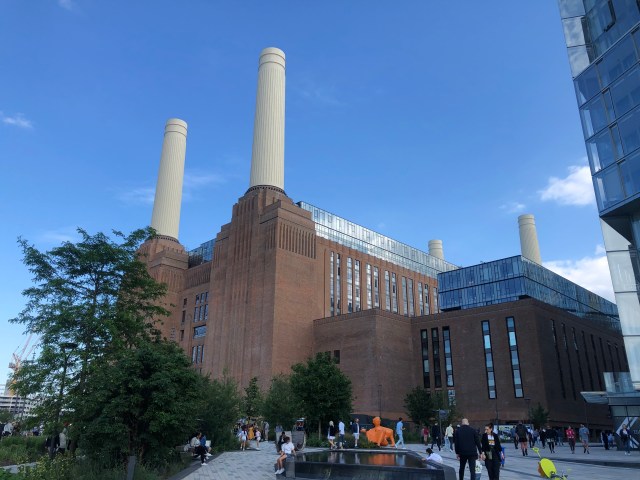
Shiny and new
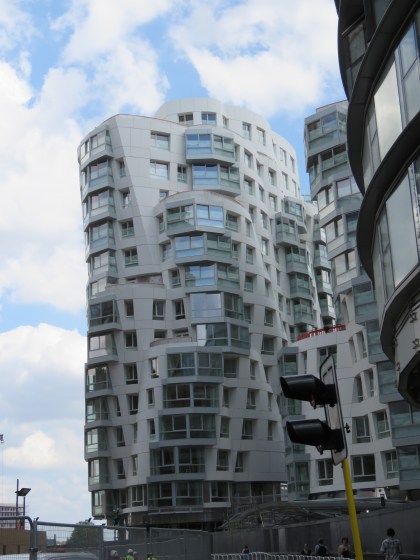
One of the odd neighbours

This next shot goes back to 2014, I think. It’s taken from Ebury Bridge in Pimlico. The  Thames is somewhere in between. The train is heading for Victoria station.
After the power station you do, unfortunately, have to walk up to the main road, Nine Elms Lane and walk along that for a while; though you do get to see the new US Embassy, which opened in 2018. It’s a distinctive building, some would say ugly. Donald Trump hated it – the previous embassy was in Grosvenor Square in Mayfair – describing it as “off location”, “a bad deal”, “horrible” and “lousy”. Not a man for understatement, as we know.

Back on the riverside, you come to St George’s Wharf, another relatively new development. Again, a lot of people dislike this, but I think it’s pretty striking when viewed from a distance – there’s something a bit sci-fi about it. On the other side of nearby Vauxhall Bridge sits the MI6 building, decked out in a similar colour scheme. For a secretive agency it’s quite an ostentatious home – much featured (and bombed) in recent James Bond films. The MI5 headquarters, situated on the north side of the river by Lambeth Bridge, is much more discreet.
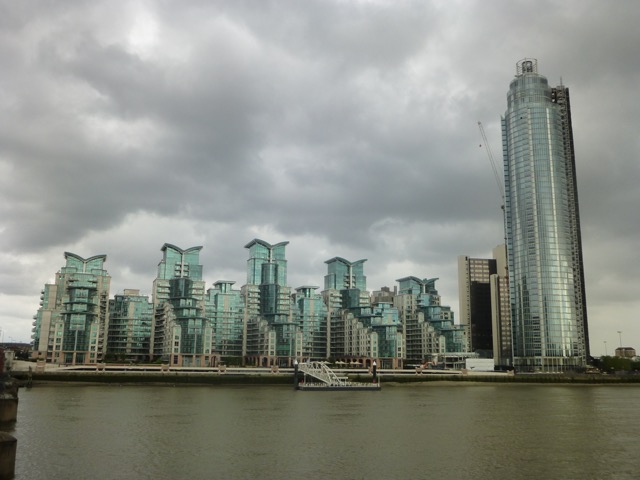
St George’s Wharf and Tower
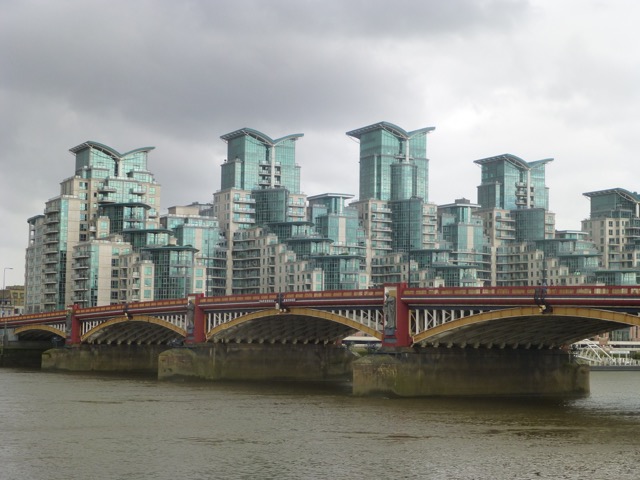
Vauxhall Bridge in the foreground
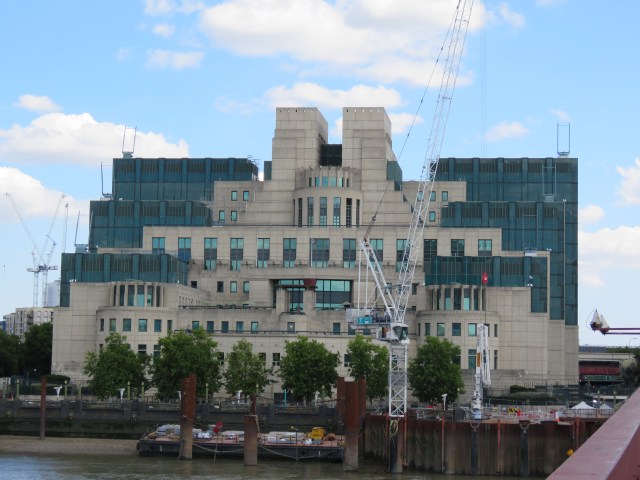
MI6
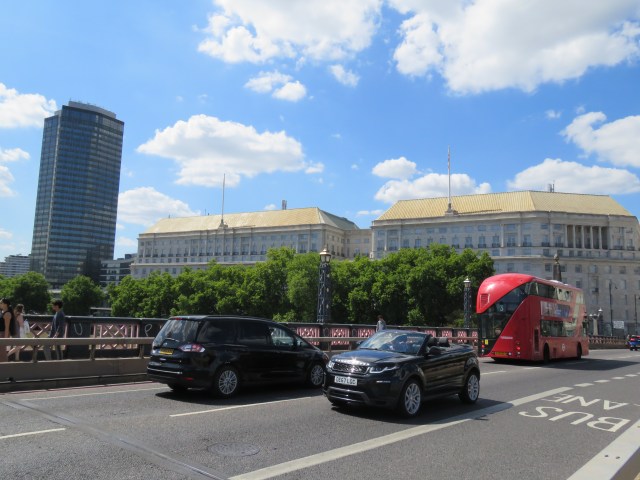
MI5 behind Lambeth Bridge

Vauxhall Bridge must be one of the busiest in London, connecting the Vauxhall gyratory system (a driver’s nightmare) with Vauxhall Bridge Road on the north side, leading up to Victoria. The bridge was built in the early 19th century. It took five years, as different designs were considered. Opening in 1816, it was London’s first iron bridge, and was briefly known as the Regent’s Bridge. As I mentioned earlier, compensation had to be paid to Battersea Bridge, as well as the local ferry service, which became obsolete. As with many of the bridges it fell into poor condition, and was replaced by the current concrete structure in 1906.

The name Vauxhall derives from the manor of an Anglo-French noble Faulkes de Breaute, built around 1200. He eventually fell out with King Henry III and was exiled to France, but Faulkes Hall remained. It later became Foxhall and then Vauxhall. Vauxhall was mostly marshland, but from the late 17th century became the site of the Spring and later Pleasure Gardens. These were a major attraction for Londoners for a couple of centuries, until they closed in 1859. The land was redeveloped; but after slum clearance in the late 20th, a new public park was opened, and remains to this day.

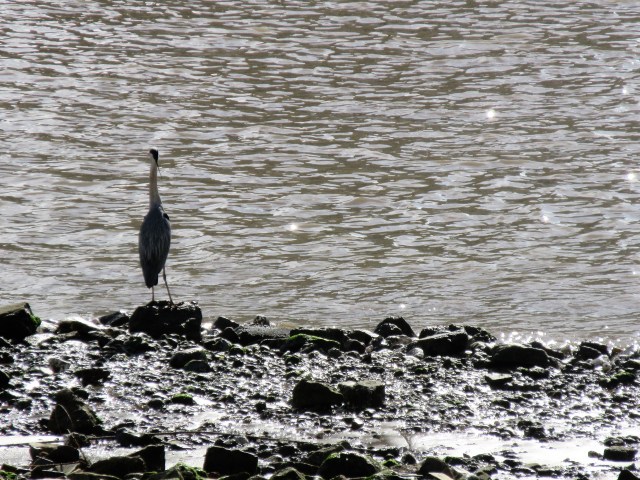
I have probably walked over Vauxhall Bridge more than any other in London, as for many years I walked from Vauxhall station over to Millbank on the north side of the river, just down from Tate Britain. And then back again in the evening. In the mornings I’d sometimes stop in the small park on the north side by the bridge and eat some breakfast from Little Waitrose or Pret a Manger on the Vauxhall side. Anything to delay going into the office!  There’s a sculpture in the park by Henry Moore called Locking Piece. One morning, with the sun glistening in the water, I took a few photos of the heron on the shore. Almost looks like a black and white photo.
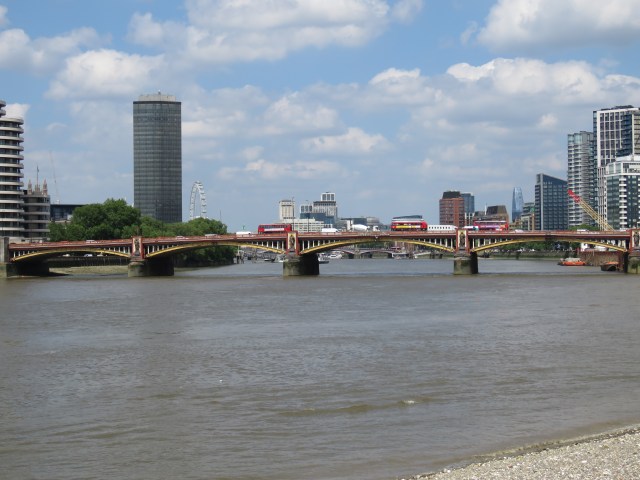
Vauxhall Bridge from upstream
I worked at 30 Millbank, next to Millbank Tower, for about four years until I retired in 2018.  In that time, I got to know the local pubs pretty well, mainly those in Vauxhall. Favourites included the Riverside on St George’s Wharf (modern, but nice to sit outside on a balmy evening – or on a sunny afternoon in retirement), Zeitgeist (a German bar on the splendidly named Black Prince Road), Mother Kelly’s on Albert Embankment (great range of craft ales under the railway arches) and The Rose, further along on Albert Embankment (the scene of my retirement party!). A special mention too for the Morpeth Arms on the north side, next to Chelsea Art College, where the world was put to rights with colleagues on many an evening after work.
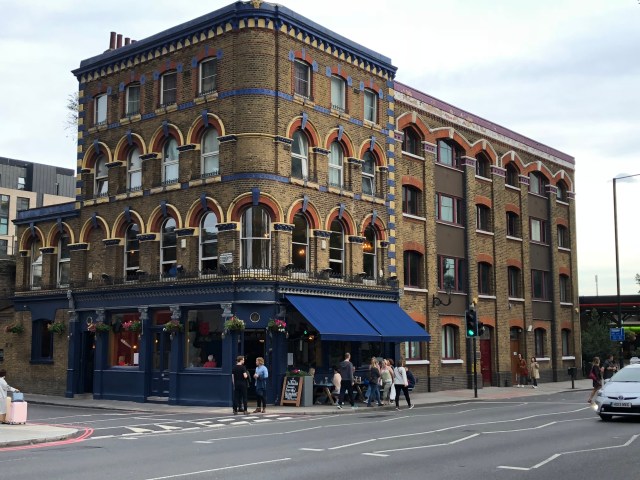
The Rose

I worked for the Independent Parliamentary Standards Authority – IPSA – which was set up to regulate MPs’ expenses and pay after the expenses scandal in 2008-9. I was the policy director there from 2010 until I retired in September 2018. It wasn’t always pleasant, but we achieved what we were set up for – to make MPs’ funding transparent and clean. People still disagree with what MPs get paid and what they can claim for; but they have an important job to do, even if some of them do it pretty badly. I’ll say no more!
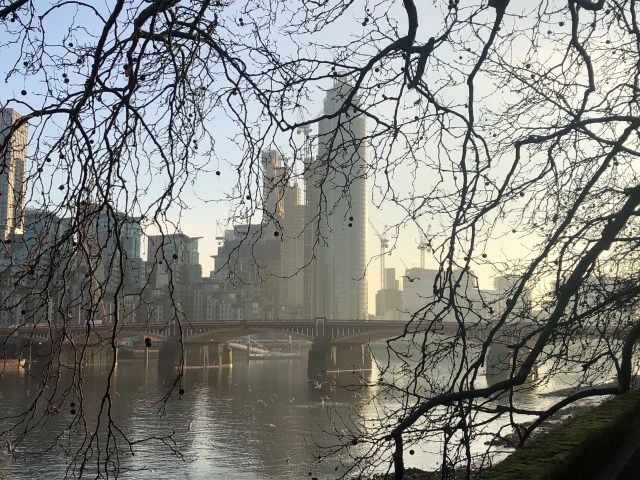
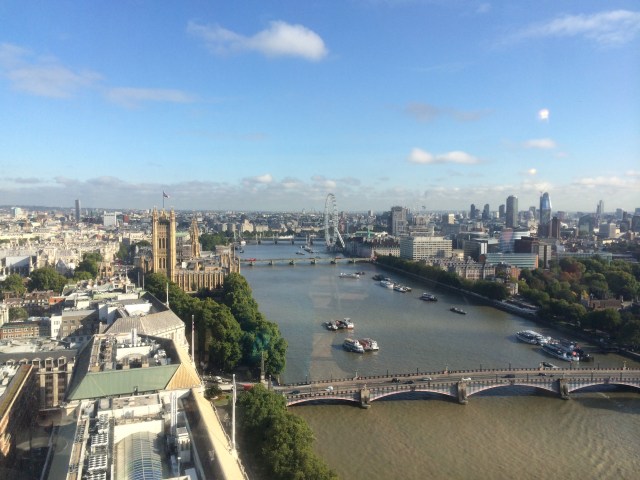
View from high up in Millbank Tower. Lambeth Bridge in foreground.
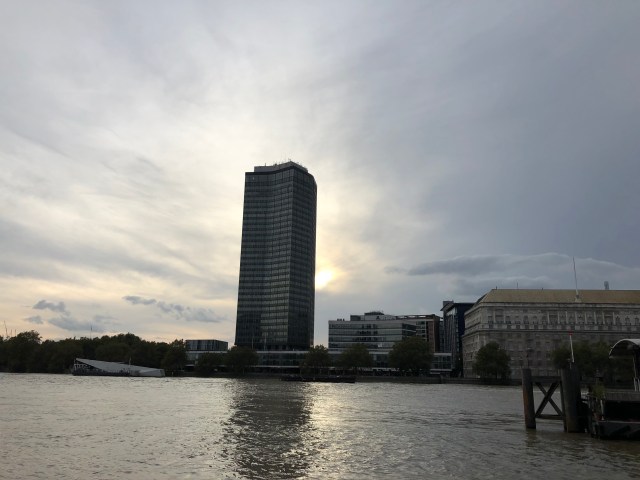
Millbank Tower, with 30 Millbank on the right.
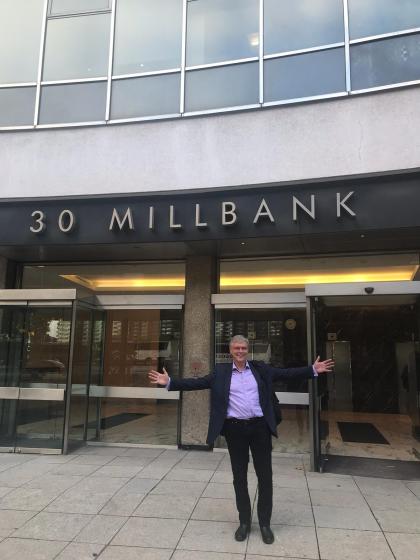
Leaving IPSA for the last time!

Both sides of the river provide enjoyable walks between Vauxhall Bridge and Westminster Bridge – with Lambeth Bridge in between. On the south side you have to divert around MI6 at the moment, but then join the riverbank, with Albert Embankment gardens on your right for a while. Along the way there’s a yellow boat, permanently moored, called Tamesis Dock. If you can get a seat on the outdoor deck, it’s a nice place to have a drink. Downstairs it’s often party time. By Lambeth Bridge, you pass Lambeth Palace, tucked away behind the trees in summer. It has been the London home of the Archbishop of Canterbury since around 1200. Not sure why, but I’ve never visited. One to rectify. The wall separating the palace, Archbishop’s Park and St Thomas’ Hospital from the Thames Path has taken on a new role since March 2021 as the National Covid Memorial Wall. It is decorated with 150,000 pink and red hearts to represent those who have died. It was started by families of the bereaved and attracted support through social media. People visit and write tributes to loved ones in the hearts. It’s an affecting sight as you walk the length of the wall.
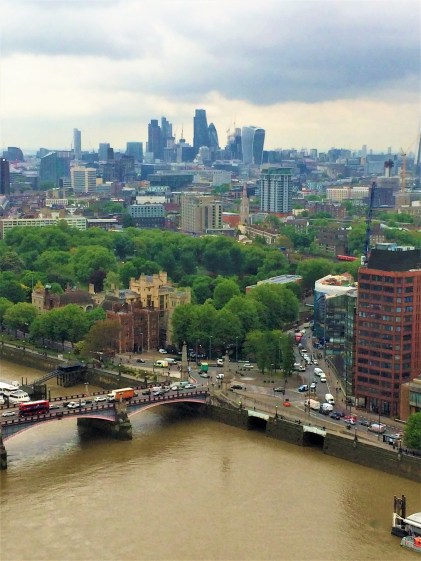
Another from Millbank Tower – Lambeth Palace in foreground
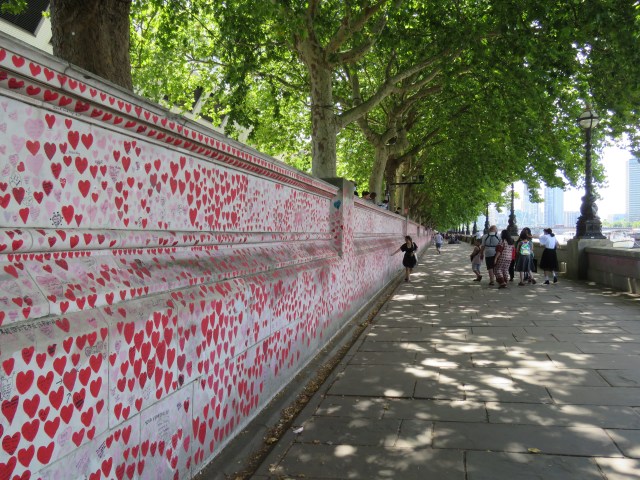
The National Covid Memorial Wall

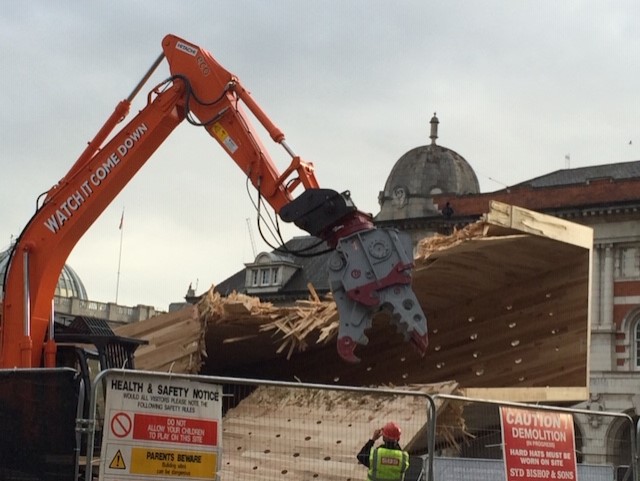
As you walk up to Westminster Bridge, the Houses of Parliament on the other side of the river loom larger. Big Ben has now been restored to its full glory, and I wandered along the river and then over to Westminster to take some up-to-date photos for this blog. I’ll end with those; but first let’s cross over to the north side for the walk up to the Palace of Westminster (its formal name). I mentioned Chelsea Art College earlier. Something of a misnomer, given that it is in Millbank. When I wasn’t walking to work from Vauxhall station, I’d be coming from Pimlico and liked to stroll across the square which the college surrounded on three sides. In the summer I’d see the students sitting on the grass and rather envy them, spending their time studying the creative arts. Often there would be exhibitions in the square, mostly the work of the students; one time there were non-melting blocks of ice lined up; another time a fascinating wooden structure called The Smile. It was designed to show new techniques for building with wood and you could look inside. It underwent a spectacular destruction when its time was up.
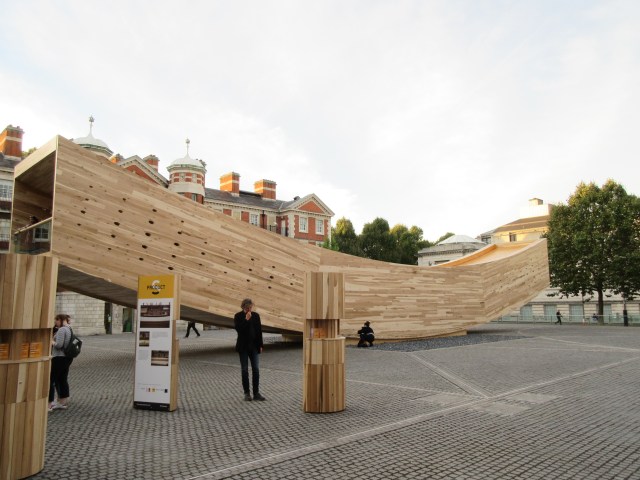
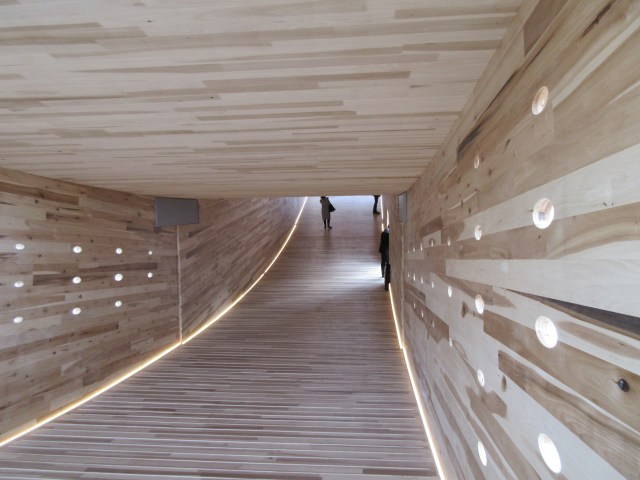
The open side of the square leads over to Tate Britain, one of the great art galleries we are blessed with in London. It is the home of British art, with a large permanent collection, including the largest collection of works of JMW Turner, which has its own special gallery. It’s a wonderful space, rarely busy, where you can marvel at the genius of Turner and travel serenely through his creative journey. Additionally, there are always one or two fascinating exhibitions. The most popular of recent years must have been the David Hockney retrospective in 2017; earlier this year I was very taken by Life Between Islands, an exhibition of Caribbean-British art and culture since the 1950s.
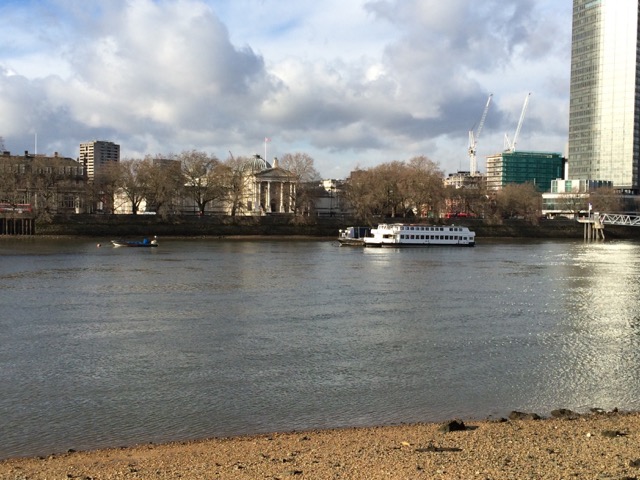
Tate Britain opposite
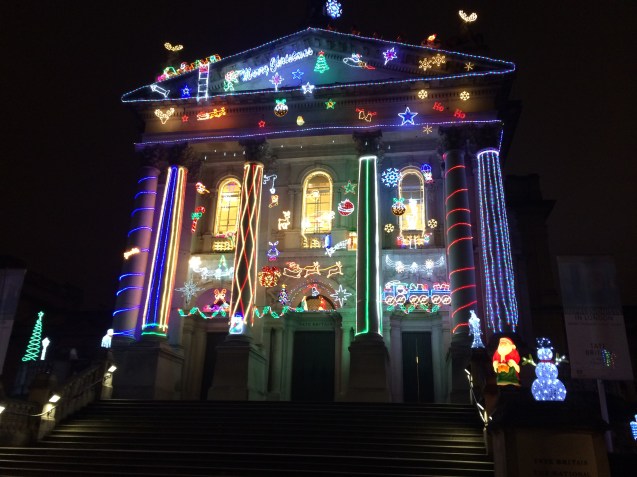
Christmas Lights, 2017

Heading past Millbank Tower and MI5, you come to Lambeth Bridge. Its red hue is said to reflect the colour of the benches in the House of Lords, whereas the green of Westminster Bridge represents those of the Commons. The bridge opened in 1862 and was rebuilt in 1932. It replaced a horse ferry, which operated between the palace of Westminster and Lambeth Palace. Hence the name of Horseferry Road which leads from Lambeth Bridge up to Victoria.
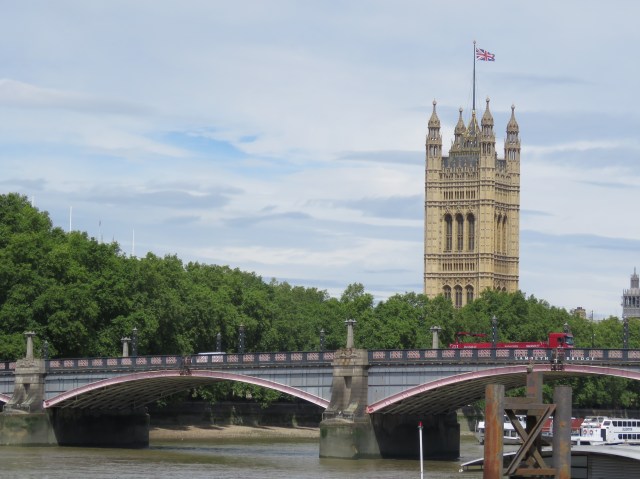
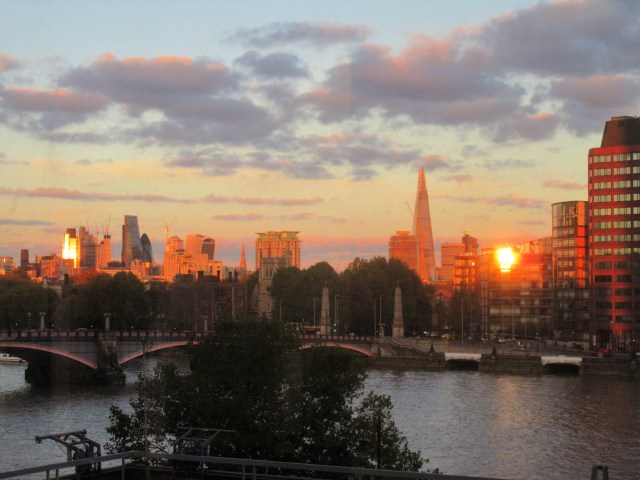
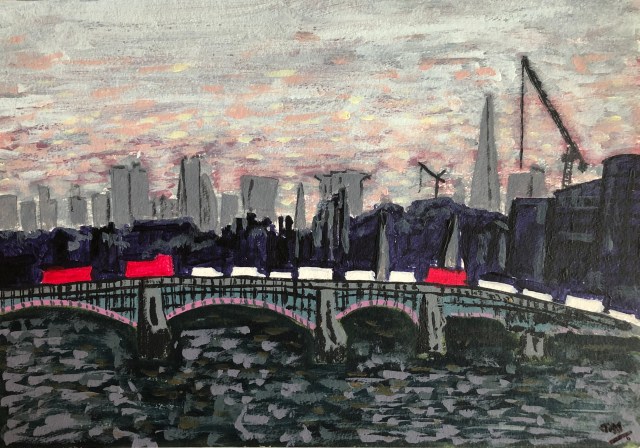
From our kitchen in IPSA you could look out at Lambeth Bridge with the towers of the City of London in the distance, Lambeth Palace in the foreground. It was an ever-changing scene, depending on the light. I even painted a picture of it – from a different photo!
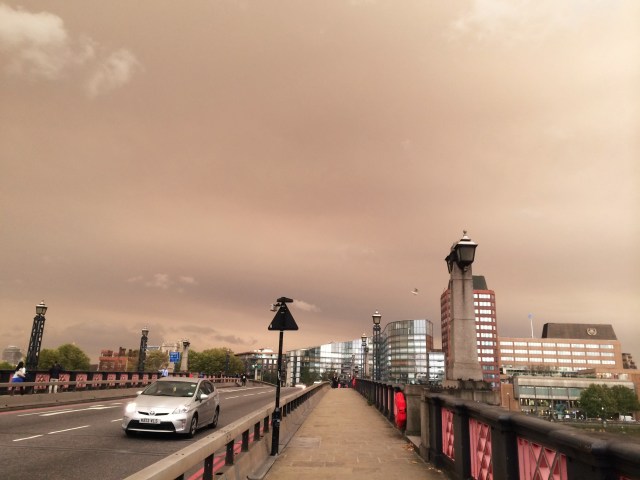
Back in 2017 London caught the tail end of Hurricane Ophelia. It sucked in air from the Sahara, so that London was suffused in an eerie red-purple light. I took some time out from the office to try to capture the light on my iPhone. It didn’t quite record the intensity of the colour, but still made for some captivating scenes from Lambeth Bridge.
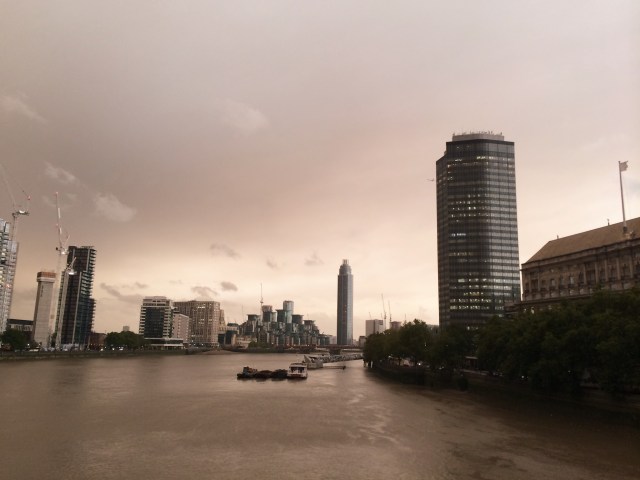
On the other side of the bridge you can approach the Palace of Westminster through the Victoria Tower Gardens. Victoria Tower is the first part of the building that you encounter as you approach from the south, with the river now flowing northwards. Today’s neo-Gothic Houses of Parliament, which provide such a distinctive landmark, are a fairly recent construct, having been completed in 1870, following a devastating fire in 1834. There have been palaces and seats of government at Westminster since the time of King Cnut in the 11th century. At this time the site was known as Thorney Island, an eyot surrounded by offshoots of the River Tyburn, which is now underground. In the same century Edward the Confessor constructed a royal palace on the site, around the same time as he constructed Westminster Abbey, which continues to this day to sit opposite the Houses of Parliament. The oldest remaining part of the Palace is Westminster Hall, which was built during the reign of King William II in the late 11th century. It is open to the public, who can wander around this part of the palace freely. It’s an awe-inspiring place, the scene of so many important moments in British history. For centuries it was the centre of the English legal system, the home of its highest courts. It was Westminster Hall where King Charles I was ordered to be executed in 1649.
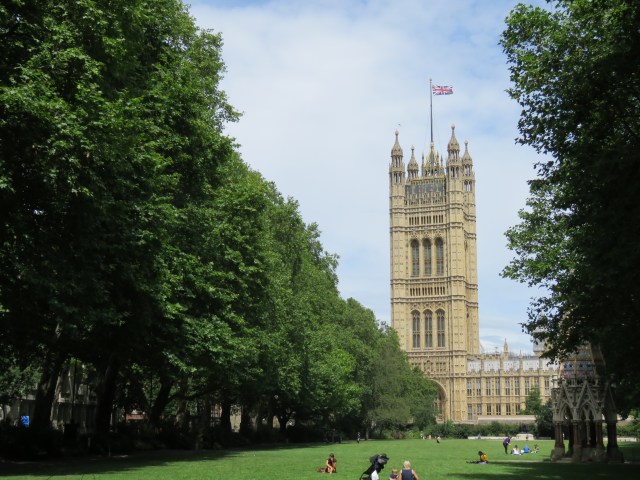
Victoria Tower and gardens, when we had grass!
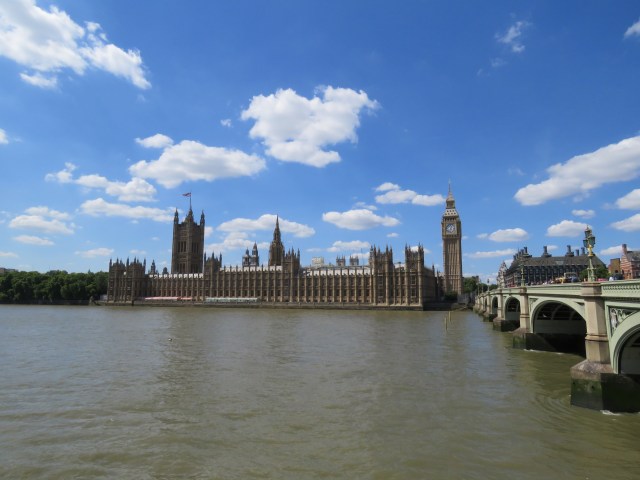
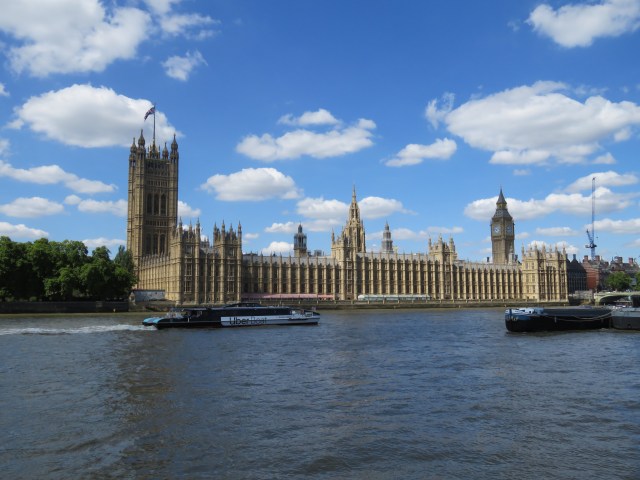
For many years I had a pass for the Houses of Parliament, first as a senior civil servant, advising the Lord Chancellor/Justice Secretary on various policy issues. I have sat in those cramped officials’ boxes in both Houses, desperately hoping that no-one asks a question that we can’t answer when the minister needs help!  At IPSA we were frequently “invited” to attend parliamentary committees so MPs could vent their frustrations. All part of the job, and if you prepared properly they were pretty straightforward, if unpleasant. But I have to say that I never lost the sense of privilege of being in that place, our home of democracy, for all its defects. You could feel the history.

The visual star of the show these days is of course Big Ben. The tower was designed by Augustus Pugin and was completed in 1859. In recent years it was surrounded by scaffolding as renovation work was undertaken, but in April this year the work was completed and Big Ben is now back in full effect, reclaiming its position as the symbol of London. The only problem is, the rest of the palace is falling apart. Major repairs are needed throughout the building, but for this to happen the MPs and peers will need to move out. For years now they have prevaricated – fearful perhaps that the cost of renovation will attract public opprobrium and they will forever be separated from their home of centuries.
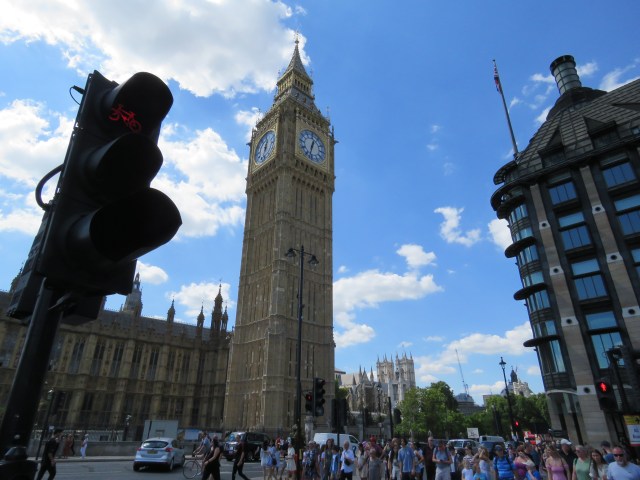
View from Victoria Embankment
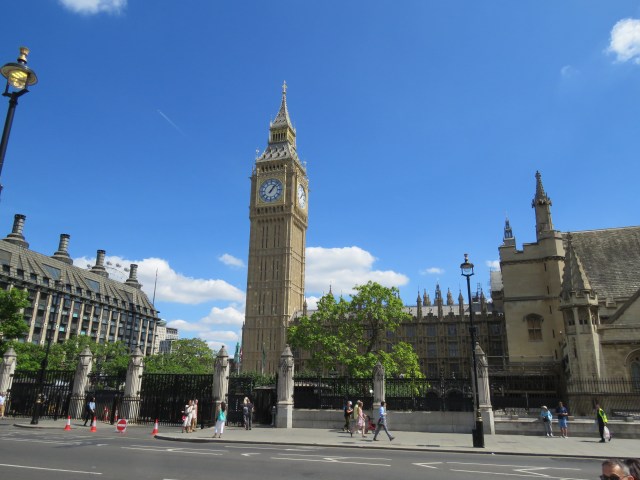
View from Parliament Square
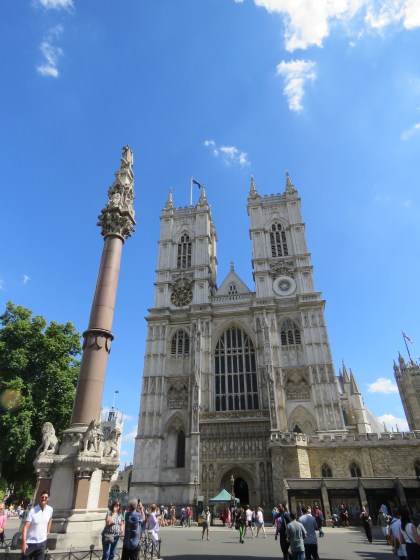
Westminster Abbey
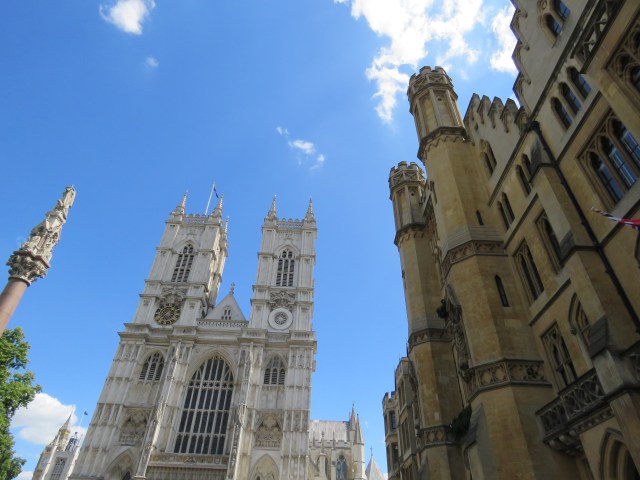
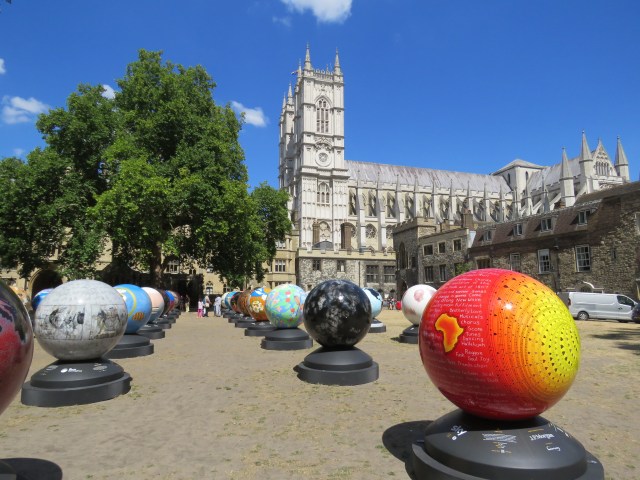
Dean’s Yard, at the back of the Abbey, with the World Re-imagined exhibition

And so we come to Westminster Bridge, now the oldest surviving road bridge in London. It first opened in 1750, after years of resistance and even sabotage by local ferrymen. Over time it began to subside, and it was replaced by a new bridge in 1862, around the same time as the new Palace of Westminster was emerging. It seems only right to end this journey with a photo of the two together, looking great in the August sunshine.
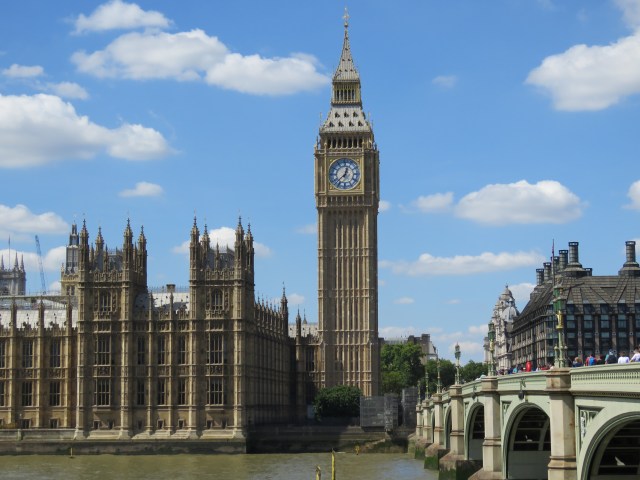
Next time we will be heading from Westminster to Greenwich, through the heart of old London, with lashings of the new. Here’s a hint of what is to come, taken from Westminster Bridge.
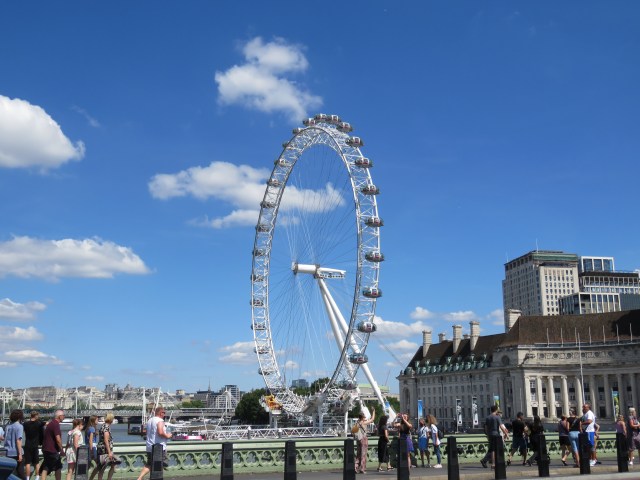
Needs no introduction!
Posted in London, A Thames Journey | Tagged , , , , , , , , , , , | 7 Comments

Sportsthoughts (170) – Premier League predictions for 2022-23

Is this season starting earlier than ever? The first game, Crystal Palace v Arsenal, takes place this Friday, 5 August. I think that’s a week earlier than last season, and presumably has something to do with the intervention of the World Cup in November/December. Something to have a rant about another time; I’ll stay focused on the PL in this blog!

Let’s start with a brief review of last season’s predictions.

Like a lot of people, I fancied Chelsea to win the league, after their Champions League victory and the addition of Romelu Lukaku to the squad. The last piece of the jigsaw we thought, a proper striker. It didn’t happen. Tuchel stuck to his fluid front three formation, and Lukaku didn’t adapt. He had injuries – and clearly wasn’t happy. Maybe Tuchel didn’t really want him. All this transpired before Russia invaded Ukraine and Abramovich became persona non grata, the club seized by the government, before being sold on to the Todd Boehly consortium. In the circumstances Chelsea did well to maintain a pretty high level of performance, and come third, 18 points behind second-placed Liverpool.

It was a season utterly dominated by Manchester City and Liverpool, City winning the league by one point, after a dramatic end to the season, Liverpool winning both cups – both on penalties against Chelsea, after 0-0 draws. Was this all very boring? No, not really – City and Liverpool were both great to watch, and both the finals were as entertaining as 0-0 draws can be. The League Cup penalty shoot-out went down to the two keepers at 10-10, with Kepa, brought on for his penalty saving prowess – non-existent on the day – hilariously ballooning his shot over the bar.

But please, we don’t want a repeat of the same teams dominating this season! That really would be boring.
Elsewhere, I overestimated the potential of Aston Villa and Leeds, and underestimated Tottenham and my own team, West Ham. My local team Brentford also did much better than I expected, though I didn’t predict them to go down. I got two of the relegation teams right: Burnley and Watford. It was sad to see Burnley go down after a few seasons punching above their weight, but they shouldn’t have sacked Sean Dyche – he might just have found a way to keep them up. Norwich were the bottom team – I thought they’d do better, after walking away with the Championship the previous season. Watch out Fulham this time!

Now for my two favourite teams: starting with the second, Arsenal. I correctly predicted fifth for them. But really, they blew a great chance to get back into Champions League football, with a couple of feeble results against lesser teams late on. So typical of recent seasons; but there’s a sense of things coming together under Arteta, with some talented young players establishing themselves. As for West Ham, seventh was a good achievement, but again, we could have done better. The lack of squad depth was our undoing towards the end. But, with the Europa League semi-final, this was objectively one of the Irons’ best seasons of all time. Add that to sixth the previous year, and huge credit must be given to David Moyes and his management team. Aaah, but we were so close to Champions League football, via the Europa League. The team seemed to freeze a bit against Eintracht Frankfurt, who were not a superior team. Inexperience at this level, perhaps. We would surely have beaten Rangers in the final. Anyway, a good season, but expectations are now raised. The only problem is that the “Big Six” continue to reinforce their squads. What chance for anyone else? And yet there are always teams that break through…

Which brings me on to this season’s predictions.

I don’t want to do it, I really don’t, but I can’t see past Man City and Liverpool for the title. The rest have an 18 point gap to make up. That could come from City and Liverpool getting fewer points, which might happen if the competition gets better; but neither side is standing still. City have taken some risks in selling Sterling and Jesus – both to potential rivals in Chelsea and Arsenal. But they have added Erling Haaland from Dortmund, a goal-scoring machine, as well as the young Argentine striker Julian Alvarez. Cue a more direct attacking approach, with Jack Grealish playing a more prominent role in his second season? Could be interesting. Liverpool have refreshed up front too, replacing Sadio Mane (sold to Bayern) with the Uruguayan Darwin Nunez, from Benfica. Like Haaland, a more conventional No 9 than his predecessor. So are we about to see a more English-style game from the top two teams? The end of the false nine? Tell that to Thomas Tuchel.

As to who will come out on top, I’ll go for City to do it again. They have just a bit more quality, especially in midfield, where they have reinforced their defensive side with Kalvin Phillips from Leeds. We always wonder whether they’ll be distracted by the so-far thwarted desire to win the Champions League. I think there’s enough depth in the squad to cope with both challenges.

The competition below the top two looks more interesting. It could be a London thing, a three-way battle between Chelsea, Arsenal and Spurs, though you can’t rule out Man United coming good under ten Hag (I’m going to though, while Fred and McTominay remain at the heart of their midfield). ‘Tis the season of optimism about Arsenal, newly boosted by the arrival of Jesus and Zinchenko from Man City. They have been on great form in pre-season friendlies, beating Chelsea 4-0 and Sevilla 6-0. Is Gabriel Jesus their final piece of the jigsaw, providing the finishing that was still lacking last season? I think it could be enough to propel them into the top four, and I’m going for third. But I still think the gap between them and the top two is too wide. The question for Arsenal is so often about resilience, especially in central midfield and defence. I think the defence is now pretty sound, and in Ramsdale they have an excellent goal keeper. But what of that midfield? A Kalvin Phillips, or, heaven forbid, Declan Rice, would make all the difference. My son Kieran, an Arsenal fan, is a great defender of Xhaka, and likes Partey. I think Xhaka will always be too combustible, while Partey is injured too often. Still it will be fun to see how it all works out. Palace away will be a good first test.

Spurs have bought well in the summer, particularly in bringing in Richarlison from Everton. The thought of him teaming up with Son and Kane must be pretty exciting for Spurs fans. Lenglet is an interesting addition to the defence, while Djed Spence, who starred for Nottingham Forest on loan last season, could provide some interesting options at right back. Conte is a top quality manager and will get the best out of this team. If Son and Kane stay fit, Spurs look to be real top four contenders. They got a bit lucky last season, sneaking in at the end when Arsenal imploded; this time they will have City and Liverpool in their sights. Fourth for me.

That leaves Chelsea in fifth. I expect they’ll confound that, and grind their way into third place (yaaawwwn!). Maybe Sterling will give them the spark they lacked up front last season. Or maybe Tuchel’s system is just a bit too cautious to get the best out of their attackers. Then again, maybe Timo Werner will rediscover his goal-scoring touch, to add to his pace and work rate, which have made him a favourite with the Chelsea crowd. I look forward to keeping an eye on Chelsea’s progress after the odd three course lunch in the Harris suite, courtesy of my friend Dave!

And what of West Ham? The good news is that Declan Rice and Jarrod Bowen haven’t been prised away yet. The addition of the Italian striker Gianluca Scamacca should add variety up front, and take some of the pressure off Antonio. It’s a shame that the new centre back Nayef Aguerd picked up an ankle injury in a friendly and needed surgery, but Ogbonna should be back. I’m assuming Flynn Downes from Swansea will be a back up to Rice and Soucek in midfield. I’m all in favour of picking up promising players from the Championship – Jarrod Bowen is a case in point. The squad still needs to be deeper, to cope with the inevitable injuries, especially in the last weeks of the season. Twice now there have been flirtations with the top four that have come to nothing because the squad has become too stretched. It’s not just us – Leicester have had the same problem. It’s all about the money in the end, and I’m not sure West Ham’s owners are willing to make the big step up. Maybe their approach is right – a gradual, manageable strengthening; not putting the club at risk. It’s a formula for upper mid-table stability, and West Ham’s fans should be grateful for that, after all the relegation traumas of the past. But expectations rise, and the grumbles get louder. Seventh again, with a run in the rather pointless European Conference, I’d say.

The team that could overtake West Ham and gatecrash the top six is Newcastle. Eddie Howe is slowly strengthening his squad, and bids have recently been made of Leicester’s James Maddison. That would be a real coup. The Saudi money is there for the long haul – expect Newcastle to be “Big Six” soon. It wouldn’t be the first time…

As for relegation, I’m going for Leeds, Fulham and Bournemouth. Fulham were supreme in the Championship; but have they the resilience for the Premier League? Can Mitrovic score even half as many as he did last season? That may be the key to Fulham’s survival. Bournemouth don’t look to have a strong enough squad to stay up. Nottingham Forest on the other hand, have been on a spending spree, and beat West Ham to Jesse Lingard. They have a well-respected manager in Steve Cooper. I’m predicting they will stay up and maybe even frighten a few teams, like Brentford last season. Maybe there’s a bit of wishful thinking – it’s been so long since Forest were in the top division; but many of my generation will always remember the team of the late 70s and 80s, managed by Clough and Taylor, with great affection. It will also make my friend Jon very happy if they stay up!

Leeds have provided great entertainment in the Premier League over the past two seasons, but the Bielsa magic wore off last season and they shipped so many goals. They brought the American Jesse Marsch in, and just survived on the last day of the season, by beating on-the-beach Brentford. They have spent the summer selling their two best players: Phillips to Man City and Raphinha to Barcelona. They have bought reinforcements, some of whom have played under Marsch before. It’s not terribly convincing. If I were Leeds fan, I’d be worried. Fingers crossed for them that striker Patrick Bamford stays fit this season.

There’s a case to be put that Brentford will suffer from second season syndrome, and struggle. Teams will have sussed them out. They have lost Christian Eriksen, who turned their season around last time, when they started to wobble. On the other hand they have made two good buys defensively: Ben Mee from Burnley and Aaron Hickey, a Scottish full back, from Bologna. They showed last season that they have a strong team spirit, play some good football and have an excellent manager in Thomas Frank. They need to hold on to Ivan Toney – a player I’d still like to see West Ham go for. On balance, I think they’ll be OK, but it may be tougher than least season.

So, in summary, these are my predictions for the 2022-23 season:

Champions – Man City. 2 – Liverpool. 3 – Arsenal. 4 – Spurs. 5 – Chelsea. 6 – Man United. 7 – West Ham. 8 – Newcastle. 9 – Leicester. 10 – Aston Villa. 11 – Everton. 12 – Crystal Palace. 13 – Brighton. 14 – Brentford. 15 – Southampton. 16 – Nottm Forest. 17 – Wolves. 18 – Leeds. 19 – Fulham. 20 – Bournemouth.

I got three placings exactly right last season: Arsenal (5th), Leicester (8th) and Burnley (18th). A low bar to exceed. Just as long as Man United don’t go and win the bloody thing!

Posted in Sportsthoughts | Tagged , , , , , , , , , | 6 Comments

Sportsthoughts (169): England’s Euro 2022 victory

Four days to go to the start of the Premier League. Normally we can’t wait, after a few desultory summer weeks; but as I write, a day after the England Women won Euro 2022, beating Germany 2-1, do we care? Well, yes we do, but what an achievement by the England team! In front of almost 90,000 people at Wembley they beat Germany – yes, Germany! When it went into extra time at 1-1, I think we all feared penalties, and the usual outcome of those against Germany. But not this time, after Chloe Kelly poked the ball into the net, at the second time of asking, from a corner. And then the celebration – as memorable as the goal!

This England team has been impressive throughout the tournament, playing with a real verve – and discipline. They’ve scrapped when they had to: against Spain, the first half hour against Sweden and most of the game against Germany. But they have been devastating in attack too – as Norway, 8-0 losers, can attest. And 4-0 against Sweden in the semis – when they get their chances they take them. They have played with real pace down the flanks, and their midfielders have always been on the look-out for the defence-splitting pass. One of those came last night, when Kiera Walsh found Ella Toone, who then chipped the keeper brilliantly to take the inital lead. Their sense of adventure, making the best use of their substitutes, is something that Gareth Southgate might take note of, in advance of this year’s men’s World Cup.

So congratulations and respect to the Lionesses, who have inspired the nation, given us something to feel good about. My household is three women, two men. It’s fair to say that football is not normally high on the agenda for my wife and daughters, but they, like so many, have really taken to this England team. The question, inevitably, is what happens next. At the elite level, I would expect further progress – England have to be one of the favourites for the next World Cup, in 2023. But what about at the grass roots? It was notable that the England team, brilliant though they were, were not an advert for diversity. That contrasts, at the moment, with the men’s team. What’s the answer? Money: money for schools, for local clubs, for academies, for wages below the very best teams. It’s always money – put it in, with good plans, and over time the results will follow. This will depend on the government, the professional clubs, the TV companies. Will they build on this tremendous achievement? We shall see, but right now, I’m optimistic. This magnificent England team has shown what is achievable – those with the power and the purse strings now need to build on it.

Posted in Sportsthoughts | Tagged , , , , , , | 2 Comments

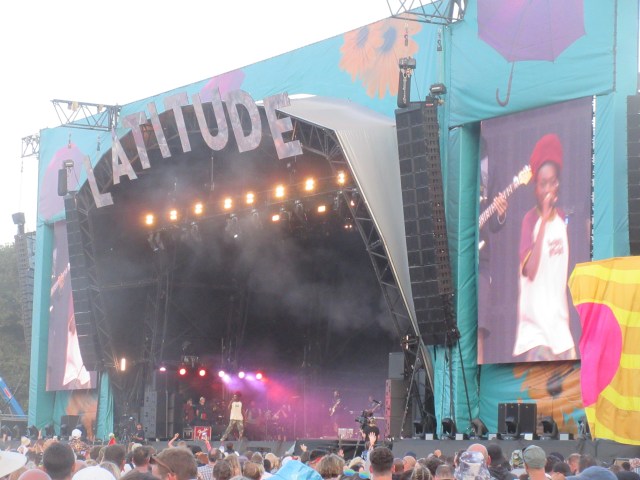
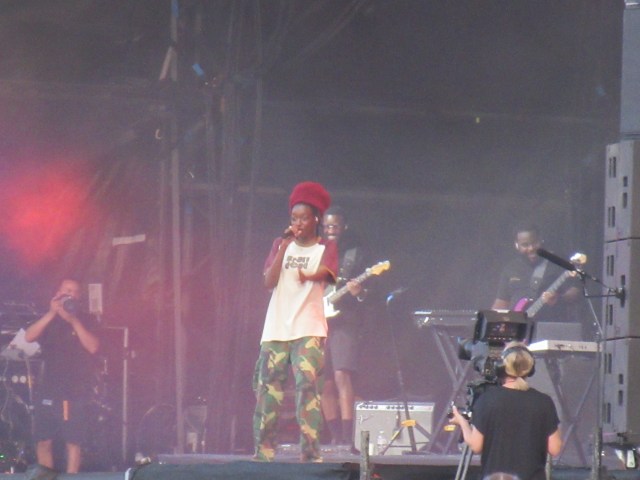
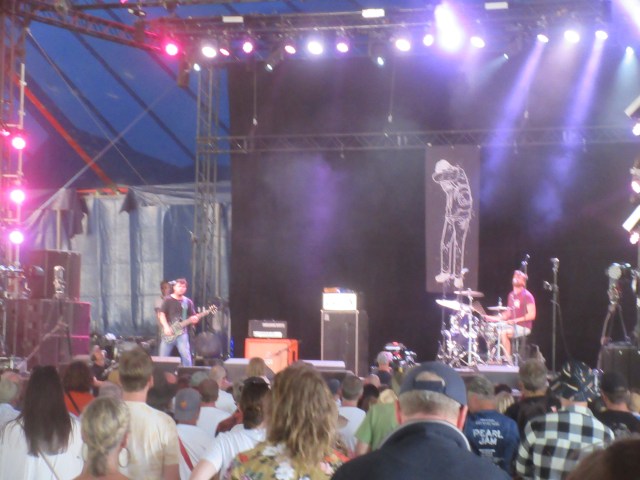
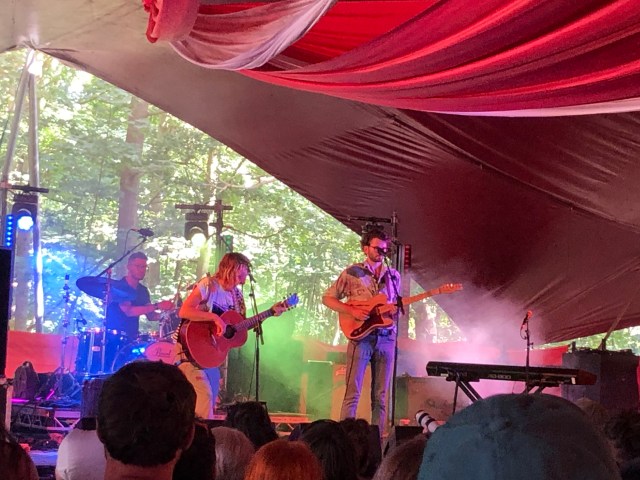
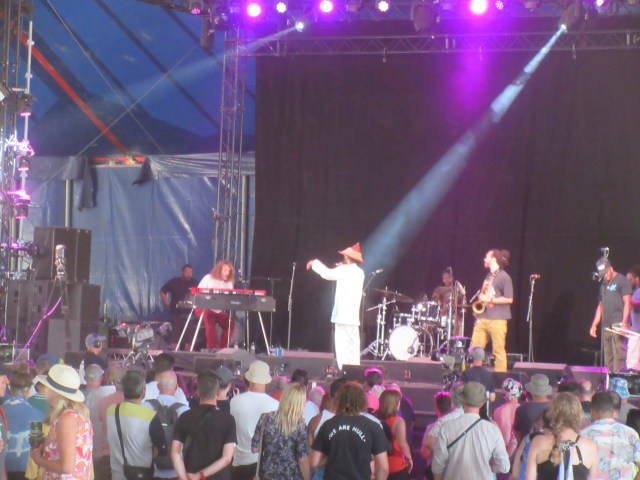
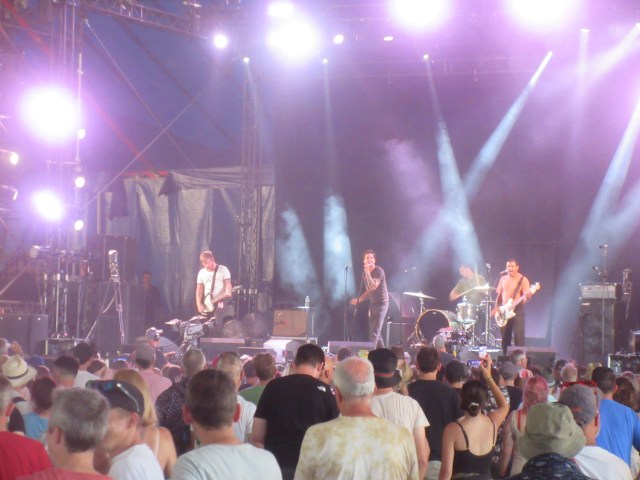
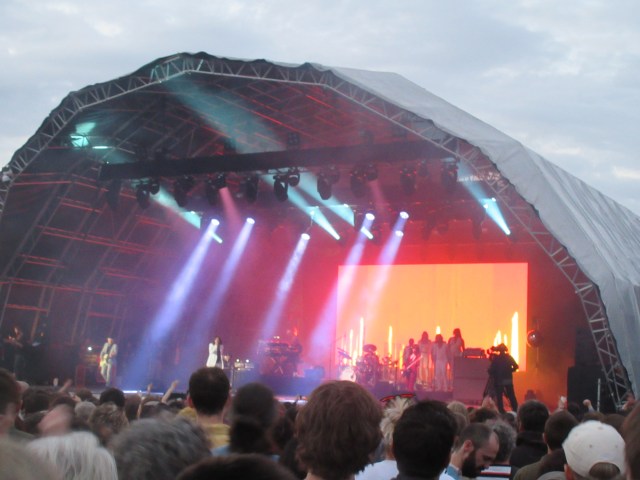
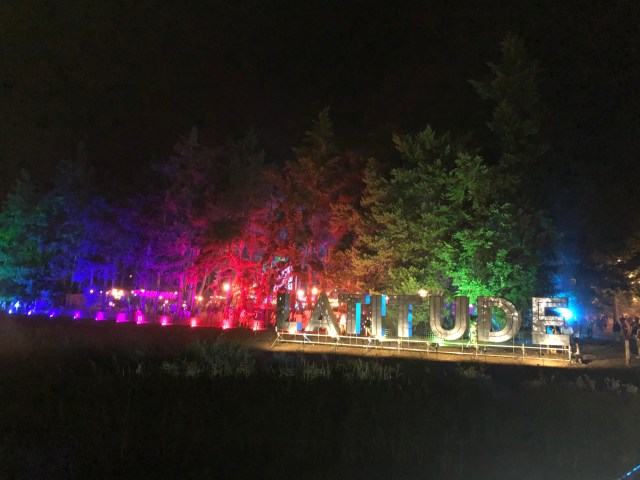
Latitude 2022

Time again for Latitude – my tenth. My first was in 2012; and notwithstanding the mud, I got the bug. I’ve been every year since then, with the exception, of course of lockdown year, 2020. Accompanied always by my friend Jon, who started the year before me, and a revolving cast of family and friends – though never our wives!

Last year was special for being the first event we could attend after the lockdown restrictions began to be lifted. I remember how weird it felt as we drove to the festival – were we really be allowed to gather again and enjoy live music? Allowed – we had been deprived of such basic freedoms, the activities that raise our spirits and nurture our creative souls; and for the most part had meekly accepted it. The new normal was retreating into ourselves, or communing online – and then slowly but surely we emerged from our shells. Some countries, some communities, faster than others. Some recklessly, perhaps; but we wanted our lives back. We knew the restrictions were necessary; but we know now how easy it is to lose our freedoms, how easy it is for the state to control us, in the face of an external threat. No wonder dictators everywhere regard the creation of external enemies and hidden threats as a crucial tool in controlling their populations.

So Latitude 2021 was the first step back into freedom. Momentarily it felt extraordinary – and emotional – as we cast aside our masks and reacquainted ourselves with the joys of live music. The south London band William the Conqueror will always have a place in my heart for playing the first live sounds I’d heard for sixteen months. There in the Trailer Park on the Thursday evening, that first guitar solo brought a tear to my eye.

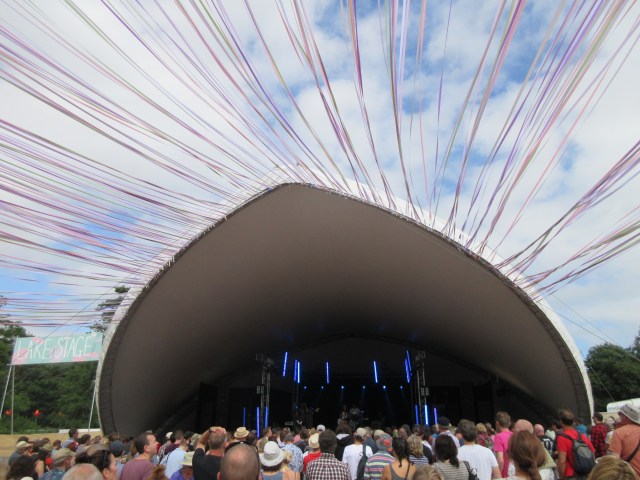
One thing was starkly missing last year – the Lake Stage. This was always one of our great favourites. With the acts curated by the BBC’s Huw Stephens, it was a fantastic showcase for up-and-coming bands and artists. Its position by the arena’s main thoroughfare meant that you’d often stop by and see performances that you hadn’t planned to see. And discover some great artists in the process. That’s where I first saw Idles, whose raucous show in 2017 was followed by a massive conga into the woods on the other side of the lake! In 2019, I got myself a paella one afternoon and wandered down to the Lake Stage to see who was on. The sounds were jazzy and soulful, the singer’s voice strikingly beautiful. It was Celeste. It was so good I stayed for the rest of her show. Lots of other people did the same. She was soon to become a star.

The hope was it was a temporary absence, the result of the pandemic. But no, when the line-up was first published this year, there was no Lake Stage. Pushed out by the need for more space for sponsored bars and more food stalls. This year we had new, branded bars for gin, vodka and tequila, as well as a new wine bar, all in prime territory. We lost the Poetry Tent a few years ago; now the Lake Stage has suffered the same fate. Victims of the creeping commercialisation and gentrification of the festival. Very lucrative for Festival Republic, I’m sure; not so good for the poets, the singers, the bands hoping that Latitude could help take their careers to a new level.

Lake Stage 2018

Still, if it helps the festival to remain viable and to create an experience that appeals to people of all ages, to families as much as individuals, then you just have to remind yourself that everyone gets different things from the festival. Everyone has their own Latitude. And I appreciate the greater variety and quality of food as much as anyone. Nor do I hesitate to step into the Taphouse, now our meeting point of choice for a beer after a show. And where is it located? Bang on top of where the Lake Stage used to be!

***

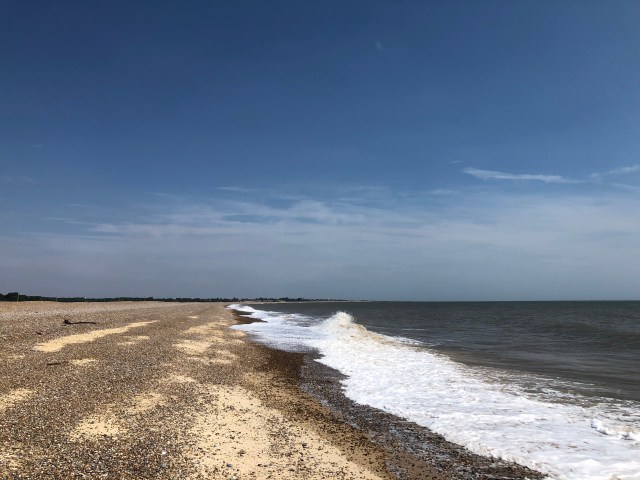
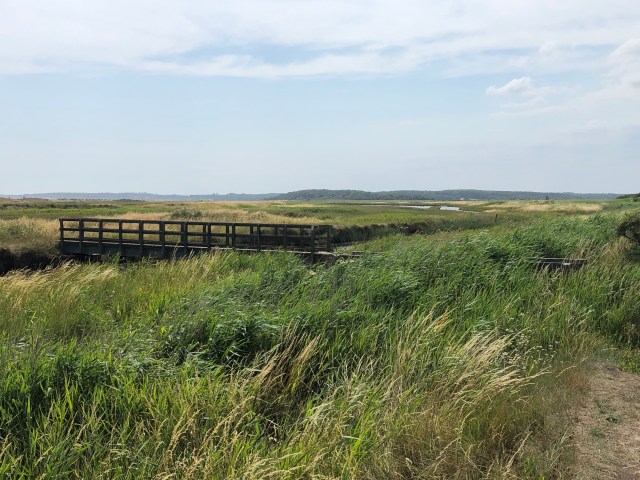
Jon and I are slowly turning the Latitude experience into a week’s excursion. Last year we stayed overnight on Wednesday in a Suffolk village called Campsea Ashe, so we’d only have a short drive to Henham Park on Thursday morning. That worked so well, we decided to go up on Tuesday this year and have a day’s walking on the Wednesday. The Suffolk coast, with its long shingle beaches and nearby marshlands, is a walker’s delight. We kept it fairly simple on Wednesday: seven miles or so, first along the beach from Walberswick to Dunwich – where the cliffs are slowly falling into the sea – and back through woodland and then the marshes. Breathtakingly beautiful under those big skies.

***

We were six this year: me and Jon, Louis and Gab and Hywel and Rebecca, who’d joined us for the first time last year. I think they’ve got the bug now! Thursday was the usual mixture of setting up camp, whiling away the afternoon, catching a bit of the limited music on offer, and sitting in various bars. Jon and I chose a table outside the new wine bar as we waited for Louis and Gab to arrive mid-evening. On the site of the much-loved Danish bar, itself the usurper of… the Poetry tent.

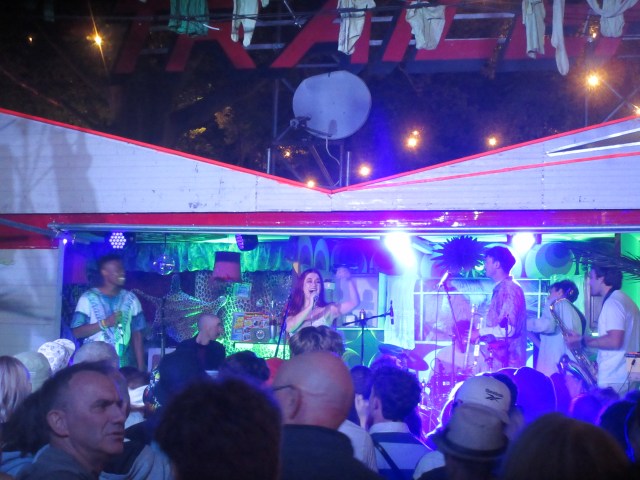
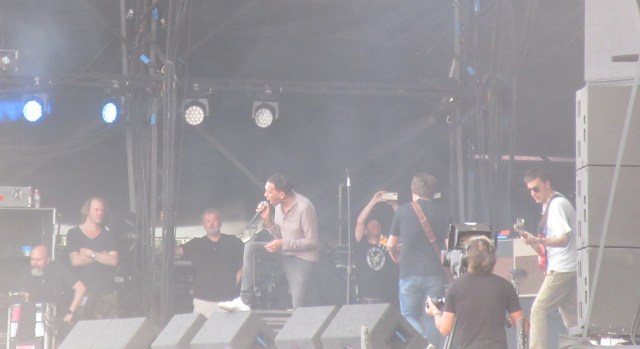
The musical highlight of Thursday, or more precisely Friday morning, was a band called Cooks but we’re Chefs. They hail from Ireland and play a very catchy jazz funk-rap fusion that took me back to my 80s soulboy days (oh yes!). I caught them by chance, as I walked by the Trailer Park, on the way back to the campsite. I could hear dance music from a sound system and thought I’d take a peek. But as soon as I entered I could hear those jazz funk rhythms coming from the music stage. It was 11.45. I thought I’d stay for ten minutes. I left at the end of the show at 12.30. Loved it. Great music and very engaging performers. Latitude knew they were onto a good thing – Cooks but We’re Chefs were booked for a late show on the Trailer Park every night of the festival.

Friday 22 June

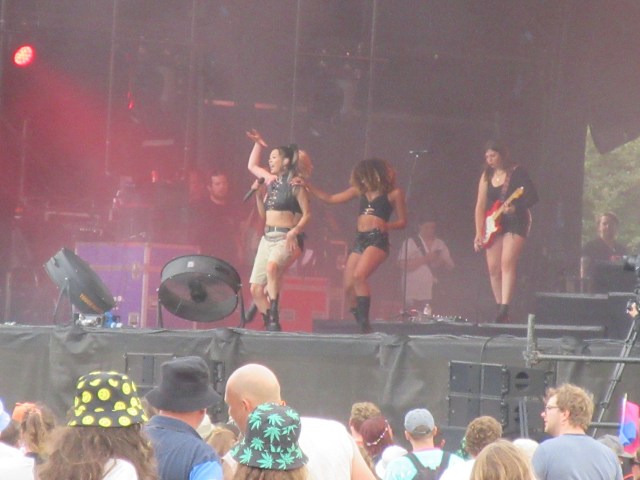
We started the music with a double dose of modern punk in the Alcove, now the main venue for new bands, though that was always its essential function. First up The Oozes, described as a London-based queercore band. They were new to me, but they have a dedicated following and a strong focus on gender issues. And they rocked! I loved their sound, which had plenty of punk thrash, but also some jerky, danceable beats. And then there were the screams. I did worry about the singer’s vocal chords at one point! There was a real energy about them – and they looked like they were having fun. They might be addressing some serious issues, but they clearly appreciate the value of just making a good rock’n’roll noise. I’m not quite sure why, but the Sex Pistols came to mind a few times, though the more obvious parallel would be the New York Dolls. I think it was because they were just a bit different to your average punk band – like the Pistols, and Johnny Rotten in particular, they were challenging you to react. After the show I watched them mingle with their fans – again, it was striking how much fun they were having. A genuinely engaging lot.


Sniffany and the Nits were next. Imagine being one of the band members and introducing yourself to someone. I’m with the Nits… Sniffany has a strident voice, and again, gender issues are high on the agenda. But the sound was a bit more conventional than that of the Oozes. Enjoyable, but a bit samey.

It was through the Woods after that, for our first visit to the Sunrise Arena – always the favourite venue. The band was KEG, one of those bands who will always be described as a bit like Squid. Similar jerky rhythms, scratchy guitars, odd time changes and bursts of trumpet or violin or whatever. Lots going on, and plenty of shouting. A very popular indie sound these days, with a clear debt to the likes of Talking Heads, Gang of Four and XTC. I enjoyed their set, which had real energy and a good dash of humour. They’ve got a song called Kids, which includes the priceless line, Daddy! I want an Itsu. Modern life, eh? Down south, anyway…

Another double in the Alcove for me next – unprecedented. First M(h)aol (pronounced male) from Dublin. More punk with gender issues to the fore – must have been intended by those curating the line-up. More Siouxsie and the Banshees than the Damned, on the punk spectrum. I liked the single Gender Studies, which 6 Music played a lot last year, and was expecting good things on the basis of that. I was a little disappointed to be honest. It didn’t get better than Gender Studies and singer Roisin Nic Ghearailt talked a bit too much. Now, the problem is usually the opposite – bands who say nothing. So, good on her for giving us a bit of context to the songs, but we probably could have done with a little bit less. Might have had time for another song.

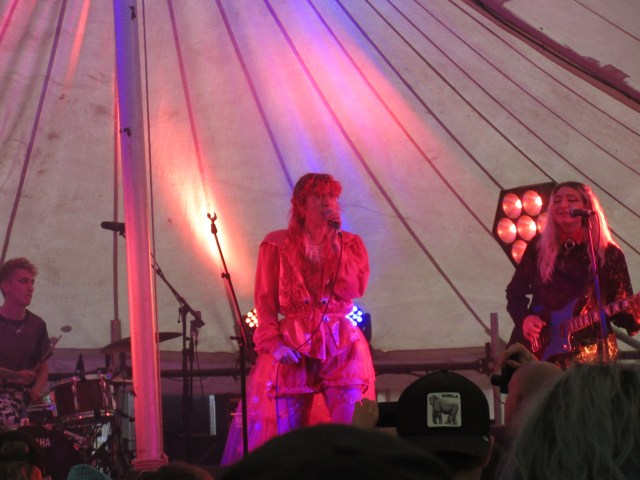
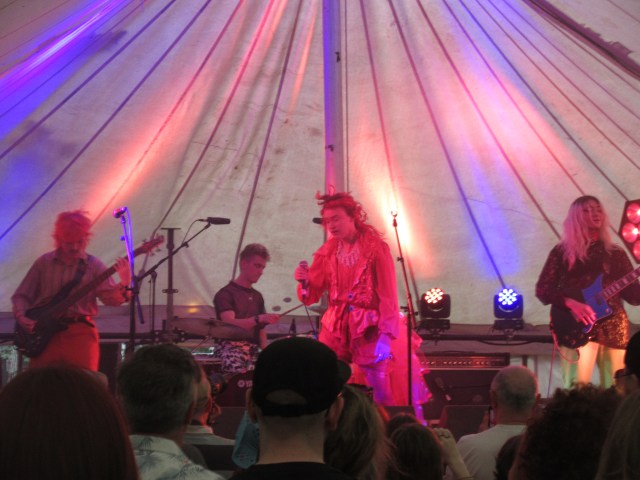
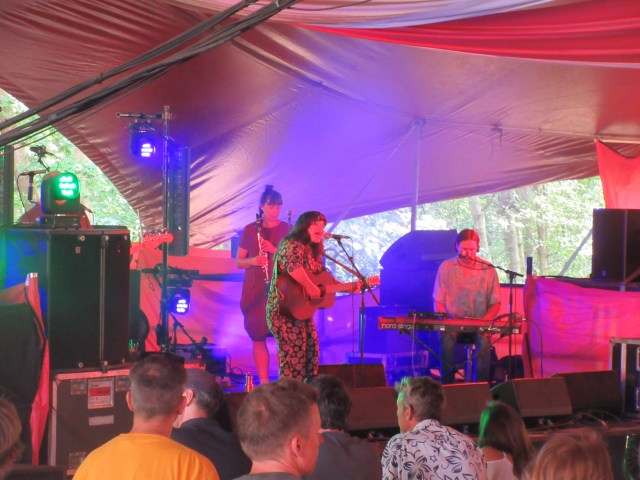
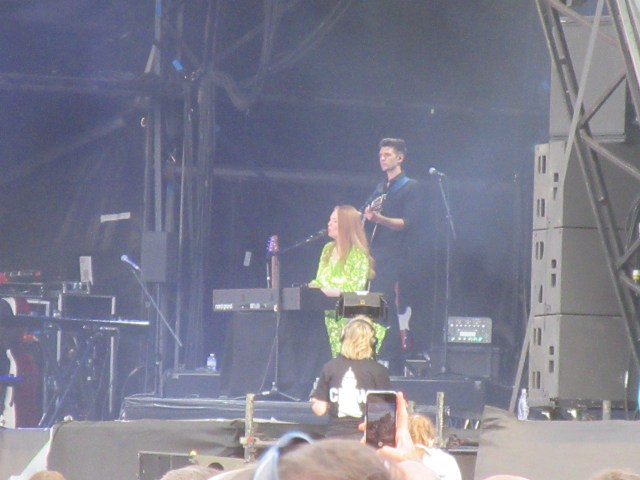
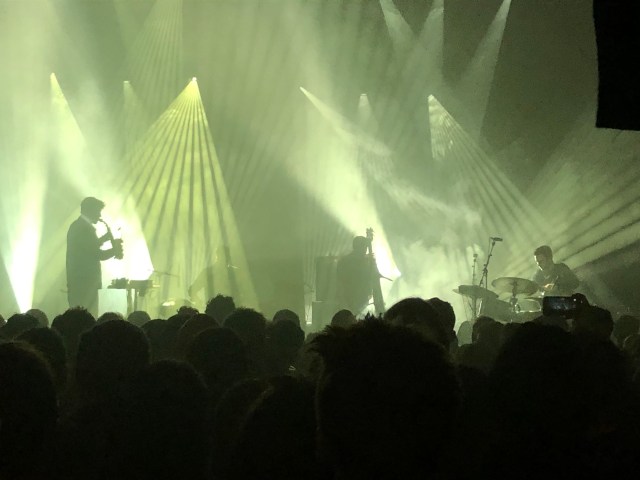
Next was a band I discovered at Wide Awake festival in May, Modern Woman. I find them intriguing. Singer Sophie Harris, very striking in her flowing red dress, looks like a folkie; but such notions are dispelled the moment she starts banging out the post-punk chords on her white Fender Telecaster. She sings like a folkie though – a wild one. Put that together with the free jazz beats, the shards of violin and bursts of synth, and you’ve got something that sounds like Fairport Convention merged with Black Midi! I really enjoyed the set, which was over too soon. I’ll definitely be looking out for future London gigs.

It was up to the Obelisk next, for Rina Sawayama. I don’t know too much about her, but Louis and Gab are both fans. I enjoyed the show, even if that mix of dance and pop with a hint of rock isn’t particularly my thing. Having said that, I did detect a bit of Prince in the arrangements, and that will always be a good sign. Louis and Gab, who were up near the front, loved it; I think their verdict is more pertinent than mine.

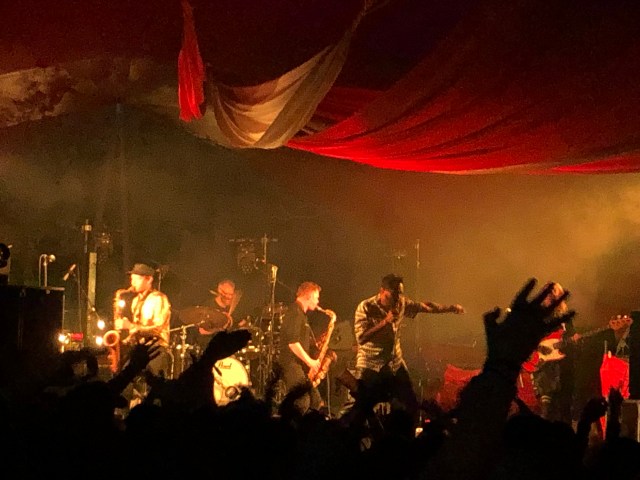
The temperature was in the low 20s on Friday, a welcome contrast to the searing heat of London, which hit an unprecedented 40C on Monday and Tuesday. But it was getting a bit chilly as evening approached, so I took a break and went back to the tent to put on some warmer clothes. That added two miles to my walking tally! Back at the arena, after a very nice Jamaican jerk pork with beans and rice, I caught a bit of Maggie Rogers on the Obelisk stage – nice enough but a bit bland – before heading down to the Sunrise for Melt Yourself Down. They are big favourites of Jon’s, though he missed them for Crack Cloud – even bigger favourites. This was a party, a concoction of thumping beats, pumping saxes and chanted choruses, with a strong African influence. Not much in the way of melodies, but that didn’t really matter as we were exhorted by the singer to clap, dance, punch the air. And the crowd responded to that. It was hot, hot, hot! I particularly liked the way the two saxophonists interacted; the singer I found a bit overbearing after a while. But it was good, high energy stuff.

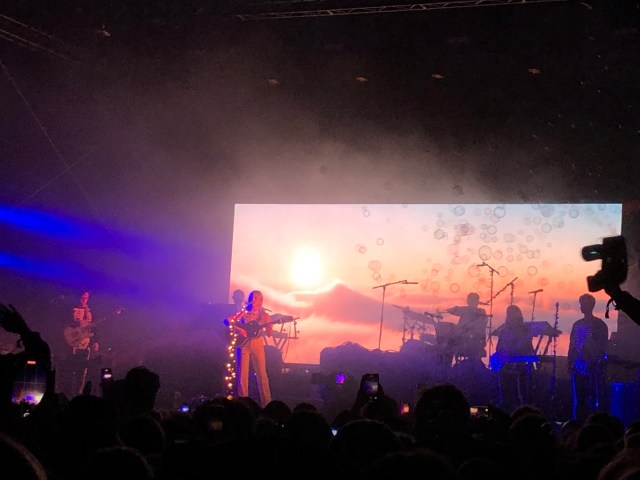
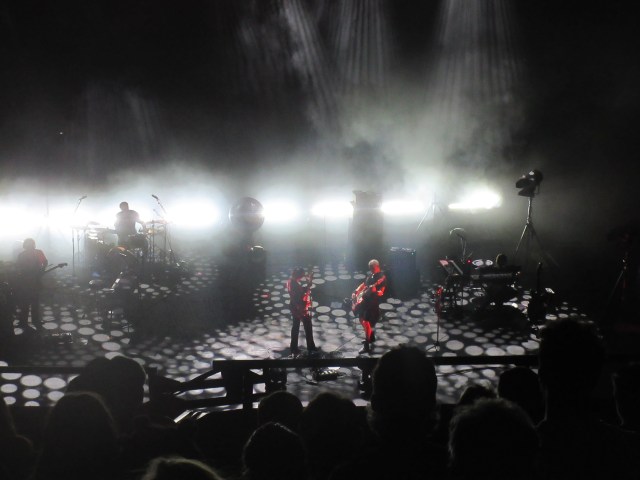
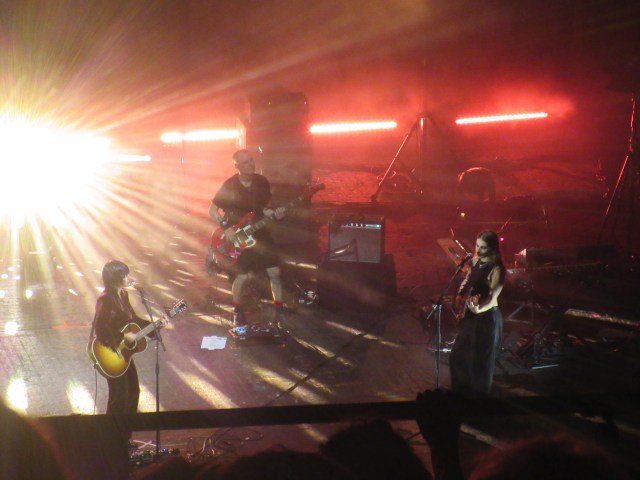
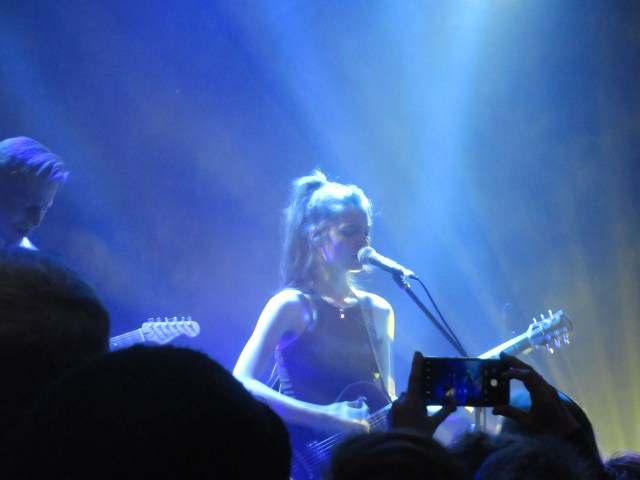
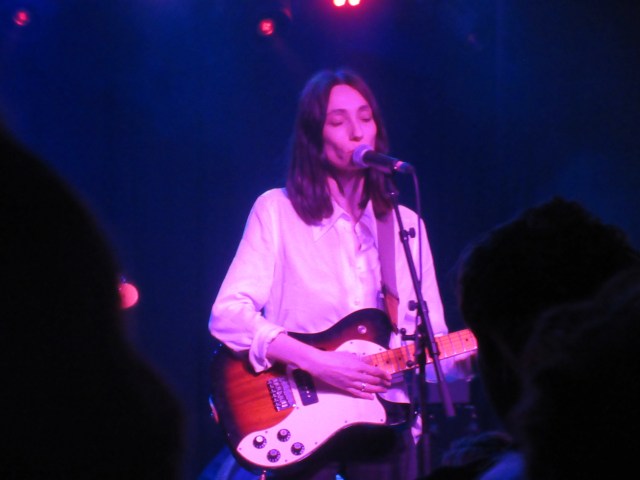
Melt Yourself Down finished at 9.30; it was time to get a drink and head over to the BBC Sounds Stage for the first time that day for Phoebe Bridgers. It was a shame to miss A Certain Ratio on the Sunrise, less of a shame to miss Lewis Capaldi on the Obelisk. I got to the tent with time to spare, so went closer to the front than I generally do – partly for photo purposes, but mainly because I really like her, and have done ever since I heard Scott Street from her first album Stranger in the Alps. I loved the follow up Punisher, which came out in 2020. It was a more polished work than the debut and had a profound impact on a lot of people during the pandemic. Phoebe Bridgers had become big. I watched her recent show at Glastonbury on the BBC iPlayer. It was a real triumph – she had made a particularly strong connection with the young women in the audience. Not so surprising; but it seemed like she was really speaking for them, particularly as her show coincided with the US Supreme Court’s retrograde judgement on Wade vs Roe. She returned to that subject tonight very powerfully. The set was much the same as at Glastonbury, a tour through the highlights of her career so far. Brilliantly presented, beautifully sung, with the sound of the trumpet providing an elegant embellishment. It all ended, of course, with I Know the End, Phoebe crowd-surfing as the song reached its dramatic conclusion. One of the highlights of the weekend, for sure.

Blimey, my feet hurt though, standing rooted to the spot for an hour. The problem with being anywhere near the front is that loads of people pile in at the last minute, and that space you thought you had, that clear sightline, completely disappears. You know it’s going to happen, so it’s a conscious choice. I consciously chose to hang back for the rest of the festival!

Saturday 23 July

Getting warmer, mid-20s today. Mostly sunny too – perfect festival weather. After last week though, and ten days in sizzling Spain recently, I’d learnt to seek out shade. Standing in the sun at the Obelisk, drinking fizzy Carlsberg was not the most attractive option. Nonetheless, I started the day there, catching the last few songs of Shed Seven’s set. Britpop revival – apparently the band are really popular at the moment, filling sizeable venues across the country. They certainly attracted a big crowd at the Obelisk. Can’t say I was ever a big fan, but I enjoyed hearing the likes of Going for Gold and Getting Better again. They also did a decent cover of Elvis Presley’s Suspicious Minds.

Over to the Sunrise after that for a couple of shows. Starting with Samantha Crain, an artist with native American heritage whose music I’ve liked ever since I first heard the wistful Kathleen and Elk City from her 2015 album Under Branch & Thorn & Tree. File under folk/Americana. She’s had a bit of a revival recently, with songs like Bloomsday and Pick Apart getting plenty of airplay on 6 Music. Musically they are a little more upbeat than her earlier work. She started her set with Bloomsday, but mostly it was gently strummed melancholy. I lay on the slope and let the sounds waft over me. An unassuming but rather lovely set.

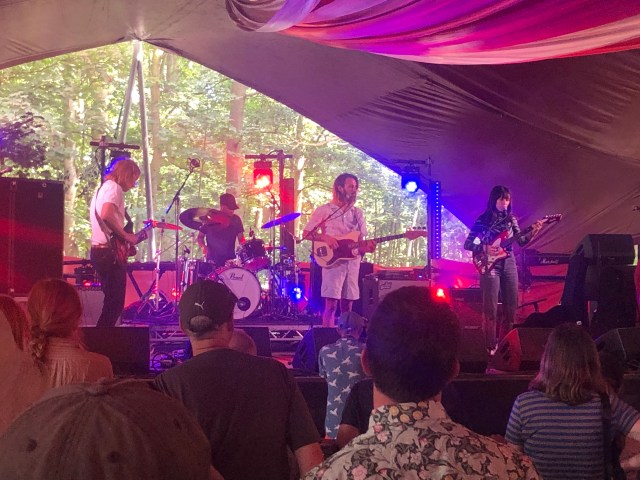
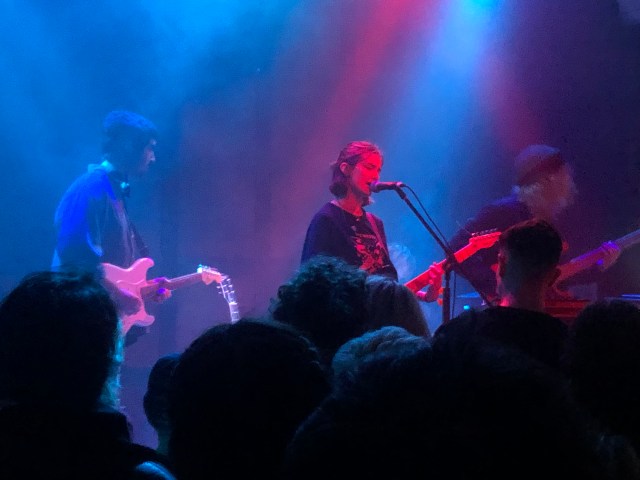
I got on my feet for the next performance, from New York-based guitar trio Wilsen. I’d not come across them before, but the programme notes suggested that they might be that rare thing at Latitude – a proper rock band. They were, but a dreamy, shoegaze one. Which is fine by me! I really liked their sound, which had some resemblance to another New York band who I like a lot called Lightning Bug. Check out their song The Right Thing is Hard to Do – it was my most-streamed track on Spotify last year.

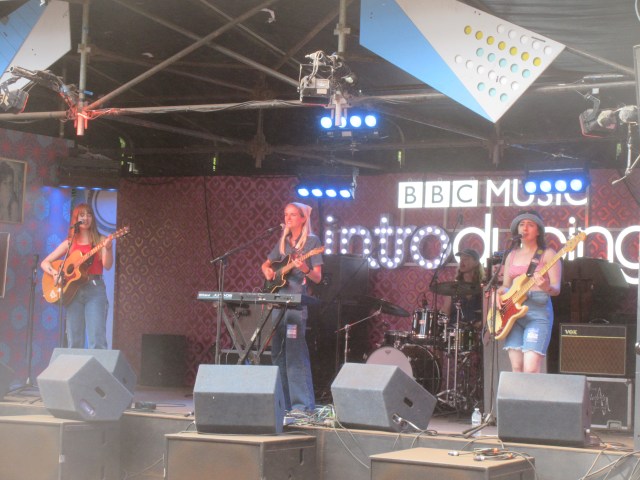
After catching two or three songs by Los Bitchos on the Obelisk, I decided to retreat to the Woods again, this time visiting the Lavish lounge, where the BBC Introducing stage is situated. This is usually a pretty relaxed place – they even have loads of sofas to lounge on. It was very busy this time though. I suspect this was as much the attraction of the shade as the band coming up, though the notes suggested there was a bit of a buzz around them. The band being Lilo, two women, Helen Dixon and Christie Gardener, from Winchester. The music was described as indie folk, as well as slowcore – a new one on me.  Anyway, they played a short set of enjoyable, if slight, folkie pop songs which reminded me of the early Staves, though Helen and Christie’s harmonies weren’t quite as spectacular as those of the Watford sisters. A pleasant interlude – except for the dust. The Lavish Lounge won the prize for the dustiest venue at Latitude. It got everywhere (as blowing your nose proved!). It actually made me hesitant about returning there. A bit of straw matting surely wouldn’t have been that expensive.

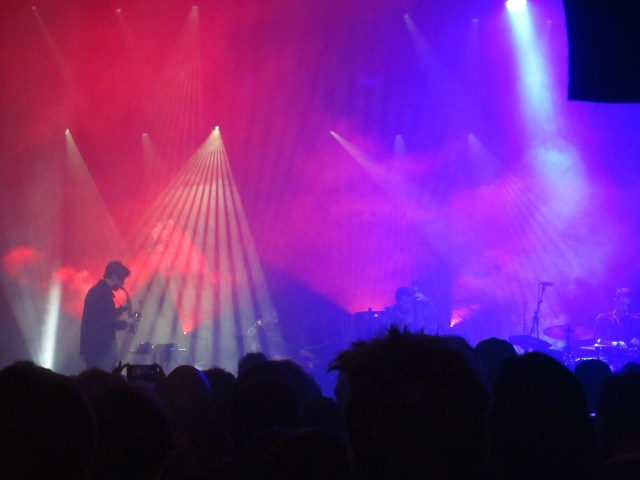
It was now time for the music to go up a gear, with what turned out the best run of bands of the weekend. It began with Caroline in the Theatre Arena, somewhere I’ve never been to before in my ten years of Latitude. And it was an actual theatre, indoors with seats. Luxury! Caroline are a south London-based collective who have created a sound like no other band that I am aware of. Their self-titled debut album came out in February. It is worth a listen, but live is where they really sound extraordinary. This was the third time I’ve seen them. I caught part of their set at Green Man last year, then saw them with Jon and a couple of other friends at Cecil Sharp House, near Regent’s Park in April this year. That last show was pretty amazing, but this one at Latitude was even better. In the darkened theatre, the band illuminated by simple lighting, the atmosphere was entrancing. It’s hard to describe the music, but if you combined medieval chanting, psychedelic folk, Black Country New Road, avant-garde jazz and post-punk guitar you might just get there. The band stand in a circle, or a semi-circle in this case, feeding off each other. The music proceeds in staccato bursts – you are never sure what is coming next. Sometimes the sound is eked out of the instruments, scratchy, half-formed; and then there is an explosion of sound, be it guitar, violin, trumpet, sax. Wow! I sat there, genuinely moved at the quality and inventiveness of it all. Like I said, extraordinary.

My only Caroline photo, I’m afraid!

The Obelisk could no longer be resisted for the last two shows of the day. It was starting to cool off in any event. First up was Little Simz. As I write, her 2021 album Sometimes I Might Be Introvert has been nominated for the Mercury Music Prize. It must be one of the favourites to win. I’ve always quite liked her music, but in small doses. Whole albums have started to drag a bit for me. Her rapping could do with more cadence, I find. It’s all a bit downbeat, though there are moments of real invention and beauty… Well, forget all that, I thought she was brilliant tonight! Her performance was confident, engaging, humorous even. She was relaxed and was clearly relishing the occasion in front of an adoring crowd. The music was refreshing, upbeat, varied. It was an absolute delight. I’m going to have to go back to those albums and reappraise them. In fact, I can’t wait to do that. Little Simz bossed it!

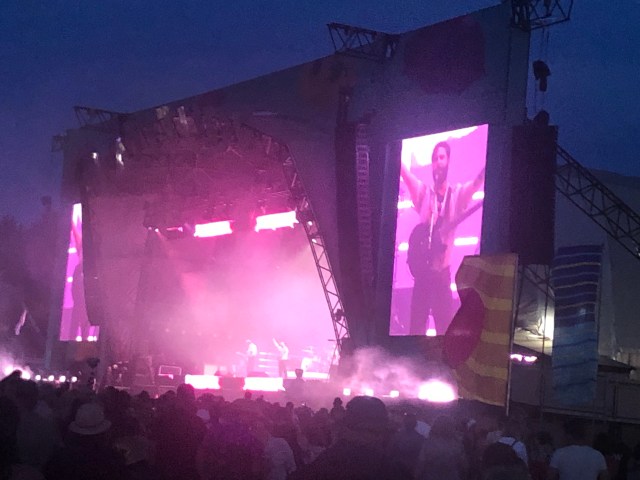
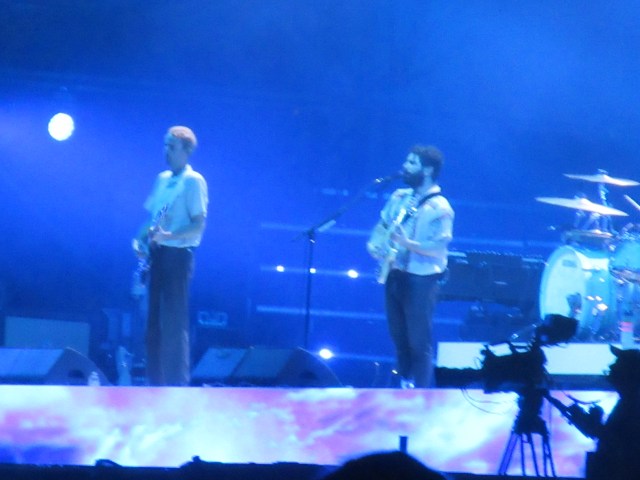
And finally, headlining the Obelisk for the second time, Foals. The first time was 2013 – how time flies! I was a bit ambivalent about that performance at the time – much as I liked their first two albums, which had a strong Talking Heads influence, I wasn’t so sure about the move towards a stadium rock sound, which featured on their 2013 album Holy Fire. And while I’ve always taken an interest in their latest moves, I’ve never really listened to a lot of Foals since. Louis, by contrast, regards them as one of the best bands around. He really wanted me and Jon to enjoy their show this time, but was worried we wouldn’t. I know how he feels – I’ve been like that at Latitude with Honeyblood, Alvvays and, last year, Maisie Peters. But he needn’t have worried, because Foals produced one of the great Latitude performances. They were absolutely brilliant, the highlight of the weekend. Only Caroline came close, for me, and that was in a much more intimate environment. Foals did it on the main stage. The energy, the connection, the quality of the sound, the passion – it had everything you want from a headliner. The performance never flagged over the hour and a half. It was sharp, it was funky and then, in the encore it went into full-on, visceral rock, with Black Bull and What Went Down, before they finished with Two Steps Twice from debut album Antidotes. Singer/guitarist Yannis set us up for the encore, talking about the frustration and anger of missing out on three years of performing live. And they let it all out tonight. This show meant a huge amount to them, and we could feel that throughout. The band showcased their 2021 album Life is Yours, of course, but we had some wonderful highlights from the past, not least an epic rendition of Spanish Sahara. That alone was enough to make the evening memorable; but everything was good, and that encore… sensational!

We went for drinks in the Taphouse afterwards and exulted about Foals… and Little Simz, and more besides. Latitude always delivers.

Sunday 24 July 

A hot and windy day, with temperatures reaching 29C in the afternoon. We took it easy in the morning, though Jon made it to the Sunrise for a singer called Tina Boonstra at 11.45. I lingered over breakfast with Louis and Gab until it was time to head for the BBC Sounds Stage for just what you need to kick start the day – the guitar and drum thrash of JOHN. So-called because both band members are called John. Jon and I – that makes four of us – saw JOHN at Green Man last year, again at the start of the day. It’s straightforward stuff: pounding drums, relentless riffing, and shouty vocals from drummer John. Not a lot of variation, but a great rush of energy. I love ‘em!

It all went bitty after that, until we reassembled in the BBC tent for jazz keyboardist Joe Armon Jones at 3.25. I wandered up to the Obelisk for Tribes, described in the notes as a Camden rock’n’roll band. That sounds alright, I thought. Turned out to be fairly standard indie in the Catfish and the Bottlemen mode. After a couple of songs I decided to check out JP Saxe in the BBC tent. He’s popular in the US I think, and duetted with Maisie Peters on her song Maybe Don’t in 2020. He was OK, but I found it a bit feeble, and it was time to meet up with Gab and Louis at the Sunrise for a band called Hudson Taylor. One of Ireland’s most popular bands, the notes said. Worth a go. I’d completely forgotten that they played on the Obelisk in 2018, if I ever knew. There was a big crowd at the Sunrise. On they came, very cheery. Then they started. The singer’s whine immediately grated with me. The songs were jaunty country pop, all a bit predictable, the lyrics the most obvious rhymes you could come up with. During the third song, I said to Louis, I can’t take any more of this. He agreed; Gab was a bit more positive, but not as positive as most of the audience, who were swaying and clapping and singing along. Sometimes you just have to accept that something’s not for you, even if a lot of people are loving it. We decided to go and get a beer and relax in the BBC tent.

Hudson Taylor

Joe Armon-Jones is a great keyboard player, featuring in recent times with Ezra Collective and Nubya Garcia. He makes his own music too, but is a reluctant frontman, as he told us more than once during his show. There was more of a reggae element to today’s set than what he has been doing with the aforementioned jazz bands, and much as I love reggae, I like his jazzy side better. There was plenty of that in the second half of the show, and it was a great set to chill out to – metaphorically, as the tent was heating up a bit. Jon, Gab and Louis all took the opportunity to lie down and get some shut-eye – wish I’d taken a photo! An enjoyably soporific 45 minutes.

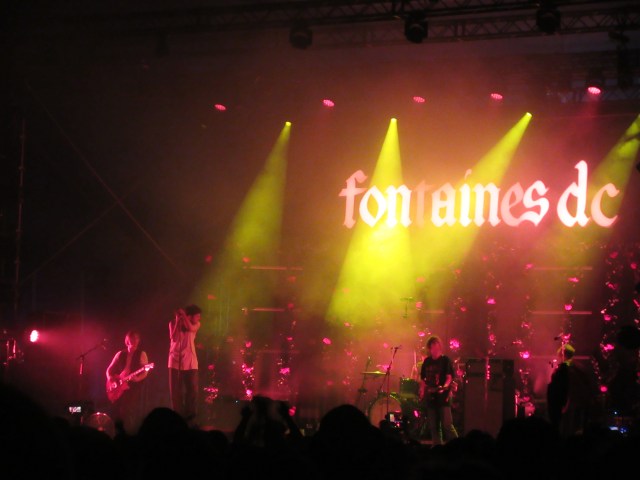
Everyone emerged from their slumbers for the next band on the BBC Sounds Stage, the awesome Crows. Full-on hard rocking from these lads. We saw them on the Sunrise in 2019 where they were ear-splittingly loud and proud. Singer James Cox had his shirt off in no time at all and spent a lot of time in the crowd. It was a stunning performance. This time, the black T shirt stayed on and there was no surfing. But it was the same high energy rock’n’roll. Jon and Louis went closer to the front and saw members of Fontaines DC catching a bit of them from the sidelines. I’ve seen Crows described as punk. In attitude maybe; but I find their music to be closer to 70s rock and metal. Not a band I’ll listen to much at home, preferring the originals, but always great for a live outing.

I parted company with the others for my next show, first treating myself to an ostrich burger and chips with crumbly blue cheese. It wasn’t bad. It was time for Freya Ridings on the Obelisk. I quite like her music; but really, there was just one song I want to see her play. That was Lost Without You, which I think is a wonderful ballad. It first came out as a single in 2017, and it still moves me. When she played in the BBC tent in 2019 my enjoyment was marred by a bunch of young lads who turned up right in front of me just as she played the first chords of the song on the piano, chatted, took photos then left as the song finished. Aaaaagh! I needed some closure, and I got it towards the end of the set this time. Still had people walking past, going to the bar or whatever. Not remotely interested in one of the loveliest, most moving songs of recent times. Those different Latitudes. But I had space to observe and absorb. I was happy.

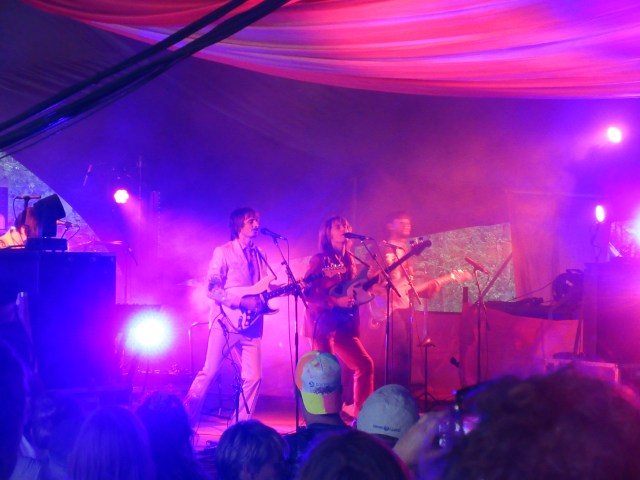
Jon and I then took a punt on an Aussie band called Lime Cordiale, who were playing on the Sunrise. As soon as they came on, with their bright 70s-style suits, Bee Gees/Monkees hair cuts and synchronised guitar moves, you knew they were going to be fun. Musically, they run through most of the classic pop styles. They have a nice interaction going between themselves and with the crowd. There were some humorous intros, and a rather weird German spoof, which was like British comedy circa 1980. The bassist also played trombone, which went down well with the crowd, a fair few of whom were Aussies. It was great entertainment; and I wasn’t surprised to hear that they were playing another set at the Trailer Park at midnight.

We stayed on at the Sunrise, joined by Gab and Louis, for Pip Millett. She’s one of the new generation of soul/R&B singers, which includes the likes of Jorja Smith and Joy Crookes. She’s from Stockport, on the fringes of Manchester – that will please one of my good friends Andy! I was particularly keen to see her because she is a great favourite of my two daughters, Isabelle and Rebecca. And she was excellent – when she made it onto the stage. She lost 15 minutes of her 45 minute set, as her band members waited for her to come on. I don’t know the reason for that, but she hit the groove as soon she started. She has a beautiful voice and slinky soul sound that reminded me a little of Erykah Badu at the time of her brilliant debut album from 1997, Baduizm. With some modern twists of course. I wanted to hear more, as did the crowd, who were loving it. But Latitude is ruthless on finishing times, and rightly so. I’ll definitely be looking out for her gigs in London in the future.

And that left one more show. Snow Patrol on the Obelisk was resistible, though I wouldn’t have minded catching Run and Chasing Cars, both classic anthems. (And Ed Sheeran guested, apparently.) It was a shame to miss Let’s Eat Grandma on the Sunrise; but it had to be Fontaines DC in the BBC tent. Their performance at Green Man last year was the highlight of the festival, a brilliant run through their greatest hits. Since then they have a released a new album, Skinty Fia, so of course a fair bit of that features in the new set. I’m not too familiar with it yet, so that affected my perception of tonight’s show, which, while powerful and dramatically lit, was sonically a bit messy. Even familiar tunes from the first two albums seemed drowned in a sea of guitar distortion. A deliberate move away from the short sharp sounds of their early songs, clearly; but when they played a relatively straightforward version of Boys in the Better Land towards the end, it was greeted like a long lost friend. Fontaines are a great band, and constantly interesting as their music evolves. This was a good show, but by the time we see them at Brixton Academy in November, I hope they’ve found a better balance between their punk brilliance and the more diffuse sounds they are exploring at the moment.

We mulled over this and what we’d loved about this year’s Latitude over a final couple of drinks at the Taphouse afterwards, as a hint of rain began to quench the parched earth. We might grumble a bit about the gentrification, the loss of the Lake Stage, the rather safe choices of bands on the Obelisk; but this was another wonderful festival, full of magical moments, new discoveries and re-discoveries. Latitude is still the best.

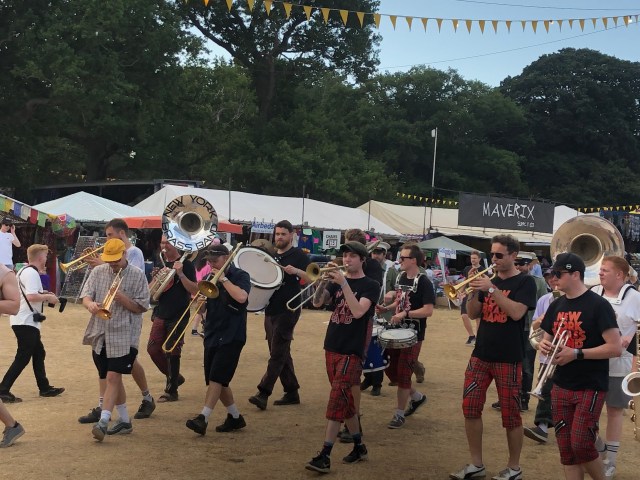
The North Yorkshire Brass Band march through the village!

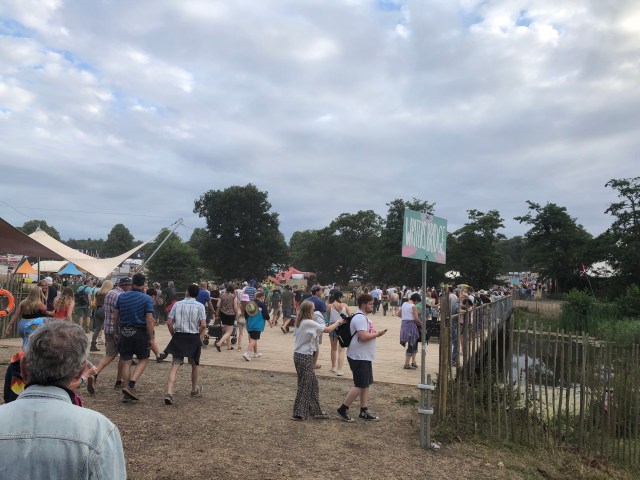
Always a special moment when you cross the Writers’ Bridge for the first time.

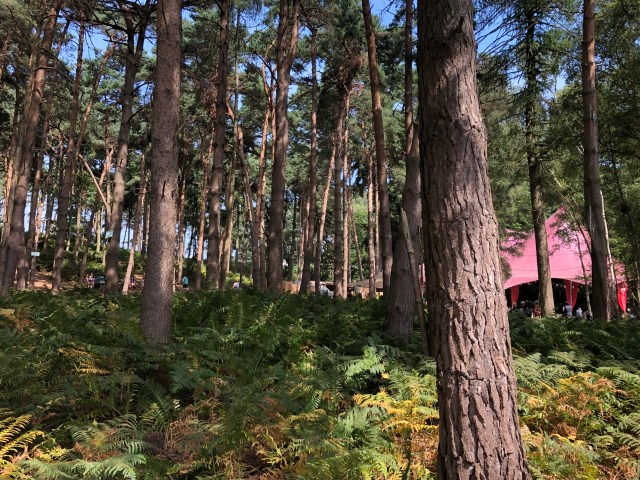
In the Woods – Sunrise Arena in the background

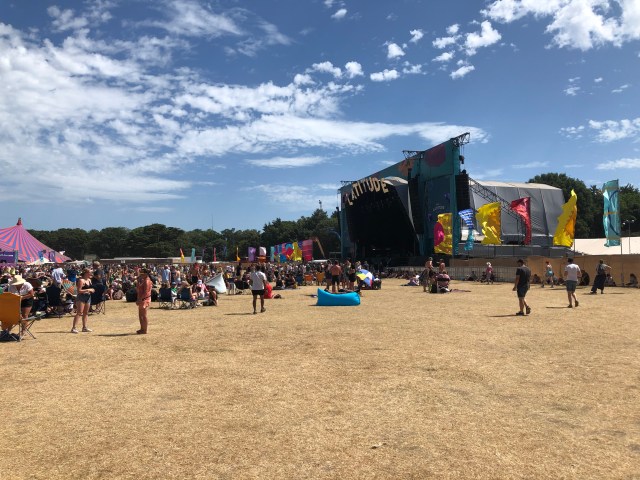
Afternoon scene

A parched Obelisk, Sunday lunchtime. Tribes onstage.

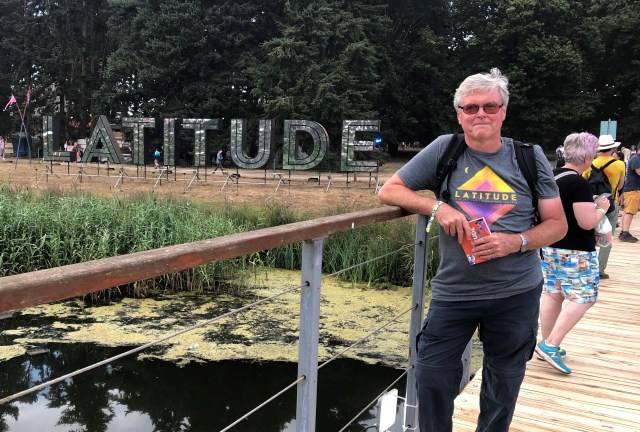
Some old geezer on Thursday evening.


Posted in Music - concerts, lists, reflections | Tagged , , , , , , , , , , , , , | 8 Comments

A golden trio of concerts: Greentea Peng, Sharon van Etten, Kacey Musgraves

A golden trio of concerts indeed! All in the space of a week. Three artists whose music I love; three of the best from recent years. And all playing at rather special venues.

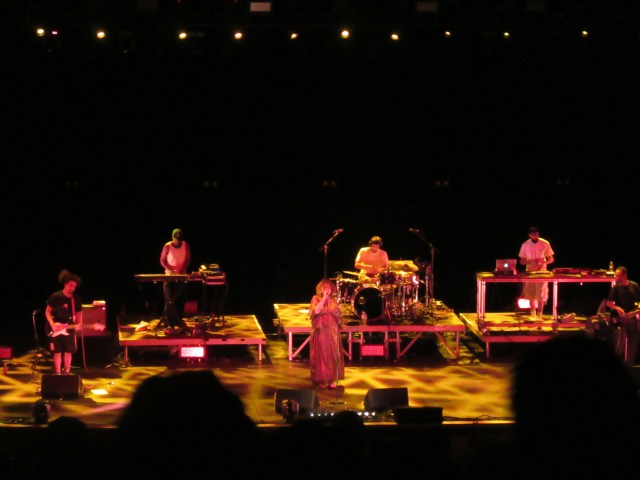
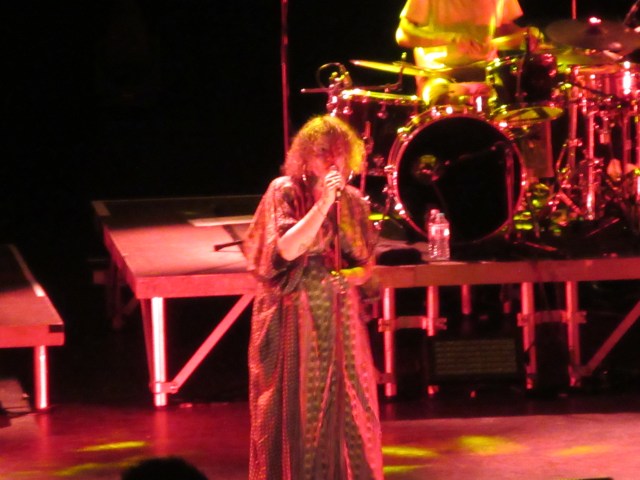
Greentea Peng at the Royal Festival Hall, Thursday 16 June

Greentea Peng – aka Aria Wells – is someone whose music I’ve followed closely ever since I first heard the sultry break-up ballad Used To in 2018. Her music is a languid combination of soul, jazz, rap and reggae, with a distinct dubwise inflection at times. Very much the sound of London – London in the summer, London at night. The music is a mellow pleasure; but listen to the lyrics and you hear the voice of someone who has something to say about the way things are. And she is fighting back.

Her debut album, Man Made, was released last year. There had been a steady stream of singles and EPs since 2018, but it was good to have a full long player. Put it on and just chill. I liked it a lot and made it No 3 in my albums of 2021.

I saw her play twice last year at festivals; Latitude and Green Man. Latitude in particular was a real joy – she was last on at the Sunrise Arena on the Sunday. The last show of the festival for me and many others there. It was a festival full of the sense of liberation, the first big gathering after the lockdown restrictions started to be lifted.  And to be in that crowd, moving to those languid beats, singing along to Mr Sun (miss da sun) and Jimtastic Blues – you’ve got to fight for your right to party – felt like a new dawn.

It was no surprise to see that Greentea Peng, with her musical influences and her take on the world, was invited to be part of Grace Jones’s Meltdown festival line-up at the Southbank this year. There is definitely a line that you can trace from Grace Jones, especially those wonderful albums she made in the early 1980s with Sly and Robbie laying down the drums and bass. But the Festival Hall itself – wow! It’s a big place, an imposing arena. And it has seats! I was intrigued to see how she and her band would make the leap.

I had the pleasure of the company of my daughter, Izzy, for the show. Greentea Peng is one of those artists that unites me with all of my children, which is always a good feeling. The hall was respectably full and almost immediately the music began everyone stood up. Quite hard to sway to the beats sitting down! The show was a generous hour and a half, with some quite extended numbers taking up that time. The groove was established from the start: mellow, jazzy, with that dub feel. I did feel that it was a bit one paced at times and it dragged a little in the middle. Having said that I was delighted when she played Used To about half way through. The familiar sounds of Mr Sun and Hu Man livened things up towards the end and sent everyone home happy.
Gazing downstream from Hungerford Bridge at the lit-up bridges, St Paul’s and the City towers as we made our way afterwards to Embankment Station, I was reminded once again how much I love this city. Reflecting on the fact that I’d just seen Greentea Peng at the Royal Festival Hall reminded me even more.

Sharon van Etten at O2 Brixton Academy, Friday 17 June

When I booked the tickets for me and Jon for this show back in February, I was really looking forward to it. With the temperature close to 30 degrees during the day the main concern became not wilting in the heat at Brixton Academy! In the event, it was fine. I’d booked seats and the place was well-ventilated – one positive legacy of the covid measures.
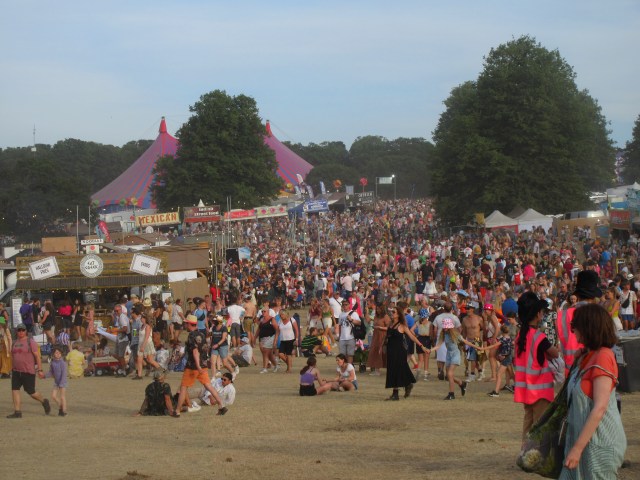
Sharon van Etten’s music has been a constant companion for me since I discovered the wonders of her 2012 album Tramp, and, in particular, the song Give Out, which became a bit of an obsession in 2014, around the time the next album, Are We There, came out. Give Out, which I enjoyed playing on the guitar, was a song about the hope – and the fear – that exists at the beginning of a relationship. Much of Sharon’s work explored the debris of broken relationships. The songs had an inner fragility, but were often powerfully expressed. There was redemption in all the darkness, a surviving spirit. In that respect she had a kinship with the music of Bruce Springsteen, and maybe that is one of the things that attracted me to it.

She played a great show at Shepherd’s Bush Empire in 2015. Thereafter things went quiet on the musical front for a while – she started a family, studied for a psychology degree and began an acting career. She returned to the music in a big way in 2019, with the release of the album Remind Me Tomorrow. It was a dramatic return, with a rockier sound, but the lyrics were as unsparing as usual, including about herself, never more so than on the sparse opener I Told You Everything. But the song that has risen above all the others, to become one of her anthems – perhaps the anthem – is Seventeen, a dialogue with her teenage self. Sonically, it is the most Springteenesque song she has ever written – and none the worse for it!
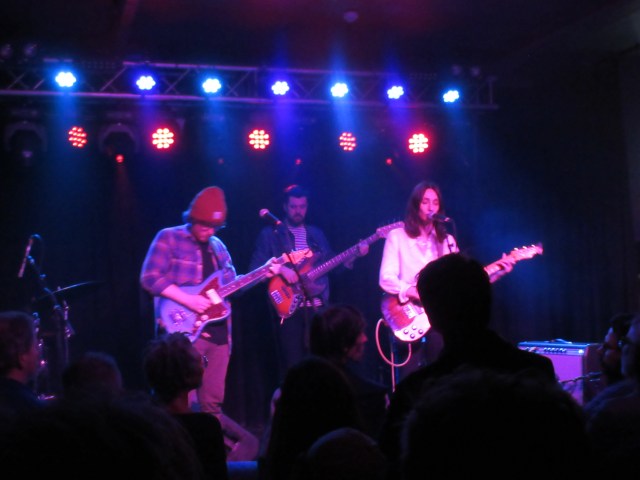
I saw her a couple of times in 2019: first at the Roundhouse, then at Green Man festival. She her band were on top form on both occasions. The music had a real punch. The pandemic intervened after that, of course; so this tour, accompanied by a new album, was her second return to the limelight after time away. The new album, We’ve Been Going About This All Wrong, is another powerful work, perhaps with a return to some of the tenderness of some of her early, more acoustic albums. Reflections on life during the pandemic have clearly played a part in the compositions.

I found some time to get to know the new album before the concert, and it grew on me very quickly. Songs like Anything, Born and Come Back are destined to become real favourites, I think. Lead single Mistakes and Headspace are built for live performance; while Darkish and Darkness Fades reveal Sharon’s most fragile side, with that hope/fear thing again. All of these and a few more featured in the show – I was glad I’d taken the trouble to familiarise myself with the album. I really enjoyed the rendition of Born, which ended the main set. It follows a classic anthem pattern, starting slow and contemplative, building gradually before breaking out of the shackles. Crowd favourite Every Time the Sun Comes Up – supreme until the emergence of Seventeen – still featured, but was faster and more guitar-based than usual. I’m not sure it entirely worked, but it’s good to try out different interpretations.

I really enjoyed the encore. First we had Darkish and Darkness Fades, Sharon solo for some of it. And then, to finish things off, to lift the mood, even if the lyrics are wistfully looking back at a freer time, Seventeen. There is no escaping it now, Sharon, this is the song you will always have to play! A true anthem, an uplifting end to a captivating concert.

And why was this concert a special moment for Sharon van Etten? With a capacity of just under 5,000, Brixton Academy was the biggest headlining show she has done, as she told us with delight. I was glad to be part of it.

Kacey Musgraves at Hampton Court Palace, Wednesday 22 June

“I don’t know how they got me here,” said Kacey at one point, before going on to say how amazing and unusual the experience was, playing at Hampton Court, once the home of King Henry VIII. And yes, it is pretty weird, as well as being a magnificent venue, especially when darkness falls and the lights glow on the old tyrant’s palace.

Kath and I were there with my friend Dave and his wife Fiona, who live on the other side of the river from the palace. A lovely part of the world. We’ve been to a few shows there over the years, highlights being Bryan Ferry and Roxy Music a couple of times and, in 2019, none other than Kylie. Like Kacey this time, she was playing a warm up show ahead of an appearance at Glastonbury festival, which is back in full effect this year. This weekend in fact. I can’t wait, and I’m not even going! Watching it on the BBC is not a bad alternative.

I said Sharon van Etten has been a constant musical companion since 2014. Well, Kacey Musgraves has been even more so, if only since 2018. That was the year that her album Golden Hour was released. I played that album constantly – it became the soundtrack to my year, and I made it my No 1 in my end of year Best Of. It started to win big awards like Grammies the following year and launched Kacey beyond her country music base to pop stardom in the US. Her traction isn’t quite as great in this country, but she still has a strong following. Golden Hour was a happy album in the main, a product of her marriage. But there were warning signs. The song Happy and Sad reflected on the fact that at her happiest moments she was waiting for things to go wrong. And they did. Last year’s album Starcrossed tracked the emotions of her crumbling relationship and eventual divorce. So she stuck to country script after all, even if the music remained a subtle blend of pop, dance and country.

So we expected a good number of Starcrossed songs in the show on Wednesday. Not too many, in case it became a bit depressing. Kacey even joked about that, but she did still start with five straight from the new album. And they worked really well. First because of the musicianship; second because the audience, which was pretty youthful for Hampton Court, seemed to know the words and were singing along. Starcrossed has really struck a chord with, let’s say, millennial women – of whom Kacey is one of course. Good Wife, with its catchy, ironic chorus, stood out for me.

After the Starcrossed introduction, we moved into a Golden Hour section, starting with the title track, which I love. It covered the poppier elements of the album – Butterflies, Lonely Weekend, Space Cowboy, High Horse – but was all a lot of fun. And then it got really interesting. First she sang a cover of Elvis Presley’s I Can’t help Falling In Love With You, which is on the soundtrack to the new Baz Luhrmann film on Elvis. Then, sitting on a stool, she played a lovely acoustic version of Merry-go-round, one of the great songs from her first album, Same Trailer Different Park. A song about the hopelessness of life for many in small town America, a place from which she came herself. And after that, another cover: Fleetwood Mac’s classic Dreams. Kacey can take on Stevie Nicks any time!

The main set finished with a couple more from the new album – good, upbeat sounds. And then, first up in the encore, the song I love most: Slow Burn from Golden Hour. A song about taking your time in life, and true to my heart. Rainbow, from the same album concluded things on a lovely, positive note.  We left with a warm glow – to go with the glow from our wristbands!

Next stop for Kacey, the Other Stage at Glasto. I’ll be making an appointment with the iPlayer.

Posted in Music - concerts, lists, reflections | Tagged , , , , , , , | 2 Comments

Wide Awake Festival, 28 May 2022

Primal Scream on the main stage

Not quite summer yet, but the festival season has begun. Wide Awake festival takes place in Brockwell Park, Brixton. Nearest station is Herne Hill. It made its debut in September 2021, delayed by the pandemic. In this, its second year, the music was spread over two days, Friday and Saturday. Friday was headlined by Caribou and erred more towards dance music; Saturday mixed dance and indie/rock, with a bit more emphasis on the latter. Primal Scream were the headliners, featuring a rendition of their classic album from the early 90s, Screamadelica. I was tempted by both days, but settled for the Saturday. Primal Scream was too good to miss; Floating Points and Overmono offered some interesting electronic options; the Comet is Coming are always hugely entertaining; and I was looking forward to renewing acquaintance with Faye Webster after a few years. Of course, when making that assessment, I didn’t think about the curse of all festivals – the line-up clash. In the event that did for everyone on that list except Primal Scream and Faye Webster!

Jon G and I managed to get to Brockwell Park half an hour before the festival gates opened, at midday, so we went off to Herne Hill to get a cup of tea. We met Louis and Gab at the entrance just before 12, along with Gab’s brother Finlay and his friend Georgia. As we entered, we were all given a token for a free can of Beefeater gin and tonic. What could we do but go up to the stall and get our freebie? Made a change from starting with a fizzy lager! It was amusing to see all the early birds at the first shows, which began at 12.15, wandering around with their G&Ts.

First up were the Golden Dregs, in the big tent, sponsored by the Moth Club* – which we love – and DIY Magazine. This is a band that I’ve missed a few times at previous festivals, so it was good to catch up with them. They’re a south London-based band, but singer Benjamin Woods is from Falmouth in Cornwall, a place I know well, as one of my daughters has been at university there. His sister Hannah plays saxophone in the band, amongst other things. I’d read that they played Americana-style music, but it was rather more than that. The band all came on dressed in white and played a very slick set, with plenty of musical variety. Benjamin played a bit of guitar, but mostly just sang – or, I should say, crooned. I was getting the National, Lloyd Cole and maybe Tindersticks in the sound. Or even Gene – remember them? All good stuff and a very enjoyable start to the day’s music. I’ll be checking out their albums at home.

I split with the rest for the next show. They stayed in the tent for Crows, the ear-splitting rockers. They were amazing at Latitude in 2019, but I fancied something a little lighter at lunchtime. Katy J Pearson was on the Windmill* stage, the main arena.  I’ve heard a bit of her country-tinged pop, and really like her recent single Talk Over Town, which takes you into Angel Olsen territory. In the sunshine she started with that song, and proceeded to play a set that suited the sunny, breezy day. It got people dancing – when they weren’t taking selfies. A refreshing aperitif of a show.

Back to the big tent after that to meet up with the gang and take ourselves back to the electropop of the mid-80s. One part New Romantic, two parts Depeche Mode. With a dash of Orchestral Manoeuvres in the Dark. All the way from Brooklyn, New York, Nation of Language. Their second album, A Way Forward, had quite a lot of airplay on 6 Music last year. It was one of Jon’s favourites of the year; I never quite got round to listening to all of it. I liked what I heard, but having grown up with the originals, I didn’t feel the urge to investigate further. But, I have to say, the show was excellent, and really grew on me as it went along. The beats were so redolent of all those 80s classics that you couldn’t help but love it. The singer Ian Richard Devaney had a bit of charisma and threw himself around the stage. He occasionally picked up the guitar, and that provided some of the outstanding moments for me, particularly the last song Across That Fine Line, which is one of their best known. The guitar, with that live distortion that you just can’t capture on record, melded perfectly with the electro-beats. A dramatic end to an absorbing set.

And I’ve listened to the album since – I really like it!

I stayed in the tent for the next show, one of those I was most looking forward to: Faye Webster. The first time I saw her was in 2017, when she was supporting Julia Jacklin at Shepherd’s Bush Empire (as was Nilufer Yanya, who is also doing well). Her self-titled second album had just come out. It’s a beautiful album of bittersweet country-pop. Since then her sounds have become ever more lush, and just as poignant. Check out Kingston and In a Good Way, both songs I absolutely love. Live, her music works best in a small venue, which allows the understated melodies and the embellishments of the steel guitar to shine through. Faye’s demeanour is quite modest too, which is fine when you are close to the action; today, with a large (and appreciative) crowd the sound was somewhat overwhelmed by the buzz of chatter, which is an inescapable part of the festival experience. Having said that, I was delighted to hear both In a Good Way and Kingston for the first time live, and She Won’t Go Away, one of the highlights of the Faye Webster album. An enjoyable set, but I should have stood a bit closer to the stage for a better appreciation.

The next two to three hours were a bit of this and a bit of that. In the meantime, I managed to miss The Comet is Coming, but I’m sure I’ll see them again soon, for more of Shabaka Hutching’s amazing sax-playing. After Faye Webster I wandered down to the Windmill stage for the second half of Yard Act. They’ve been winning a lot of plaudits recently, and are appearing everywhere, but I found it all a bit wordy, and after a couple of rants from James Smith, I decided to go and get a burger. Product placement alert – Cheeky Burgers, very good quality!

Afterwards I wandered up to the small Brixton Brewery stage, open but with one of those big canopies. A band called Modern Woman (aka Mordern Woman) were about to come on. They looked interesting: a dark-haired, rather striking woman guitarist in a long diaphanous red dress; and three men, including one who had a violin as well lots of electronic kit. They looked quite Mediterranean in appearance, Turkish maybe, and I wondered whether we were going to get an interesting clash of musical styles. So I stuck around, even though the band, especially the woman, seemed to be taking an age tuning up. I’m glad I did, because the music was intriguing – a clash of sounds indeed, but folk rock and post-punk jarring guitars and violins over jagged bass lines. Fairpoint Convention meets Black Midi! And quite a lot of shrieking too. There was a sort of suppressed wildness about them. It was all over quite quickly – probably because of that prolonged sound check – but not before a previously innocuous young man just in front of me began to leap about crazily, dragging one of his friends and a few bystanders into his improvised mosh.  I moved away to keep out of it and try to focus on the music, which was reaching a frenzied climax – before it ended suddenly. All a bit surreal.

It made quite an impression me though, and I looked afterwards to see what information there was on the band online. The singer and guitarist is Sophie Harris, the violinist/synth man David Denyer, who has Armenian heritage. The band are south London-based. Of course they are! Jon and Louis later said they’d seen them at End of the Road last year, which I missed. There’s an EP from 2021 called Dogs Fighting my Dream on Spotify, which summarises their recorded output so far. I shall keep an eye out for future shows – I’d like to see more of them. I’ll try to avoid that lone mosher if he’s there though!

After that excitement, I thought I’d give Billy Nomates a go. She’s another artist I’ve not got around to seeing at previous festivals. I liked the duet she did with Jason Williamson on Sleaford Mod’s catchy single Mork and Mindy last year. What I’d heard of her own music sounded like 70s rock/soul melodies set against a modern electronic backbeat. Could be interesting live, I thought. And it was – sort of. Billy was very energetic, leaping around the stage, as the laptop pumped out the sound. I could see why she was a fit with Sleaford Mods. But it was a bit karaoke for me – onstage. The music itself was fine. I decided to go up to the Bad Vibrations/So Young stage across the way, where the delightfully-named Tropical Fuck Storm were about to play.

TFS – let’s call them that – were bound to rock, I assumed. I was right about that! They looked the part, too. After the shenanigans at Modern Woman, I was impressed by how the band were all standing in their places, raring to go, for about five minutes before they were due to start.  No-nonsense professionals. They are from Australia, and clearly know how to entertain an audience. I didn’t know any of their music, but it was easy to enjoy the riffing, the shaking heads and the general (controlled) mayhem. Judging from the crowd they also have a diehard fanbase, who were at Wide Awake to see them today. Good fun – might not listen to their music at home, but would be happy to see them again on the stage.

I left before TFS’s set ended to return to the tent for the Horrors, and to hook up again with the rest of the group. I have good memories of this band – their show at my first Latitude, in 2012, was the highlight of the weekend. They were three albums into their career, having recently released Skying. They combined Goth, post-punk, shoegaze and electropop effortlessly and had the classic rock’n’roll look, singer Faris Badwan in particular. Fast forward to 2022 and what did we get? More of the same? Not really, not for me, anyway. It might partly have been because the lighting and imagery wasn’t anywhere near as good as that Latitude show; but mainly it was the music. It all seemed like a rather turgid wall of sound to me, with some thumping beats. Where had the melodic underpinning, the brilliant guitar sound, that stylish grandiosity gone? Ten years ago… things obviously change. The band have had some successes, but haven’t really dominated the indie scene in the way that  might have been expected. A very loyal following, for sure, but I felt that something had been lost. Some of the swagger. I didn’t stay on to see if it got better in the end, as I had an appointment with some proper rock’n’rollers…

Amyl and the Sniffers don’t make any pretences. They are a straight up hard rocking Aussie punk rock’n’roll band. Almost a cartoon version of the genre. They have the feisty, foul-mouthed, female singer, the mullet-haired guitarist, straight from the AC/DC school of rock, the booted skinhead bassist – he used to have a mullet too, I’m sure – and the drummer… the bloke who holds it altogether, but no-one knows. When I first came across them, at End of the Road in 2018, I couldn’t stop smiling. They just brought back so many youthful memories of metal, rock, punk – and they were clearly having a great time. A big rock’n’roll celebration. I saw them again, at Heaven in Charing Cross a year later, and the attraction had palled a bit; but when their new album Comfort to Me came out last year, my interest revived. There are one or two terrific rocking tunes on that, notably Guided by Angels and Looking for Love. And on the Windmill Stage they gave the crowd exactly what they wanted: a big slug of no-nonsense up-yours rock’n’roll. After the gloomy dirges of the Horrors, my smile was back! Highlights included the two songs already mentioned and the old favourite I’m not a Loser – great to hear that again. Amy Taylor strutted around the stage, taking everyone on, as she always does. Rock’n’roll grew from rebellion, but it’s a reassuring presence too, these days. Forget your worries, drink some beer and punch the air. Amyl and the Sniffers are the perfect accompaniment.

One of interesting and laudable features of the Windmill stage was that there were a couple of people to one side providing a sign language version of the songs for those who might need it. I couldn’t help but wonder what they made of Amy Taylor’s language!

I caught a few minutes of Overmono in the big tent – looked like a big rave was happening inside – and then rejoined Jon and the gang for the final show, Primal Scream playing Screamadelica. On the way down Gab took issue with my dismissal of the Horrors – she thought they were brilliant and said they had played plenty of their best songs. So there you go – a bit of BBC  balance for you.

As we waited, you could feel the anticipation in the air. We were talking about who we’d enjoyed most during the day, had a group photo taken (not a selfie!) and then the lights changed and on walked Bobby Gillespie, resplendent in white suite, flanked by his band and a gospel choir. They launched straight into Movin’ On Up and the celebrations began. There was a lot of love in the crowd for this song, this album, this band – even though a lot of the audience wouldn’t have been born when Screamadelica was released in 1991. It was one of those albums which brought rock, pop, soul, dance and rave together in an unprecedented way. It set a benchmark for others in the future. The great and late, lamented producer Andy Weatherall was, of course, at the centre of it, setting the controls for the heart of the sun, as Pink Floyd once sang.

There are three big songs on Screamadelica, with everything, especially the singers, in full flow: Movin’ On Up, Come Together and Loaded. Movin’ On Up kicks off the album; the other two are bunched together in the middle, if you listen on anything other than the vinyl, which is a double album. On that Come Together ends Side 2 and Loaded begins Side 3. That makes more sense; but if you listen all the way through, the album peaks in the middle. Around that are some pretty mellow, psychedelic tracks, some ballads. How do you deal with that in the live environment? It could all be a bit anti-climactic. What Primal Scream did was to take Loaded out of the middle and put it at the end – though not the end of the main set. That did end a bit tamely – but we still had the encore.

The whole set was brilliantly put together. A lot of the songs were given quite a different reading to the original album versions. More dance beats would sum it up. That worked for the crowd, of course. The band and the choir were superb, and Bobby was ever the showman. The lighting, the backdrop, playing on the album cover for the first part of the show, made it even more spectacular. And then came the encore…

At first, just a Scots piper, playing that familiar motif from Loaded. Teasing us. A brilliant touch. And then they all came on and piled in. A triumphal rendition of an absolute anthem. The festival anthem?

And then a switch of gear. If Amyl and the Sniffers could do rock’n’roll, then Primal Scream could do it even better. If you know the band then you can guess which three they played. In order: Jailbird, Country Girl, Rocks. Just magnificent! The only issue was fending off the bodies of some pretty beefy blokes in front as they leapt around. But yeah, what a wonderful celebration – first, of a landmark album and then the best live music of all: 100% pure rock’n’roll.

Meanwhile Liverpool were playing Real Madrid in the Champions League final. Did we care? I think you know the answer.

* The Moth Club is an excellent music venue in Hackney. By day it is a military veterans’ club. The Windmill is a Brixton pub, well known for its musical roster of up-and-coming bands. I went there for the first time this April to see Enola Gay – a great evening.

Posted in Music - concerts, lists, reflections | Tagged , , , | Leave a comment

Gang of three: Mattiel at Lafayette, Portico Quartet at Koko and Gretel Hanlyn at Bermondsey Social Club

Three concerts from a couple of weeks ago. They happened over a four day spell, from Saturday 7 May to Tuesday 10th. First and third were classic indie-pop; in the middle, some atmospheric electro-jazz. I’ll take them in chronological order.

Mattiel at Lafayette, King’s Cross, 7 May

Mattiel are a duo from Atlanta, Georgia, comprising singer Mattiel Brown and guitarist/producer Jonah Swilley. They released a self-titled debut album in 2018 and followed that with another, Satis Factory, in 2019. I came across them in 2019, when a few of their songs were given airtime by 6 Music. I particularly liked one called Keep the Change, which had a real New York feel to it – a bit of Bruce even. Thinking about it, the melody and rhythm reminded me a bit of Jesse Malin. He had a couple of albums I liked in the early 2000s, with songs like Mona Lisa and Queen of the Underworld. Mattiel has a more distinctive voice than Jesse’s – and an ear for a catchy melody. The easy categorisation is indie, but they’re not just another Strokes re-tread. Their earlier sounds have a strong hint of Americana and I’d say their influences go back to the 70s, at least. That’s acknowledged by the band’s cover of the Clash’s Guns of Brixton.

Like a lot of new bands, Mattiel’s progress was put on hold by the pandemic, but they came back this year with their best album yet, Georgia Gothic. There’s a richer sound to this one than its predecessors, and overall the songs are stronger. Highlights include Jeff Goldblum and Lighthouse, both of which bounce along and demand you join in the celebration. And that explains why the gig at Lafayette was a sell-out. The venue is part of the new development just north of King’s Cross station. I hadn’t been there before, but I liked it. There’s a modern bar upstairs and the music venue downstairs is designed so that the 300 or so audience get good views of the wide stage. I thought that maybe there were slightly too many people packed in, but Jon and I managed to find a bit of space near the bar at the back, having got there just as the concert was about to begin.

I was interested to see that the crowd was fairly young – mostly 20s or early 30s, I’d say. That surprised me a little, given that Mattiel’s music is classic indie and rock, essentially. Maybe it’s the 90s revival – or is it now the noughties? And the songs, drawn from all three albums, were greeted really enthusiastically. It was striking how many great choruses there were – an invitation to sing along, which a lot of people did. The one thing I’d say was missing was the rock’n’roll sound of a full four or five piece band. Mattiel sings and presses a few buttons, while Jonah plays guitar, without much stage presence. So the focus is very much on Mattiel. It might be anyway, but I think she’d benefit from having some more organic beats to sing along to. Call me old fashioned…

They came straight out of the traps with Jeff Goldblum, and Lighthouse soon followed. Another favourite during the main set was Subterranean Shut-in Blues, which does nod to Bob Dylan given the title, and has a very catchy chorus about making me nervous. They rattled through 18 songs and came back for five more – a very generous set list. Jonah swapped his electric guitar for an acoustic in the encore, and paradoxically that gave the songs a harder edge. And what a great surprise to hear Guns of Brixton – they did the Clash classic full justice.  They kept the best till last – Keep the Change. Mattiel sings I’ve wasted all my time, but nothing could be further from the truth. A really enjoyable evening.

Portico Quartet at Koko, Camden, 8 May

I first saw Portico Quartet in March 2012, supporting Scritti Politti at the Lexington on the Pentonville Road. It was part of a series of concerts promoted by the Word magazine –  sadly no more, though Mark Ellen and David Hepworth keep the spirit going with their excellent Word podcast. I’d not heard much about the band before the gig, even though their 2007 debut album Knee Deep in the North Sea was nominated for the 2008 Mercury music prize. Here’s what I said about them in my review at the time:

First band on was Portico Quartet. We missed a bit of their set, drinking beers downstairs, waiting for one of our number and then just chatting. But as soon as we got upstairs, I was just blown away. Four young guys extracting amazing sounds from a mini-sax, drums, double bass with occasional violin bow, synth and a set of sort-of steel drums. It was at the same time prog rock, jazz, world.  It was haunting, it grooved and the bass lines shook the floor.  You could feel the vibrations rise up your legs. It was like a sound system at Notting Hill. A thought occurred that this was the kind of sound that Radiohead are increasingly heading towards.  I imagined what it might be like with Thom Yorke singing over it (with no disrespect to the drummer who did a bit of singing).  Awesome.

I’ve followed the band ever since, though not in a dedicated way. They make jazzy, ambient electronica – their website describes it as widescreen instrumental music – which is relaxing, absorbing, but, like the band themselves, rather unassuming. They are there when you want them, but they don’t scream for attention. Seven albums since they started, and various collaborations. All high quality. The band members are: Jack Wylie on saxophone and keyboards, Duncan Bellamy on drums and electronics, Milo Fitzpatrick on electric and double bass and Keir Vine on keyboards. All but Keir Vine are original members of the band; he replaced Nick Mulvey, who left in 2011, to pursue a successful solo career. And that sort-of steel drum I referred to in 2012 is called a hang, and still features in their sound.

When I saw that Portico Quartet were playing Koko, I thought it was a good opportunity to renew the acquaintance with the band and the venue. Koko had been closed since January 2020, when a fire destroyed the roof of the building. I always liked going there for gigs – a nice size – around 1,500 – and with some of the old musical hall/theatre designed retained. It had, of course, been the Camden Palace in the 80s and 90s, and before that, the Music Machine, a favoured punk venue, in the 70s. It dates back to the early 20th century, and I’m pretty sure must be the theatre which features in many of the paintings of Walter Sickert, currently the subject of a major new exhibition at Tate Britain. Jon G and Tony were up for the occasion, so after a couple of beers across the road at the Lyttelton Arms, we wandered over for an evening of cool, atmospheric jazz.

And that’s what we got. More than jazz of course – a lot of that ambient electronica, and some reverberating basslines. The lighting and dry ice was used cleverly to enhance the spacey atmospherics. I especially liked the way that it caught Jack Wylie’s sax and beamed out into the audience. The band were predictably low key, letting the music do the talking. Koko’s an all-standing venue, which gave the place a bit of a buzz – had it been seated, I think it would have been tempting to shut your eyes and just let it all flow. I honestly can’t tell you which tunes were played, though I think I recognised Impressions from last year’s album Monument. Likewise, I imagine that the new EP Next Stop featured. Both well worth a listen, as I’ve been doing since the concert.

An enriching evening of high quality music to immerse yourself in.

Gretel Hänlyn at Bermondsey Social Club, SE London, 10 May

This was a real night of discovery! It’s not often that I venture into the depths of SE London for a gig under some railway arches, but this was the location for Bermondsey Social Club. Slightly intimidating from the outside; inside a basic, but welcoming venue, holding at most 150 people, I’d say. And the artist, also new, though I’d been listening to her quite a lot in recent months. That’s thanks to Steve Lamacq, who has been backing her singles – a string of catchy indie rock’n’roll songs with Gretel’s deep voice giving them a distinctive edge. Each time I heard a new song of hers, I immediately thought, this is good, what is it? I assumed she must be Scandinavian, or German, given her name; but she is in fact from Acton, West London. Just down the road from my patch, Ealing. She does in fact have some German heritage; her real name is Maddy Haenlein. I’ll call her Gretel.

Gretel has recently released an EP called Slugeye, which brings together all her singles with some new tracks. Seven in all, checking in in a brisk twenty minutes. It’s not so different to Mattiel’s music, but with a more modern feel – the slower songs especially feel very contemporary. That’s no surprise when you read that Mura Masa has been involved in the production. This collection hits a lot of bases, and might just be the best new music I’ve heard this year. My favourite is the infectious rock’n’roll of Motorbike, closely followed by It’s the Future Baby, which was the first song of hers that I heard. Motorbike is absurdly catchy – with good promotion it could be this year’s Chaise Longue, Wet Leg’s irresistible first single, which became 2021’s indie sound of the summer.

Jon and I got to the venue in good time to see the support band, gglum, fronted by Ella Smoker, who is from Croydon and is half-Finnish. I didn’t know the music, but enjoyed it. In the same vein as Gretel Hänlyn, maybe a bit dreamier and less rooted in rock’n’roll. I read later that she’s had over two million streams on Spotify, which is impressive. She attended the Brit school apparently, which may help to explain things. I shall watch out for more from her.

gglum

This was Gretel’s first ever headline show, and she went for it from the start. First song was Motorbike and it rocked! It’s the Future Baby followed. She had a tight band, and a good dynamic with her bassist Edd Paul, who looked like he’d come straight from the gym. There must have been some new songs, as the set lasted a good hour. The ballad Connie went down really well – Gretel mentioned that in an Instagram poll it was voted favourite song on the EP. She played an Elliot Smith cover during the set too. The uptempo Apple Juice, the most recent single, was another highlight; and the set finished with the excellent Slugeye, one of the songs where it occurs to you that her voice has some resemblance to Hannah Reid’s (the London Grammar vocalist).

This was an upbeat, celebratory show, full of the joys of rock’n’roll, and the crowd’s reaction reflected that. Lots of love! She and the band were clearly delighted. That is so nice to see. There’s no doubt in my mind that she will go on to greater things, and I’ll be pleased to be able to say I was at her first headline show!

Posted in Music - concerts, lists, reflections | 1 Comment

Mabe Fratti at King’s Place, 21 April 2021

Mabe Fratti is a Guatemalan cellist and composer, based in Mexico. Last year she released a wonderful, entrancing album called Sera Que Ahora Podremos Entendernos. I first heard tracks from it, of course, on BBC 6 Music: Mary Anne Hobbs, Lauren Laverne, Tom Ravenscroft on what was then called 6 Music Recommends – it was all or one of them. Nadie Sabe, the album opener, was my introduction. From there I explored the whole album, and was quickly hooked. I made it No 10 in my albums of 2021, but really, it could have been a lot higher. It was like nothing else I listened to all year. I said this in my review of the the albums of the year:

The album title in English is Will We Be able to Understand Each Other Now? That sense of unease permeates the album as Mabe Fratti’s wistful vocals float over a soundscape of juddering and looped cellos, synths, discordant guitars – and a bit of birdsong! There’s a strange beauty to it, which occasionally brings to mind Kate Bush or even the Cocteau Twins, but really I haven’t heard anything like it before.

And so, when I saw she was playing King’s Place in April, I leapt at the chance to get tickets. I persuaded my wife, Kath, that it would be interesting; and King’s Place is a great place to see any artists, musical or spoken word. It’s near King’s Cross station, sharing the building with the Guardian newspaper, and the two halls have comfortable seats and good acoustics. What’s not to like?

Events got off to a slow start on the night, with the 8.30 start pushed back further. A brief support performance was provided by Australian artist Laila Sakini. The music was mostly pre-recorded, though she played a bit of piano and chanted a little. There was no introduction, so we weren’t sure whether this was part of Mabe Fratti’s set; but it ended after about twenty minutes. After a short break, Mabe came on, accompanied by a guitarist and two keyboard/synth players. Together, I think they were Concepion Huerta – Mabe has made an EP with them recently, called Estatica.

A little confusing; but once the band started up, that was entirely forgotten. The concert was captivating from start to finish. Mabe’s cello playing was amazing, and her voice floated beautifully over the wildness, the rawness of the music. Meanwhile, the guitarist conjured up some extraordinary, meandering sounds, which complemented the musings of her cello. The synths added further layers to the soundscape. It was truly immersive. I couldn’t tell you what they played, though I think there were a few from the 2021 album – if not my favourite, En Medio, as far as I could tell. That’s the one which really brings to mind the Cocteau Twins. Estatica had a full rendition in the second phase of the show. I know this because Mabe told us!

A fantastic concert, an entrancing sound. You don’t need to know the tunes beforehand to find them engrossing. Mabe Fratti herself is visually quite understated, but musically, incredibly powerful. I’ll certainly be looking out for her next visit to these shores.

Posted in Music - concerts, lists, reflections | Tagged , , , | Leave a comment

King Hannah at Oslo, Hackney, 20 April 2022

King Hannah are a four piece band featuring, on vocals and rhythm guitar, Hannah Merrick; and on lead guitar and occasional vocals, Guy Whittle. They are Liverpool-based, though Hannah is from Wales. Theirs is not the typical Liverpool indie sound though – all those jangling guitars and Beatles-inspired melodies. This is music from the dark heart of America, meshing with Hannah’s droll reflections on daily life.

I first came across the band last year at Green Man. They were second on, on the Sunday in the Far Out tent. Always a rather soporific time at the festivals, as people recharge their batteries after the excesses of Saturday night. The programme notes for the band referred to America’s big open spaces, to Mazzy Star and Lana del Rey. And it said that they had just released a cover of Bruce Springsteen’s State Trooper – a song from his album Nebraska, the bleak but brilliant acoustic album that came out in 1982, after The River and before Born in the USA. It sounded like a good prospect.

And it was. I loved the performance. The songs were mostly quite long, starting dreamily, with that Mazzy Star sound very much in evidence, especially through Hannah’s singing. A touch of Velvet Underground too, in their slower moments. And then Guy’s guitar would be unleashed, and we were into Neil Young/Adam Granduciel territory, with the distortion pedal in full effect. Think Cortez the Killer or Cowgirl in the Sand, or War on Drugs’ Thinking of a Place. This was absolutely my thing! And they played State Trooper – at a slightly higher tempo than Bruce, with the bonus of a rasping solo at the end. My top discovery at Green Man in 2021.

At Green Man, August 2021

Of course when I got home I checked out the back catalogue. Just a couple of singles and a six track EP called Tell Me Your Mind and I’ll Tell You Mine, as well as State Trooper. The EP included the first two singles, Crème Brûlée and Meal Deal. Both terrific songs, with the deadpan vocals and soaring guitars. Crème Brûlée rapidly became my favourite. It’s a song about yearning, and doesn’t mention the fabled French dessert at any point!

The band played the Lexington on Pentonville Road in the autumn, but I couldn’t make that; so I was pleased to see that they had a tour to promote their first album, I’m Not Sorry, I Was Just Being Me, this spring. I wasn’t able to persuade any of my friends of the band’s merits, so made my way up to Hackney on the Overground last Wednesday to see them myself. I like Oslo: there’s an excellent bar/restaurant on the ground floor and the music room upstairs is a nice size. I’d say you could get 300 plus in there. Just right for a band on its way up. I got there in time to see the support act, Hussy, named after the singer (real name Sophie Nicole Ellison). She played guitar and was accompanied by another guitarist with an impressive mullet! I wasn’t familiar with their music, but enjoyed it – some of the guitar work took them into similar territory to the main act.

Hussy – Sophie on the left

Which brings us onto King Hannah. The set was based around the new album, of course, but the sound was familiar from Green Man, though more powerful and direct in the smaller venue. Hannah for a while adopted the insouciant/nervous pose, with no introductions: but she succumbed after a few songs, to express her gratitude and amazement at the number of people there. They are quite a humble band – their Instagram account suggests that they are genuinely taken aback by the numbers of people coming to see them. And it’s well deserved: the show was excellent, with some astonishing guitar from Guy adorning every song. Visually the two of them are chalk and cheese: Hannah elegant and seemingly aloof, New York indie style; Guy, in his plaid shirt and beanie, straight out of some mid-west Americana band. But they complement each other perfectly, just as the brooding melodies blend so well with the searing riffs and solos.

After opening with A Well-Made Woman, one of singles from the album, it was straight into State Trooper. What a great version it is – I wonder if Bruce has heard it? I’m sure he would approve.  The Sea has Stretchmarks from the early EP followed, before a deep dive into the new album. Highlights? Every solo! Credit, too, to the drummer and bassist who laid down a very solid – and subtle – beat that allowed the songs to build so effectively to that point where Guy let rip, with Hannah’s rhythms embellishing the wall of sound. We liked that one, she smiled after one particularly raucous wig out – it might have been Big Big Baby. To cap it all, the main set finished with the masterpiece: Crème Brûlée. Magnificent.

I would have gone home happy at that point, but we were treated to a generous encore of Meal Deal – which counts as an old favourite – and It’s You and Me, Kid, on which Guy shares the vocal duties. A fitting end, as they really do work so well together.

So, if you haven’t heard King Hannah give them a try. And try to catch them live, where the power and majesty of their songs is fully realised.

Riffing at the speed of light!


Posted in Music - concerts, lists, reflections | Tagged , , , | 2 Comments

The War on Drugs at the O2 Dome, 12 April 2022

The War on Drugs are a band that I liked from the first time I saw them, at Latitude in 2012, and have loved ever since they released their fourth album, Lost in the Dream, in 2014. In 2012, not knowing the band, I immediately took to their big, spacey sound, a combination of  Americana and grunge. I likened them to Pearl Jam in that regard. But the roots of this band lie most of all in the classic sounds of Bruce Springsteen and Bob Dylan, with Neil Young, Freebird Lynyrd Skynyrd and Dire Straits inspiring the solos of Adam Granduciel, the main man, singer and lead guitarist. Lost in the Dream was an album that reflected its title: lost, in love or despair; hoping, dreaming of better times. Springsteen themes, for sure, but sung with a fragility and tenderness that made them less defiant, more forlorn. Instead, the most uplifting moments often came from the sounds of Adam’s guitar –  in the words of Bill Nelson of Be Bop Deluxe, crying to the sky.

There was something else that lifted the songs; a pounding motorik beat that seemed more European than American. German, to be precise. Never was that more so than on Lost in the Dream’s flagship tune, Under the Pressure. A nine minute anthem bookended by a flickering, shimmering build-up and a gradual, abstracted fade. In between a triumphant piano motif and relentless Euro-beat as Adam lamented being under the pressure. A universal feeling, but also one tied to a fragile relationship, it seemed. But in this song, the hurt of the words was overwhelmed by the sheer grandeur of the music. It was a song born to be the War on Drugs’ signature tune for all time.

There were epic tunes aplenty on Lost in the Dream – Red Eyes, Burning, Eyes to the Wind, An Ocean in Between the Waves – but the two ballads were the ones that hit home for me most of all. The title track was a sumptuous Dylanesque lament, straight from the Blood on the Tracks songbook; Suffering was about lost hope, but had a musical backdrop of languid beauty, cracked at the end by a tremolo guitar, a whisper of sax and a cry from Adam that pierced the soul. I had a bit of an epiphany with this song once, walking over Ebury Bridge in Pimlico, gazing over the railway lines with their snaking trains coming in and out of Victoria Station, and a hazy Battersea Power Station looming in the background. With that moment in mind, the song made its way into my novel, The Decision, as the hero, Charlie, had his dark night of the soul before the act that would launch him and his rebel group to prominence.

So yes, the War on Drugs became an important band for me. They played a sublime show at Latitude in 2014 at the end of a sequence of amazing bands – Parquet Courts, Eagulls, Fat White Family, Augustines  – which probably still ranks as my finest memory of the festival. I saw them too at Brixton Academy in 2015, Alexandra Palace in 2017 and All Points East in 2018. Each time they were awesome – and each time they failed to play Suffering! Maybe it hurts too much to sing. Adam has been candid over the years about his struggles with depression – maybe it was a song too far. But Under the Pressure was always there, always a highlight, wherever it featured in the set.

Latitude 2014

The follow up to Lost in the Dream, A Deeper Understanding, came out in 2017. More discursive than its predecessor, it took me longer to appreciate fully, but it stands the test of time. My favourite two tracks are Thinking of a Place, which may have Adam’s finest guitar moments, and Pain, which rivals it on that account. You can tell from the song titles that Adam’s themes hadn’t changed, and the melodies on both those songs are the height of wistful. Lost in that dream.

It was four years until the next studio album I Don’t Live Here Anymore in October 2021. Nearly two years taken out by the pandemic, of course. I’d settled into listening to the songs I’ve mentioned above on various playlists, and not much else. I completely missed the fact that a live album had been released in 2020. When the new album came out I was surprised at how much promotion it was getting – billboards around London, in tube stations. And it was surprising to see that the London leg of the UK tour was at the O2 in the Dome, the largest indoor arena, I think. Had they become this big? When did that happen? I feared the worst – was the new album an attempt at larger audience, which would almost certainly mean commercialising the sound? More dinky beats, uptempo tunes and less guitar? Not my War on Drugs at all. My fears weren’t realised. There was more of a pop edge to some of the melodies, the production was a bit shinier, 80s style. But it was still discernibly the War on Drugs, with song titles like Victim, Old Skin, Wasted and Rings Around my Father’s Eyes. They hadn’t exactly gone happy-clappy.

Jon E, not previously a known War on Drugs fan, suggested getting some tickets for the O2 show. And so we were there last Tuesday. For various reasons, including wanting to watch Real Madrid vs Chelsea  – a mystery to me, that one – Dave, Tony, Shane, Jon G and Louis all couldn’t come in the end, but Gab did, so we were three. Great seats, quite near to the front, to the left of the stage. The top tier of the O2 was closed and the seats were about two-thirds occupied; but the standing area looked full, and the atmosphere was tingling as the lights went down. The support band, Lo Moon were excellent. Based in LA, with some New York roots, they have a big sound in common with the War on Drugs, but it errs towards Coldplay and an element of shoegaze. I liked it a lot.

Lo Moon

And so to the main attraction. First song, Old Skin, starting slow but building to a crescendo. And from there into Pain, truly magnificent. Already this felt like a level above what the band had done before. The sound, the lights, the solos. Every song seemed to soar. Around us, there were ecstatic fans, celebrating at the end of each song. It felt triumphal.

The set revolved around the last three albums, though we did also get Come to the City from Slave Ambient, the album featured at Latitude in 2012. The songs from the new album were prevalent of course, and they sounded fresh and sharp – those commercial elements worked really well in the arena. Which is what they were designed for, I guess: I Don’t Live Here Anymore, I Don’t Wanna Wait, Harmonia’s Dream – the new anthems. But the beautiful ballad got in there too: Living Proof, the album opener. This is unlike most War on Drugs songs, in that it doesn’t feel long enough. A lot of them meander to the finish. In contrast, Living Proof ends abruptly after a wonderfully delicate guitar solo. You really want another chorus, but it doesn’t arrive. A lovely song though, with that plaintive intro brings a tear to the eye.

In the first half of the show we had an Ocean in Between the Waves and Red Eyes from Lost in the Dream and The Strangest Thing from A Deeper Understanding. Each one infused with emphatic beats and embellished by the soaring solos. It reminded me of the Latitude show in 2014 when I thought to myself, it’s like Freebird in every song. The band are really tight, and Adam just lets rip with his guitar over the rich foundation they provide. Things peaked, of course, with Under the Pressure, third song from the end of the main set. As soon as those electro beats started ticking, the sense of anticipation rose. And this was the best I’ve ever heard it. A immense, immersive sound, the stage bathed in metallic light. And that relentless, driving beat. Sensational. I, for one, was filled with a sense of wonder – lost in the dream.

That may have been the peak, but there were more delights to come. I Don’t Live Here Anymore and Occasional Rain, both from the new album, completed the main set brilliantly. And then the encore exceeded all my hopes. First a magisterial Thinking of a Place; and then, for the first time on this tour I think, Lost in the Dream. A moment of pure joy. And that wasn’t even the end. To round things off we were treated to a version of Neil Young’s Like a Hurricane – an acknowledgement of where this band have come from.

I think the War on Drugs are now operating at a level above anything they have done before. When I first saw them I wondered whether their more delicate songs could translate to the stadiums. There’s no doubt now – this is a band that fills the arena, the stadium with a huge sound, a triumphal sound, but one that can still tug the heartstrings. Inevitably, as time advances, we will see and hear less of Bob Dylan, Bruce Springsteen and Neil Young and others of their generation(s). Adam Granduciel and the War on Drugs are one of those bands that stand ready to keep the flag flying.


Posted in Music - concerts, lists, reflections | Tagged , , | 2 Comments